
Best NBA Point Guards of All Time
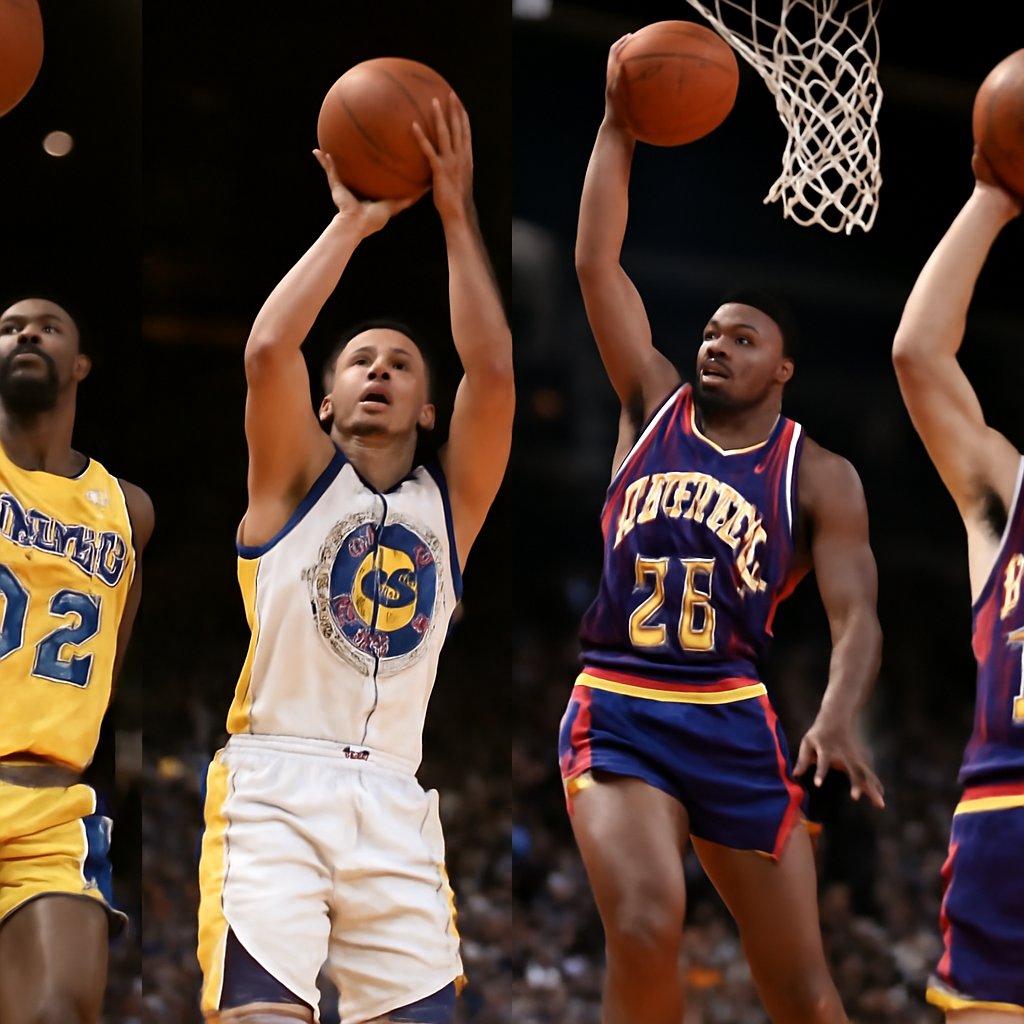
When we talk about the best NBA point guards to ever lace it up, the conversation runs deeper than any box score. These are the players who carried their communities on their backs, turned gyms into gathering places, and showed young folks—especially in neighborhoods where the game has always meant more than wins—what leadership looks like on and off the floor. The position has always demanded vision, heart, and the kind of quiet courage that lifts an entire squad.
Magic Johnson set the gold standard with his unmatched 12.3 assists per game career average and five championships for the Lakers. What gets lost in the highlights is how he used his size and passing to rewrite the point guard role entirely, making the game bigger than stats while inspiring a generation to see basketball as a stage for joy and excellence. His 6’9″ frame gave him an unprecedented advantage in the position, allowing him to see over defenses and facilitate in ways shorter guards couldn’t replicate. Magic’s Finals performances were particularly legendary—he won three Finals MVP awards and averaged over 19 points per game in playoff competition, proving he was far more than just a facilitator.
John Stockton sits right there too with the all-time assists record at 15,806 over nineteen seasons with the Jazz. His pick-and-roll chemistry with Karl Malone became a masterclass in efficiency, and his defensive grit often gets overlooked in the rush to rank legends. What made Stockton truly remarkable was his consistency—he played in 1,504 consecutive games and never averaged below 9.7 assists per season during his career. His longevity and reliability set him apart from guards who had higher peaks but couldn’t sustain excellence across nearly two decades.
Before the 1980s, Oscar Robertson laid the foundation by averaging a triple-double in the 1961-62 season—30.8 points, 12.5 rebounds, and 11.4 assists—a feat not seen again until Russell Westbrook came along. His all-around game from the point guard spot helped redefine what offensive versatility could look like at the position. Oscar’s influence extended beyond statistics; he was instrumental in the 1971 championship run with the Milwaukee Bucks alongside Kareem Abdul-Jabbar, showing how a great point guard could complement dominant big men and create winning basketball.
Steve Nash brought spacing and shooting purity that stretched defenses in ways few had imagined, earning two MVP awards with those signature 50-40-90 seasons. His ability to shoot from anywhere on the court while maintaining elite passing numbers revolutionized how offenses could be constructed. Nash’s pick-and-roll game with Amar’e Stoudemire in Phoenix created one of the most exciting offensive systems in NBA history, averaging over 120 points per 100 possessions during peak years. He demonstrated that international players could reach the highest individual accolades, paving the way for global talent to pursue NBA stardom.
Chris Paul has embodied the modern two-way floor general, blending elite assist-to-turnover ratios with defensive fire and leading teams deep into the playoffs time and again. His basketball IQ shines as a reminder that the game rewards those who think two steps ahead. Paul’s defensive prowess earned him multiple All-NBA selections and All-Star appearances, making him one of the few point guards who could guard opponents’ best players night after night. His ability to elevate role players into productive contributors, particularly during his New Orleans and Los Angeles Clippers years, showcased the intangible value great point guards bring to a roster.
Steph Curry changed everything by becoming the greatest shooter ever while still running Golden State’s offense, his 2016 unanimous MVP season and record three-point volume forcing the league to adapt. His 73-win season showcased a player taking 11.2 three-pointers per game while maintaining a 50-40-90 shooting split—a combination that seemed mathematically impossible. Curry’s off-ball movement and ability to create scoring opportunities without the ball in his hands added another dimension to point guard play that coaches are still studying and attempting to replicate.
Russell Westbrook added pure athleticism and scoring aggression, highlighted by his record 42 triple-doubles in 2016-17. His explosive style and willingness to take over games in the final moments made him one of basketball’s most exciting players during his MVP season. Westbrook’s aggressive approach proved that point guards didn’t need to sacrifice scoring to be elite facilitators, though it also sparked debates about shot selection and efficiency that continue today.
The game has always been bigger than stats, and these players showed how the position evolves with the culture around it. Championships separate the great from the greatest. Magic’s five titles and three Finals MVPs place him at the top for many. Isiah Thomas delivered two rings for the Pistons with unforgettable playoff heroics. His performance in the 1990 Finals against the Trail Blazers, despite a severely injured ankle, remains one of basketball’s most iconic displays of competitive will. Tony Parker earned Finals MVP in 2007, proving international point guards could dominate when it mattered. His speed and ability to navigate through packed defenses became the template for crafty, undersized guards in today’s game. Curry’s four titles and gravitational pull on offense have locked him among the elite. In the WNBA, we see the same truth—floor generals who elevate teammates and carry the weight of expectation with grace.
Playoff metrics like win shares and clutch impact reveal how these guards performed under pressure. Jason Kidd and Chauncey Billups brought steady hands and defensive edge through deep postseason runs. Kidd’s three-point shooting evolution during his later years with the Dallas Mavericks showed how great players continue to adapt their games. Billups earned Finals MVP in 2004 with the Pistons, leading one of the most dominant defensive teams ever assembled. Four of the top ten in career assists per game are Hall of Famers, and Stockton’s 3,265 steals remain the record. Curry has drained over 3,500 threes, more than anyone, while Paul leads active players with a 4.1-to-1 assist-to-turnover ratio. Oscar’s triple-double season still stands alone as perhaps the most complete individual season ever recorded.
From Magic’s showtime flair to Curry’s revolutionary shooting, these point guards have shaped how the game is played today. They’ve delivered championships, unforgettable moments, and proof that basketball’s real power lives in the communities it builds and the young players it lifts. The position continues to evolve with each generation, yet the fundamental requirement remains unchanged: excellence demands both individual brilliance and the character to lift those around you higher.