
NBA Records That May Never Be Broken
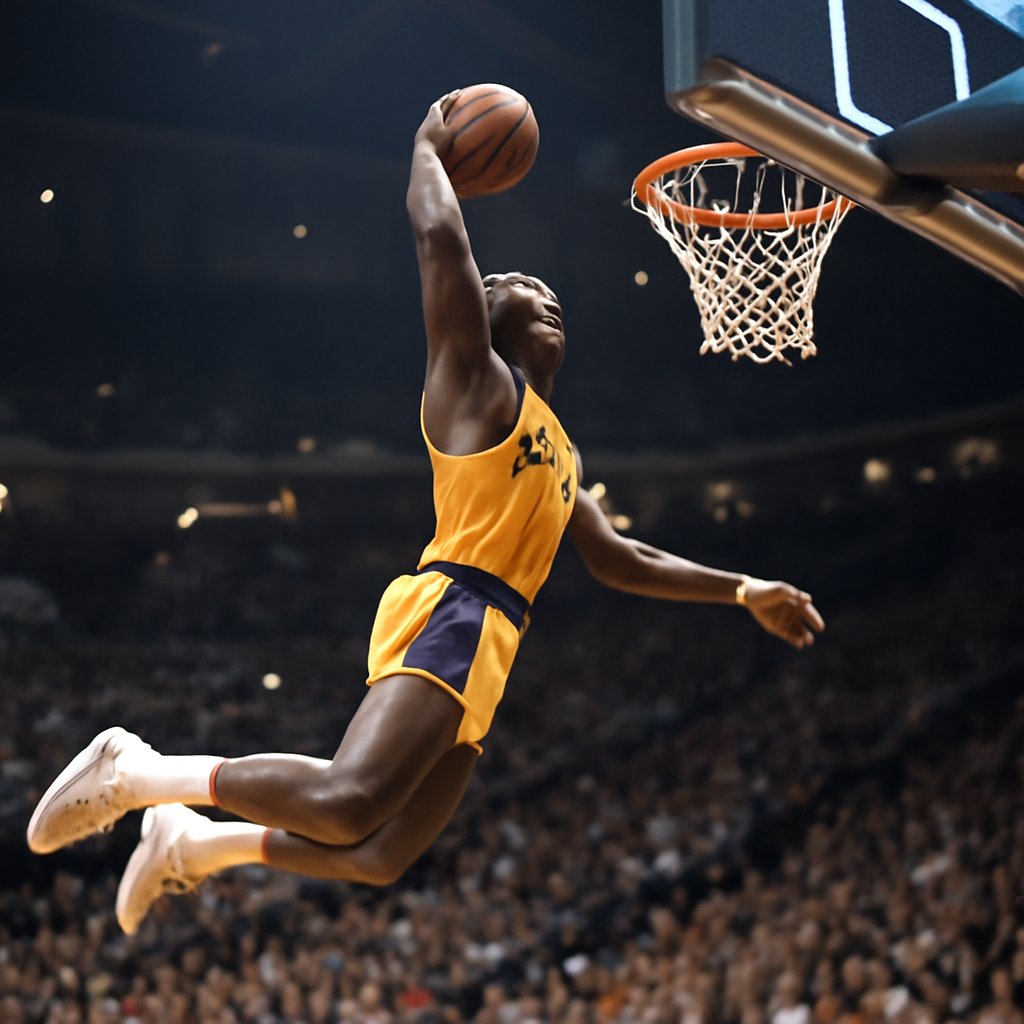
When we look back at those NBA records that seem frozen in time, what stands out isn’t just the numbers—it’s the way these legends poured their whole selves into the game at moments when basketball was still shaping communities from Philly playgrounds to Boston neighborhoods. The game has always been bigger than stats, carrying stories of resilience and pride that echo through the WNBA today, where players like A’ja Wilson and Breanna Stewart are building their own legacies of dominance and connection.
Wilt Chamberlain’s explosions on the scoreboard still leave folks shaking their heads. On March 2, 1962, he dropped 100 points for the Philadelphia Warriors against the New York Knicks in that 169-147 win, all without a three-point line to lean on—just hooks, fades, and that unstoppable force inside. He finished with 36 field goals and 28 free throws, a night no one has truly touched since. Then there’s his 1961-62 season, averaging 50.4 points across 80 games for 4,029 total points, the highest single-season mark the league has seen. Stars like Michael Jordan, Kobe Bryant, and LeBron James lit up scoreboards in their own eras, but the shift toward perimeter spacing and load management has made that kind of volume feel almost mythical now. What gets lost in the highlights is how Chamberlain’s physical gifts met an era where centers owned the paint without today’s help defenses and zone schemes.
The closest anyone has come to Wilt’s single-game scoring dominance is Kobe Bryant’s 81-point performance on January 22, 2006, against the Toronto Raptors. While an absolutely stunning achievement that may never be replicated, it still falls 19 points short of Chamberlain’s untouchable mark. The difference speaks volumes about how the modern game has evolved. Today’s defenses employ sophisticated schemes, zone coverage, and physical limitations that make such sustained scoring binges nearly impossible. Additionally, load management has become standard practice for star players, with teams intentionally resting their best scorers to preserve their long-term health. Chamberlain played in an era where players were expected to stay on the court for 48 minutes night after night, and the competitive landscape was fundamentally different.
Bill Russell’s run with the Boston Celtics carries that same weight of community leadership and quiet strength. He collected 11 championships in 13 seasons, including titles in 1957, then 1959 through 1966, plus 1968 and 1969. Averaging 15.1 rebounds for his career, Russell anchored those squads as both player and coach in the final stretch, lifting teammates like Bob Cousy and John Havlicek. His Celtics built something special in a league with fewer teams and shorter playoffs, yet the sustained excellence came from defense, rebounding, and that unbreakable bond. No one since has come close to double-digit rings, with greats like Magic Johnson, Jordan, and Tim Duncan reaching five or six. The game has always been bigger than stats, and Russell showed how one man’s presence could lift an entire city.
What makes Russell’s achievement even more remarkable is that he won his first championship in 1957 at age 23 and his last in 1969 at age 35, showing consistency across more than a decade of basketball. The Celtics’ dynasty wasn’t built on individual stardom alone but on a philosophy of team defense and sacrifice that Russell embodied. In an era before social media amplified individual accomplishments, Russell let his 11 rings do the talking. The organizational structure of the Celtics under coach Red Auerbach created a culture where team success trumped personal statistics, and that mentality permeated every roster decision and practice session.
Oscar Robertson’s 1961-62 season stands apart for its all-around command. As a 23-year-old with the Cincinnati Royals, he averaged that rare triple-double line—30.8 points, 12.5 rebounds, and 11.4 assists—over an 80-game schedule. The “Big O” proved guards could control every inch of the floor long before positionless basketball took hold. Russell Westbrook later put up multiple triple-double seasons, but those came with different pace and assist tracking. Robertson’s efficiency without today’s recovery tools makes his mark feel especially grounded in an era of nonstop minutes. Playoff coverage today rarely sees guards matching that rebounding alongside elite scoring and vision.
Robertson’s all-around excellence extended beyond that single season. He finished his career with 26,710 points, 9,887 assists, and 7,804 rebounds, making him one of only a handful of players to accumulate elite numbers in all three categories. His basketball IQ was legendary, and opponents consistently noted how he seemed to elevate every player around him. Unlike Westbrook’s recent triple-double seasons, which sometimes came with lower shooting percentages, Robertson maintained remarkable efficiency while filling the stat sheet. This balance of volume and effectiveness represents a different standard than what’s often seen in modern triple-double races.
These benchmarks hold firm even as the league grew to 30 teams and sped up the action. Wilt’s 100-point game remains the single-game scoring record, with no one topping 81 since. Russell’s eight straight titles from 1959 to 1966 stand unmatched across major North American sports. Robertson owns the only official triple-double season average in history. Chamberlain also pulled down 55 rebounds against the Celtics on November 24, 1960—a performance that showcases both his athleticism and the rebounding opportunities available in an era with different shooting volume and three-point spacing. The Celtics’ 11 titles in 13 years under Red Auerbach and Russell were built on elite defense and rebounding. Rule changes and specialization have shifted what’s possible, yet the pride in these stories keeps the culture rooted.
Consider also Chamberlain’s career rebounding records, which remain virtually untouchable. His single-season rebounding average of 27.2 boards per game in 1960-61 represents a level of dominance on the glass that seems almost incomprehensible by modern standards. Even accounting for the higher number of missed shots in that era, the physical toll of grabbing 27 rebounds nightly while scoring at elite levels demonstrates a combination of athleticism and endurance rarely seen. Modern players like DeAndre Jordan and Andre Drummond have averaged over 14 rebounds per game, but Wilt’s mark remains nearly double those figures.
Another record worth mentioning is Jerry West’s career free throw percentage. West made 7,160 free throws while missing only 1,320 attempts, giving him a career free throw percentage of 84.4%. This level of consistency from the line, maintained over a 14-year career, reflects a level of mental discipline and technical precision that’s genuinely remarkable. While modern players have occasionally exceeded this percentage over shorter stretches, maintaining it across a full career with the physical demands of the game is extraordinarily difficult.
As the NBA keeps evolving with analytics, global talent, and spacing emphasis, these feats feel more distant. Still, the same spirit lives in the WNBA, where community impact and player excellence continue to remind us why basketball matters far beyond the court. Fans will keep debating who comes closest today, but the blend of physical gifts, era rules, and sustained greatness captured here will likely stay untouched. The records serve as reminders that excellence isn’t just about the numbers—it’s about the dedication, sacrifice, and love for the game that these legends brought every single night.