
Top Five NBA Small Forwards All Time
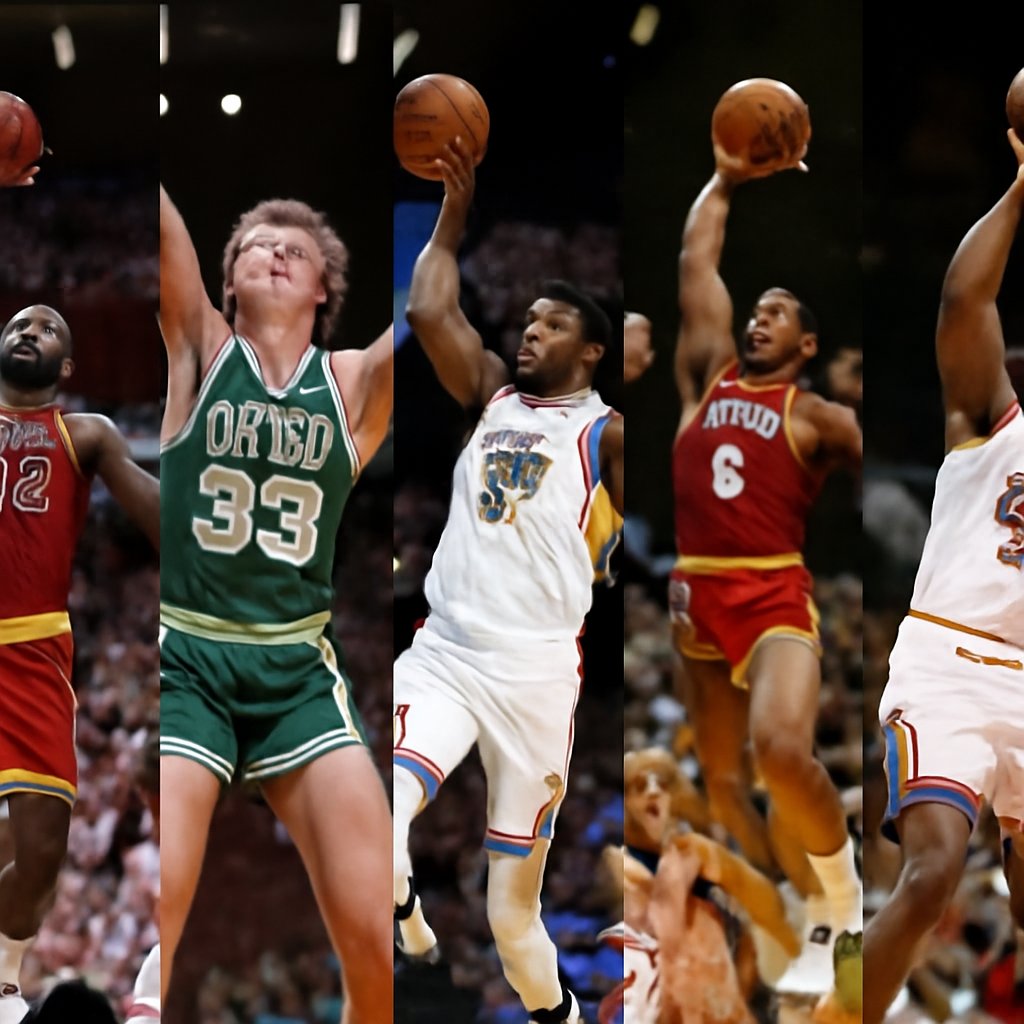
When we talk about the all-time great small forwards in the NBA, we’re really celebrating the players who made the wing feel like home for so many of us who grew up watching games on a cousin’s living room TV or at the neighborhood rec center. These are the ones who blended scoring, defense, rebounding, and that quiet leadership that turns teammates into family. The game has always been bigger than stats, and nowhere is that clearer than with the small forward position, where versatility has long mirrored the way our communities lean on each other.
From the ABA-NBA merger days through today’s positionless style, the best at the three have always adapted—physical and mid-range sharp in earlier eras, stretch-big and playmaking now. What gets lost in the highlights is how these players carried the weight of expectations while lifting entire franchises and inspiring kids in cities and small towns alike. We see echoes of that same wing brilliance in the WNBA, where athletes like Maya Moore or the next generation of versatile forwards show the same mix of toughness and skill that makes the position special across both leagues.
Ranking them means looking at longevity, peak dominance, rings, MVPs, All-NBA nods, and that intangible fire that shows up in the playoffs. We kept the focus on those who truly logged time at small forward. At number five, Scottie Pippen anchored six Chicago Bulls title teams with defensive versatility that let him guard every position. He averaged 16.1 points, 6.4 rebounds, and 5.2 assists across 17 seasons and earned eight All-Defensive First Team selections, popularizing the switchable lineups we still see today.
Pippen’s impact on defense revolutionized how the position could be played. His ability to guard opposing team’s best perimeter scorers while also switching onto bigger power forwards made him invaluable to the Bulls’ dynasty. In the 1994-95 season, when Michael Jordan was playing baseball, Pippen led the Bulls to 55 wins, proving he wasn’t just a complementary piece but a franchise cornerstone. His playmaking from the forward spot was ahead of its time, often initiating offense and creating scoring opportunities for teammates. This blend of elite defense, basketball IQ, and unselfishness established a template for wing players that modern teams still chase today.
Julius Erving, Dr. J, comes in at four. The ABA star brought flair and transition dominance to the NBA, winning a championship with the Philadelphia 76ers while averaging 22.0 points for his career. His 1983 run proved small forwards could take over fast breaks and make the game look effortless. Erving’s artistry on the court set him apart from his contemporaries. He was one of the first players to make dunking an integral part of his offensive arsenal, thrilling crowds with acrobatic finishes that seemed impossible from the perspective of defenders trying to stop him. His grace and athleticism made him an ambassador for the game during a critical period when the NBA was fighting for relevance against the NFL and major league baseball.
The 1983 championship with the 76ers, often called “The Year of the Fo’, Fo’, Fo'” (the team won four playoff games against opponents in the first two rounds), showcased Erving’s ability to elevate his game on the biggest stage. Though aging by then, he proved that veteran presence and basketball intelligence could overcome declining athleticism. His Finals performance that year remains a testament to his competitive drive and championship pedigree.
Kevin Durant sits third, his scoring touch unmatched—he’s claimed two titles, an MVP, and multiple scoring titles while averaging over 27 points a game and stretching defenses with his size and shooting. Durant’s skill set fundamentally changed how the small forward position could function. At 6’10”, he brought a height advantage that, combined with guard-like ball-handling and shooting ability, created matchup nightmares for opposing defenses. His four scoring titles tied him for second all-time in that category, and his ability to create his own shot from anywhere on the court revolutionized wing basketball.
What often gets overlooked in Durant’s career is his consistency. Beyond his two championships with the Golden State Warriors, he spent nine seasons with the Oklahoma City Thunder, making the Finals once and establishing himself as a perennial MVP candidate. His 50-40-90 season in 2013-14, when he joined the exclusive club of players shooting at least 50% from the field, 40% from three, and 90% from the free throw line, demonstrated offensive excellence rarely seen at the forward position. Even after injuries, Durant has remained a scoring force, proving that elite skill and basketball IQ can sustain a career at the highest level.
Larry Bird earns the number-two spot thanks to his basketball IQ and clutch moments. The Boston Celtics legend led three championship runs, collected three MVPs, and retired with elite shooting from the forward spot. Bird’s competitiveness was legendary—teammates and opponents alike spoke of his burning desire to win every possession, every game, every season. His shooting range extended far beyond what was common for forwards in his era, effectively stretching defenses and creating space for teammates decades before three-point shooting became the league’s focal point.
Bird’s Finals performances were particularly memorable. In the 1984 Finals against the Lakers, he delivered championship-clinching performances that showcased both his scoring ability and his willingness to take on defensive challenges. His 1986-87 season, when he averaged 28.1 points while shooting over 50% from the field, demonstrated peak offensive dominance at the forward position. Beyond statistics, Bird’s leadership style—vocal, demanding, and by example—set a standard for star players who wanted to be respected as much for their character as their talent.
LeBron James tops the list as the greatest small forward in NBA history. Four championships, four MVPs, unmatched longevity, and career averages of 27.1 points, 7.5 rebounds, and 7.4 assists show how he carried teams year after year. LeBron’s combination of size, strength, speed, and basketball intelligence created a player unlike any small forward before him. His ability to impact winning through playmaking, defense, and scoring simultaneously makes him a transcendent talent who redefined positional basketball.
LeBron’s playoff resume is particularly extraordinary. He’s made 10 NBA Finals appearances across three different franchises, each time carrying significant offensive and defensive burdens. His performances in closeout games—when a team has a chance to end a series—rank among the most clutch in basketball history. His 2016 championship with Cleveland, breaking a 52-year title drought for the city, cemented his legacy as more than just a great player but a transformative figure for franchises and communities.
LeBron holds the record for most playoff points by any small forward with over 7,600 postseason points. Bird led the league in three-point percentage three times. Durant is the only one here to average 30-plus in multiple Finals. Pippen recorded more steals than the others on this list. Erving’s scoring average stands tall among ABA-to-NBA wings. Together they account for 17 championships and 22 All-Star appearances at the position, with an average PER above 22.0.
The small forward position has evolved dramatically across these five players’ eras. Erving pioneered athletic, transitional play in the modern NBA era. Bird established shooting excellence at the position. Pippen showed how versatile perimeter defense could anchor championship teams. Durant proved that size and skill could coexist at the three. And LeBron combined elements of all his predecessors while adding his own physical dominance and playmaking brilliance.
These legacies keep shaping how teams build around versatile wings, and they remind us that basketball’s real power lives in the pride it sparks in our communities—from pickup courts to championship parades.