
Stephen Curry Shooting Mechanics Breakdown and Analysis
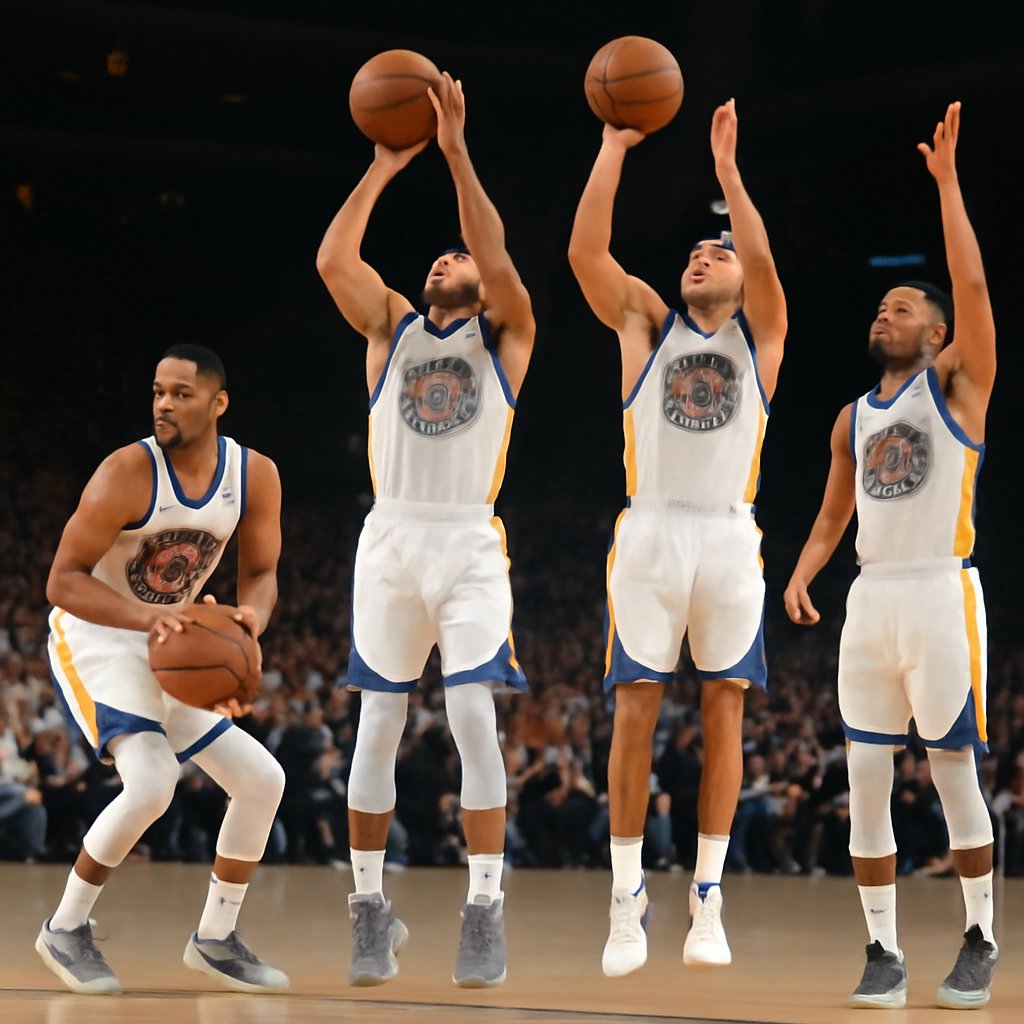
Stephen Curry’s shooting mechanics stand out as one of the most copied and dissected parts of today’s game, mixing speed, accuracy, and smart body control that changed how perimeter scoring works in the league. I laced up for four years playing college ball, so I know exactly how that quick elevation and balance feel when your legs start burning late in a game. His form might look a little different from the old-school textbook, but it gets the job done from way deep, and you can see the ripple effect on how teams space the floor and jack up threes now—something that echoes through Black basketball culture from the playgrounds straight to the pros.
His base starts balanced and a touch wider than shoulder width, giving solid stability while still letting him move quick. Knees bent, weight on the balls of his feet, that setup pulls power from the legs instead of just the arms, which cuts down on fatigue during long playoff runs. The advanced metrics back up what any player who’s been in the gym knows: that compact stance keeps the shot path steady even when somebody’s closing out hard.
Footwork is all about a fast gather step and a slight dip to load the legs, sending energy up through the core to the shooting hand. In real game action that load happens in under half a second, leaving defenders scrambling. Whether it’s off the dribble or straight catch-and-shoot, it all traces back to that repeatable lower-body move—something I saw plenty of growing up where rhythm and timing separate the good shooters from the great ones.
Release happens at the top of the jump with the ball held high. Grip stays relaxed with fingers spread for natural backspin, index and middle fingers steering while the thumb steadies the push. That high point stretches his range past 30 feet and forces defenses to stretch out way beyond what used to be normal.
Follow-through stays clean with the wrist extended and elbow in tight, producing a 45-to-50-degree arc that drops the ball softer on the rim. Slow-motion shows almost no side-to-side wrist movement, which lines up with his career-long consistency. Together it creates one of the fastest, most repeatable releases the league has seen.
The ball position during the shot is another key detail that separates Curry from other elite shooters. He keeps the ball slightly off-center in his palm rather than resting it flat, which allows for a quicker release and more control over shot trajectory. This positioning, combined with his high release point around 10 feet off the ground, creates a flatter shot path that’s tougher for defenders to contest without fouling. The minimal arc variation in his release means the ball comes off his fingertips at nearly the same angle every single time, a level of consistency that’s almost mechanical in its precision.
Curry’s off-ball movement deserves serious attention when breaking down what makes him lethal. He doesn’t rely solely on step-back threes or pull-ups—he constantly relocates using screens and cuts to find open space. This movement keeps defenses honest and creates rhythm-based catch-and-shoot opportunities where his mechanics truly shine. The Warriors offense was designed around this constant motion, with Curry running around multiple screens to free himself for that one-motion release. His footwork coming off screens is equally important; he plants his feet quickly to establish balance before the catch even arrives, meaning by the time the ball reaches his hands, his lower body is already loaded and ready to explode upward.
A critical component that often gets overlooked is how Curry adjusts his mechanics based on defensive pressure and game situations. Against elite perimeter defenders, he shortens his dribble pull-ups and relies more on quick-trigger releases. In situations where he has space, he’s comfortable taking a longer load and generating more power from the legs. This adaptability shows maturity and court awareness that complements his technical skill. He’ll also shift his release point slightly higher when being closely guarded, making it nearly impossible for defenders to get their hands in the way without extending too far.
The role of his core strength in maintaining shot stability cannot be understated. Curry’s torso stays remarkably still throughout his entire shooting motion, isolating most of the movement to his legs and shooting arm. This stability means his shot doesn’t drift sideways even when he’s catching the ball off-balance or while being defended closely. His core acts as an anchor that keeps the shooting arm on the same vertical plane every time, which explains why his shot looks identical whether he’s standing still or moving sideways.
In the playoffs the mechanics shift just enough for tighter coverage—more off-ball movement and pump fakes—but the core stays the same. That reliability fueled those deep Warriors runs where his three-point volume pulls defenders out and opens driving lanes for teammates. His form holds up under fatigue, keeping release speed sharp even in the fourth quarter when legs are heavy.
What makes Curry’s shooting so effective in high-leverage moments is his ability to simplify his mechanics under pressure. While he’s capable of creating space with complex dribble moves and footwork during the regular season, in crucial playoff situations he often reverts to the most fundamental version of his shot—a quick catch-and-shoot or a straightforward pull-up. This simplification reduces variables and increases repeatability when the stakes are highest. He’s also developed a reliable step-back three that’s become nearly impossible to defend, using a quick dribble to create just enough separation before rising and releasing in one fluid motion.
The numbers tell the story: career three-point percentage near 43 percent over more than 800 regular-season games, the single-season record of 402 made threes in 2015-16, average release under 0.4 seconds on catch-and-shoot looks, playoff three-point mark around 40 percent in 140-plus games, over 60 percent of his points from deep in recent seasons, true shooting still above 50 percent despite the volume, more than 3,000 career threes—the most ever—and an average arc of 48 degrees for optimal rim angle.
Training the Curry way means understanding that elite shooting isn’t just about mechanics—it’s about endless repetition and game-speed conditioning. The shot has to become so natural that it happens without conscious thought, even when a 6’7″ defender is closing out at full speed. Young players trying to model their game after Curry should focus on thousands of repetitions in practice, varying release points and shot distances to build that range and consistency. They should also work extensively on footwork and balance drills, particularly coming off screens and on step-back attempts.
Curry’s approach has raised the bar for what efficient scoring looks like, blending smart biomechanics with nonstop work to deliver historic output. His impact goes past individual stats and into how squads now build around spacing and three-point volume. In Black American basketball culture, where the game has always been about creativity and ownership on the court, his blueprint gives the next generation something real to chase.