
Evolution of the NBA Center Position
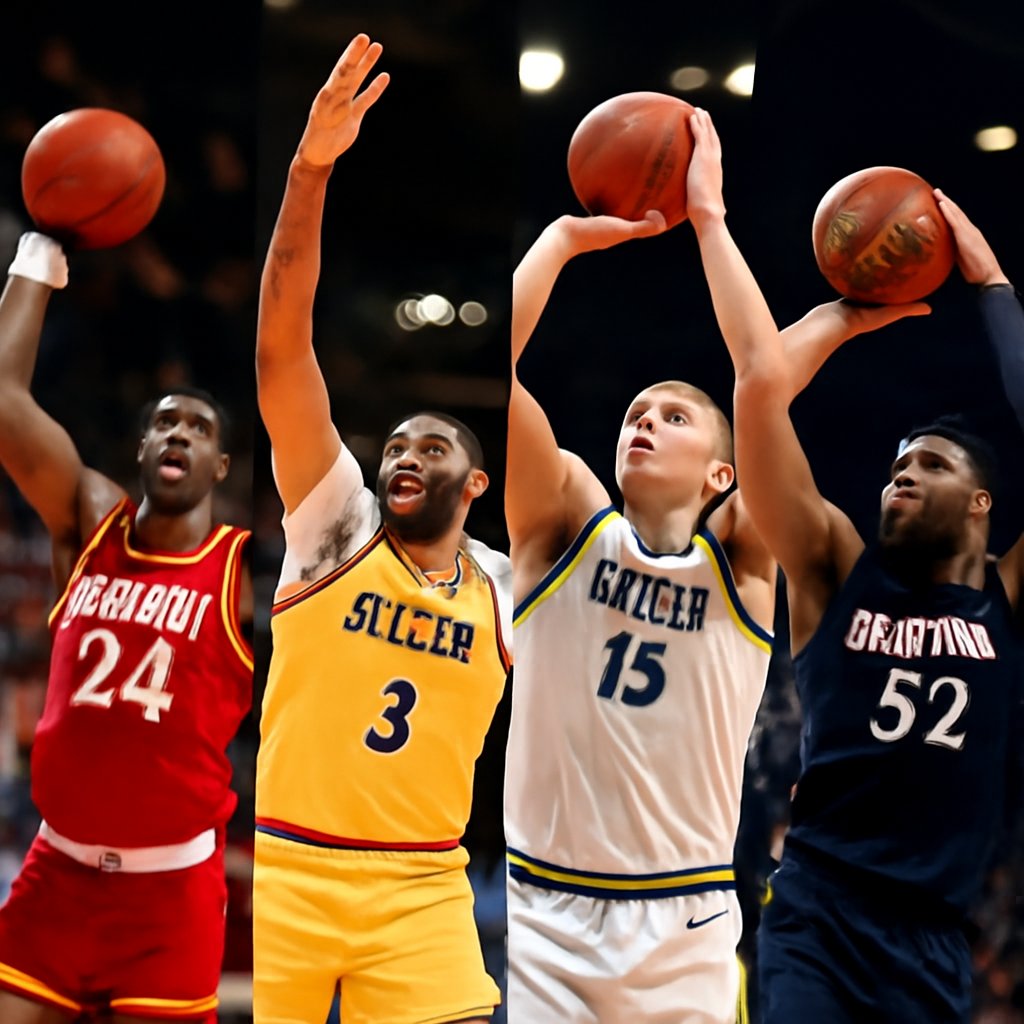
The NBA center spot has come a long way from the days when the biggest body in the paint just planted his feet and dared you to drive. I laced up for four years playing college ball, so I know what it feels like to battle down low against guys who treat the block like their own backyard. That physical grind, the way the game used to reward pure size, is part of why basketball sits so deep in Black American culture—it’s always been our proving ground, from playgrounds in Philly to the Garden.
Back in the 1950s through the 1970s, centers like George Mikan and especially Wilt Chamberlain owned the middle. Chamberlain dropped 50.4 points and 25.7 rebounds in 1962, numbers that still make your jaw drop. He showed how one man could carry an offense with nothing but post moves and that raw power. Bill Russell flipped the script on the defensive end, anchoring those Celtics teams to 11 titles with his shot-blocking and leadership. In that era without the three-point line, centers hauled in 30-40% of a team’s rebounds on average, and you felt every one of them in the standings.
Wilt’s records, including those 100-point games, laid out exactly how taxing the position was on the body. Russell turned defense into a championship weapon, and those two set the mold that said size came first. The advanced metrics back up what any player who’s been in the gym knows: those early bigs controlled tempo through pure presence. Mikan, standing 6’10”, was so dominant that the NBA widened the lane from 6 feet to 12 feet in 1951 just to make the game more competitive. That’s how transformative elite centers were—they literally changed court dimensions.
The 1980s and 1990s brought skill into the mix. Kareem’s skyhook became the stuff of legends, while Moses Malone and Hakeem Olajuwon added quick feet and that smooth footwork inside. Olajuwon’s 1994 run with the Rockets showed a center could block shots, swipe steals, and still close out games. Then Shaq rolled in with that mix of power and quickness that made defenses rearrange everything around him. Patrick Ewing and David Robinson held down franchises in New York and San Antonio, often leading their squads in points and boards come playoff time. Olajuwon averaged 33 in the 1995 Finals, proving the position still decided titles. More face-up game and mid-range jumpers crept in, blending the old power with new mobility.
This era represented the last true golden age of traditional dominant centers. Shaq’s peak from 1999 to 2002 with the Lakers showed what unstoppable post dominance looked like in the modern era—he won three consecutive championships and back-to-back MVPs while leading the league in scoring and finishing in the top five for rebounding. The 2000-2002 Lakers roster was essentially built around feeding Shaq in the post and letting his physicality wear down opponents. Robinson won the 1995 MVP and anchored the Spurs’ first championship that year with 27 points and 10 rebounds in the Finals clincher. These performances demonstrated that in the right system, a dominant post player could still be the primary engine of a championship team.
By the early 2000s the position took some hits. Faster offenses and stretch fours pulled bigs away from the rim. Dwight Howard and Yao Ming kept that traditional power alive, but injuries and perimeter rules cut down on touches. Tim Duncan, even when listed as a power forward, slid to center in small-ball sets and won multiple rings by anchoring the Spurs with fundamentals. League data from 2000-2010 shows center minutes dropping as spacing took priority. Howard still posted those double-doubles, but the overall scoring share for the position dipped. It was a turning point toward hybrid roles.
Howard’s era in the 2000s and early 2010s represented a bridge between traditional and modern basketball. He won Defensive Player of the Year three consecutive seasons (2008-2010) and was the first center since Shaq to be a legitimate MVP candidate based purely on two-way dominance. Yet even Howard’s career showed the shifting demands—as the league moved toward perimeter shooting, his role diminished despite his defensive prowess. His inability or unwillingness to develop a three-point shot left teams vulnerable to spacing arguments, a warning sign for future big men about the importance of floor spacing.
The three-point revolution fundamentally reshaped what scouts and front offices looked for in centers. The 2013-14 season marked a turning point when the league took 22.1 three-pointers per game on average. By the 2019-20 season, that number had jumped to 33.5. This explosion meant centers couldn’t just camp in the paint—they had to either defend shooters on the perimeter or their team would get destroyed by spacing. The pick-and-roll-heavy offenses that dominated gave way to spread pick-and-roll sets where the big man had to step out to the three-point line. Teams that ignored this evolution, like the 2018-19 Rockets without a true center, showed how traditional post players could be completely hidden from the game through clever spacing.
Today the center has to space the floor, pass from the high post, and switch on the perimeter. Nikola Jokic changed the game with his playmaking, leading the Nuggets to the 2023 title while averaging triple-doubles. Joel Embiid brings volume scoring and rim protection, and Anthony Davis adds that switchability on defense. These guys let teams run small-ball lineups that feast in transition and from deep. The numbers show centers now account for 32% of blocks versus 45% in the 1990s, but the ones who thrive do it with versatility.
Jokic’s rise to MVP status in back-to-back seasons (2021, 2022) and championship in 2023 signaled that dominant centers haven’t disappeared—they’ve just evolved. His 10-plus assists per game broke the mold of what fans expected from a 7-footer, and his willingness to operate as a primary playmaker from the high post allowed Denver to run unconventional lineups. Embiid’s development as a three-level scorer—capable of shooting threes, mid-range, and posting up—mirrors the skill progression expected at the position. Davis, while often playing power forward, showed that elite centers needed the lateral quickness to guard on switches, something unthinkable for traditional centers in earlier eras.
The international influence on center development cannot be overlooked. Players like Marc Gasol, Pau Gasol, and Nikola Jokic brought European basketball’s emphasis on skill, basketball IQ, and spacing to the position. This global talent pool raised the floor for what NBA centers could do offensively. Scouts began prioritizing footwork, court vision, and shooting touch in ways they hadn’t before. The Gasol brothers particularly changed perceptions about what a seven-footer could accomplish away from the basket.
Looking ahead, prospects like Victor Wembanyama are stretching the definition even more—shot-blocking plus three-point range. Analytics now prize bigs who can guard multiple spots and run pick-and-rolls, shifting playoff schemes around floor-spacing rather than pure rim-runners. Wembanyama’s combination of size, skill, and versatility represents the theoretical endpoint of center evolution: a player who can defend positions 1-5, shoot threes off the dribble, and pass out of pick-and-rolls with precision. He’s the prototype for what front offices believe centers must be moving forward.
The draft priorities for centers have shifted dramatically. In 2005, the highest-drafted center (Andrew Bogut at #1) was selected partly on the promise of traditional post skills. By 2023, Wembanyama was the consensus top pick largely because of his ability to stretch the floor and guard perimeter players. This represents not just a generational shift but a fundamental reimagining of what the position demands. College basketball mirrors this trend—elite big men are increasingly the ones who can play pick-and-roll offense and defend in space.
Defense evolution at the center position is equally dramatic. In the 1990s, elite centers like Olajuwon and Ewing built reputations on straight-up post defense—holding their ground against opposing centers. Modern elite centers must defend in space, show on pick-and-rolls, and rotate helpfully without fouling. The increase in three-point shooting
Sources
- NBA.com – Official NBA statistics, news, and player information
- ESPN NBA – Comprehensive NBA coverage, scores, and analysis
- Basketball Reference – Historical NBA statistics and player records
- Sports Illustrated NBA – In-depth NBA reporting and features
- The Ringer – NBA analysis and long-form journalism