
NBA Draft Busts and Surprising Success Stories
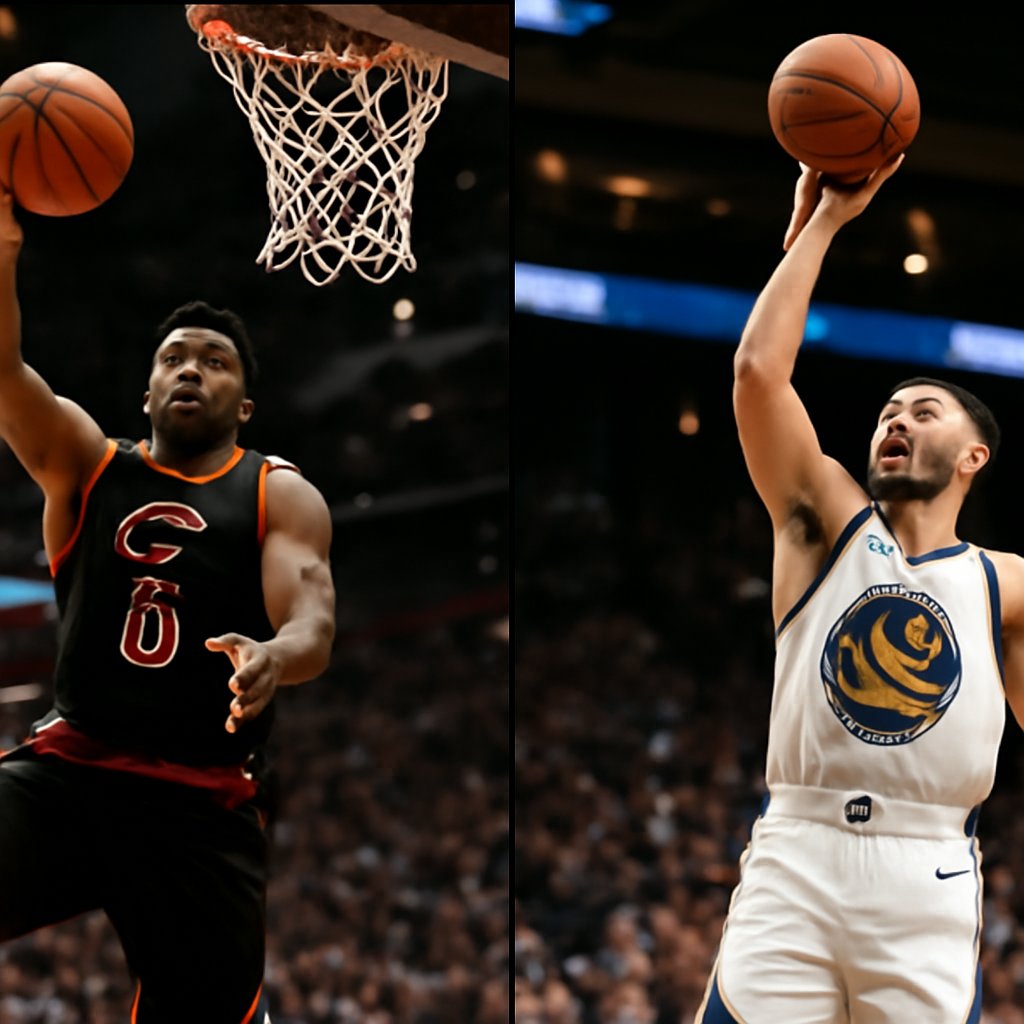
The NBA draft has always carried the weight of entire neighborhoods dreaming on one pick, the kind of hope that fills barbershops and family living rooms from Compton to Chicago. What gets lost in the highlights is how these young players carry not just their own futures but the aspirations of communities that raised them on hard courts and borrowed sneakers. The game has always been bigger than stats, and nowhere is that clearer than in the stories of busts and late bloomers who remind us the league’s real heartbeat lies in resilience and second chances.
High first-round selections can feel like the whole world is watching, especially for players thrust into the spotlight before they’ve fully grown into their games. Anthony Bennett, taken first overall by the Cleveland Cavaliers in 2013, never found his footing and averaged just 4.2 points across a brief career that ended by age 23. Kwame Brown, the top pick in 2001 by the Washington Wizards, posted career marks of 6.6 points and 5.5 rebounds while battling inconsistency that scouting reports had flagged early. Darko Milicic, chosen second in 2003 ahead of future stars like Carmelo Anthony and Chris Bosh, managed only 6.0 points per game in limited time, a reminder that even the most athletic big men can struggle when fit and development don’t align.
These moments sting because they reflect how quickly the machine can move on, often leaving talented kids to navigate injuries, pressure, and the weight of expectations without enough support. The psychological toll of being a high draft pick who underperforms cannot be overstated—scouts, analysts, and fans all have invested their credibility in these selections, creating an environment where failure feels uniquely public and unforgiving. Yet the same draft process has lifted players who looked overlooked on draft night, proving that advanced metrics and traditional eyes sometimes miss what matters most on the floor and in the locker room.
Draymond Green, taken 35th overall in 2012 by the Golden State Warriors, became a Defensive Player of the Year and four-time champion through sheer basketball IQ and versatility, finishing his prime averaging 8.7 points, 7.0 rebounds, and 5.0 assists. Nikola Jokic, selected 41st in 2015, turned into an MVP and led the Denver Nuggets to their first title in 2023 with historic triple-double production. Undrafted standouts like Fred VanVleet anchored Toronto’s 2019 championship with clutch playoff moments that teams still study. What gets lost in the highlights is how these players often credit the same community gyms and coaches who never stopped believing when the big boards passed them by.
The gap between early first-round picks and mid-round selections tells a fascinating story when examined through the lens of actual NBA success. While teams naturally prioritize early draft picks with roster spots and playing time, the pressure to justify selections often leads to forcing ill-fitting players into roles where they struggle. Players selected between picks 20 and 50 often slide into more organic team situations, joining squads with established systems and less desperation to prove the front office’s judgment correct. This allows them to develop on their own timeline, which frequently correlates with better long-term outcomes than high-pressure early draft situations.
Consider the case of Jalen Brunson, taken 13th in 2018 by the Dallas Mavericks. While not a complete bust, he served largely as a backup until his full potential emerged—a trajectory that mirrors many successful players who needed time and opportunity to flourish. Meanwhile, players like Jamal Murray, selected 7th in 2016, had similar developmental arcs but carried higher expectations from day one. The difference in perceived success often came down to team environment and coaching rather than raw talent differential.
Franchises that truly learn from past misses start valuing character and versatility the way the San Antonio Spurs did when they landed Manu Ginobili at 57th overall in 1999, fueling multiple titles through international scouting that still feels ahead of its time. The Boston Celtics’ 2007 trade for Kevin Garnett, partly born from earlier draft lessons, helped deliver their 2008 championship. Modern front offices now lean on tracking data to reduce risk, but the smartest ones never forget that playoff success often rides on role players who bring grit and joy to the game.
The evolution of draft evaluation has introduced new metrics that can reveal hidden gems earlier than traditional scouting. Advanced analytics now track things like offensive and defensive spacing, screen navigation, and on-ball decision-making in ways that weren’t possible a decade ago. Teams like the Denver Nuggets and Golden State Warriors pioneered approaches that identify versatile, high-IQ players regardless of draft position—recognizing that a player’s ability to play multiple positions and guard different opponents translates to playoff success far more reliably than raw scoring ability alone.
International scouting has also transformed draft strategy dramatically. Scouts now travel extensively to European leagues, the Australian NBL, and other global competitions to identify talent that might otherwise be overlooked. Nikola Jokic’s path through European professional basketball before being drafted late is no longer an anomaly—it’s increasingly common for deep draft picks to have developed their games overseas before joining the NBA. This shift has expanded the talent pool and made late-round picks statistically more valuable than they were 20 years ago.
The WNBA has shown us similar truths for years, where late picks and undrafted talent like those who anchor championship rotations prove draft position is never destiny. Late first-round and second-round selections account for over 40 percent of recent championship rotation players across both leagues. Only 7 of the last 20 first-overall NBA picks have made an All-Star team. Players like Jokic and Green have combined for more than 150 career win shares despite being drafted outside the lottery. Undrafted players have started in 12 percent of NBA Finals games since 2010. Teams like the Warriors and Spurs that find mid-round gems average 2.3 extra playoff wins per season.
Recent draft classes continue to validate these patterns. The 2016 draft, which produced Jaylen Brown, Brandon Ingram, and Karl-Anthony Towns in the lottery, also gave us Pascal Siakam at 27th overall and Domantas Sabonis at 11th—both players who became cornerstones of playoff teams. Siakam’s rise from mid-lottery afterthought to All-NBA consideration over just four seasons exemplifies how opportunity and coaching can transform draft narratives. The 2017 class brought Donovan Mitchell at 13th and later revealed that depth at guard and wing positions meant later selections often had better opportunity to find their role.
At the end of the day, these draft stories keep the league alive because they reflect the same spirit that built Black basketball culture from the ground up—never counting anyone out until the final whistle. Hidden gems continue to deliver the most lasting impact, and that truth keeps every draft night electric with possibility. For every Anthony Bennett, there’s a Draymond Green reminding scouts and fans that the best measure of a player isn’t always where they’re selected—it’s what they do when given the chance to prove themselves.
Sources
- NBA.com News – Official NBA news and draft coverage
- ESPN NBA Draft – Comprehensive draft analysis and player profiles
- Basketball Reference Draft Database – Historical draft statistics and player data
- ESPN NBA – NBA scores, stats, and player information
- NBA Stats – Official NBA player and team statistics