
NBA Coaching Strategies That Define Eras
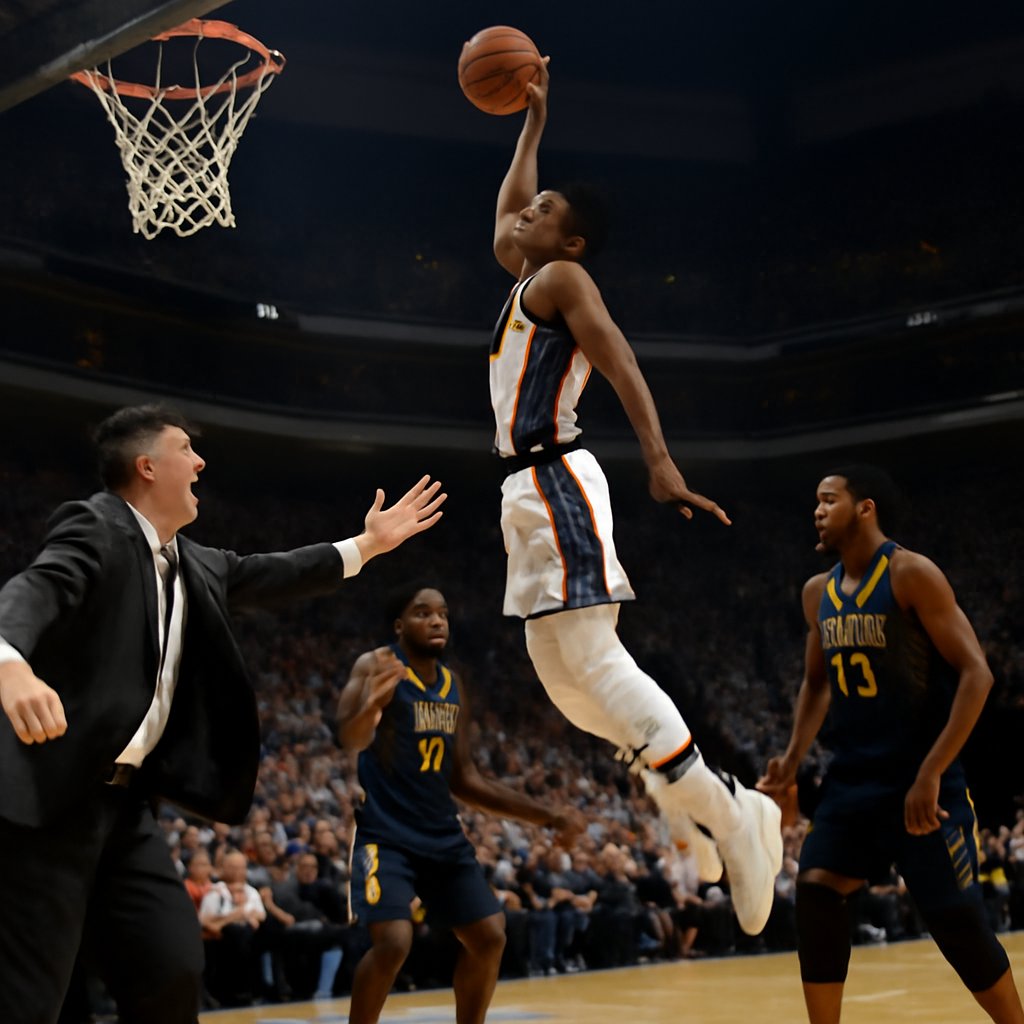
Man, when I think about how coaching schemes have carved out whole eras in the NBA, it hits different because I laced up for four years playing college ball. I know what it feels like to get your spacing destroyed by a defense that reads every cut before you even plant your feet. From the triangle to the pace-and-space wave, these systems didn’t just move numbers—they turned raw talent into something that felt like destiny on the court, especially in Black communities where hoops has always been our proving ground, our escape, our language.
Phil Jackson’s triangle offense ran the 90s and early 2000s like it owned the paint and the perimeter at the same time. Spacing, ball movement, and that post play turned Michael Jordan and Kobe Bryant into forces nobody could stop during those playoff runs. The Bulls averaged 110 points a game in the 1996 Finals, and their assist-to-turnover ratio stayed under 1.5. I still remember watching how Scottie Pippen’s versatility created mismatches that felt personal—like he was playing chess while everybody else was running suicides. Jackson’s crew won six titles in Chicago alone because they adjusted on the fly, reading defenses in real time. The advanced metrics back up what any player who’s been in the gym knows: that blend of post efficiency and perimeter threat still echoes in how coaches build today.
What made the triangle so revolutionary wasn’t just the complexity—it was how it forced ball movement as the foundation of every possession. The system created five potential scoring options at any moment, which meant defenses couldn’t collapse on one player without leaving someone open. Jackson’s adaptation of this offense, which he learned from Tex Winter, demanded that every player understand spacing angles and timing rather than relying on isolation plays. The Lakers’ three-peat from 2000-2002 showcased this perfectly, with Kobe and Shaquille O’Neal operating in harmony through the triangle’s geometric principles. Even as the league moved away from this system, you still see its fingerprints in how modern coaches emphasize ball movement and spacing—the foundational principles never really die, they just evolve.
Then came the small-ball, three-point explosion in the 2010s, pushed by Mike D’Antoni with those Suns teams and Steve Kerr with the Warriors. Transition play and spacing pushed offensive ratings over 115 per 100 possessions in big series. Stephen Curry and Steve Nash stretched defenses so thin their gravity opened up looks that hit 40 percent from deep. Kerr tweaked it when Kevin Durant showed up, and the Warriors’ 2015-2018 run posted margins that still look ridiculous in the books. Analytics started driving substitutions, flipping the script on traditional bigs and favoring versatile wings who could switch everything. In Black neighborhoods, this era felt like a new soundtrack—quick, flashy, and unapologetic, the same way we always played pickup.
The Warriors’ implementation under Kerr took the three-point revolution to levels nobody anticipated. By spreading the floor with multiple shooters, Golden State forced opposing defenses into pick-and-roll coverages that constantly created breakdowns. The “Splash Brothers” era showed that you didn’t need a traditional big man posting up to dominate—you needed shooters who could move without the ball and create advantages through spacing. Their 73-win season in 2015-16 demonstrated that this system could sustain excellence at historically high levels. The offense wasn’t just about shooting threes; it was about using those three-point threats to open driving lanes and create assistance opportunities. Teams that tried to replicate this struggled because they didn’t have the shooting talent or coaching sophistication to make it work consistently. The Warriors’ success forced the entire league to recalibrate how they valued three-point shooting and floor spacing in the draft and free agency.
These days the game leans heavy on hybrid defenses and advanced metrics. Coaches like Erik Spoelstra and Gregg Popovich mix zone with man pressure to drop opponent effective field goal percentages below 52 percent in the playoffs, just like the 2023 Heat showed. Data on pick-and-roll coverage rattled guys like Luka Doncic, while Bam Adebayo’s switchability became the blueprint. Defensive ratings improved by five points per 100 possessions when the right two-way wings filled the roster. The advanced metrics back up what any player who’s been in the gym knows: adaptability beats rigid systems once the postseason grind hits.
Modern defensive philosophy has shifted dramatically toward position-less basketball and switching everything. The Miami Heat’s defensive schemes, orchestrated by Spoelstra, prove that elite defense doesn’t require traditional assignments. By deploying versatile defenders who can guard multiple positions, teams can apply pressure without worrying about mismatches in space. Bam Adebayo’s ability to guard perimeter shooters and still anchor the paint became the gold standard. Gregg Popovich’s San Antonio Spurs set the template years ago with their fundamental switching defense, but now every contender runs variations of this approach. The playoffs consistently reward teams that can defend without fouling, and the data shows a direct correlation between lower foul rates and deeper playoff runs. Teams that master switching also generate more steals and deflections because defenders aren’t caught out of position trying to recover from traditional pick-and-roll rotations.
The numbers tell the story plain. Phil Jackson’s triangle produced 11 championships with a 112.4 average playoff offensive rating. Steve Kerr’s Warriors hit a 124.2 offensive rating in 2016 while chucking over 40 threes a game. Spoelstra’s 2023 Heat finished top-five in playoff defensive rating at 108.7 and held opponents to 38 percent from three. League-wide, three-point attempts jumped from 18.1 per game in 2010 to 35.2 by 2023. Analytics tie into a 15 percent bump in efficient shot selection during Finals runs, and multi-positional defenders rack up 22 percent more steals when the pressure peaks.
Looking at coaching evolution through a structural lens reveals how information flow shapes strategy. In the 90s, coaches relied on film study and scout reports—limited information processed through human interpretation. Today’s coaching staffs employ dedicated analytics departments that process thousands of data points before each game. They know opponent tendencies in specific situations: down three with under two minutes, facing particular defensive coverages, playing teams that have won their last five games. This information granularity allows coaches to game-plan with precision that seems almost unfair compared to previous generations. Yet coaching still requires intuition and leadership—the best coaches synthesize data and human insight into coherent systems that players actually believe in and execute.
The college-to-NBA pipeline has shifted based on these coaching evolutions. Guards who can shoot off screens, big men who can space the floor, wings who defend multiple positions—these are the players worth premium draft picks now. Coaches like Gregg Popovich and Doc Rivers have shown that player development remains critical, but only within systems that match modern NBA requirements. A player can be talented but unemployable if they can’t space the floor or switch defensively in today’s league. This reality has forced college coaches to teach modern spacing and ball-movement principles, creating a feedback loop where high school and college basketball systems mirror NBA coaching philosophies.
Coaching keeps evolving, mixing old-school principles with fresh basketball stats to shape teams that actually develop players instead of just plugging them in. Playoffs still crown the ones who adapt fastest, and the game stays electric because of it.