
Top NBA Rookies Who Became Superstars
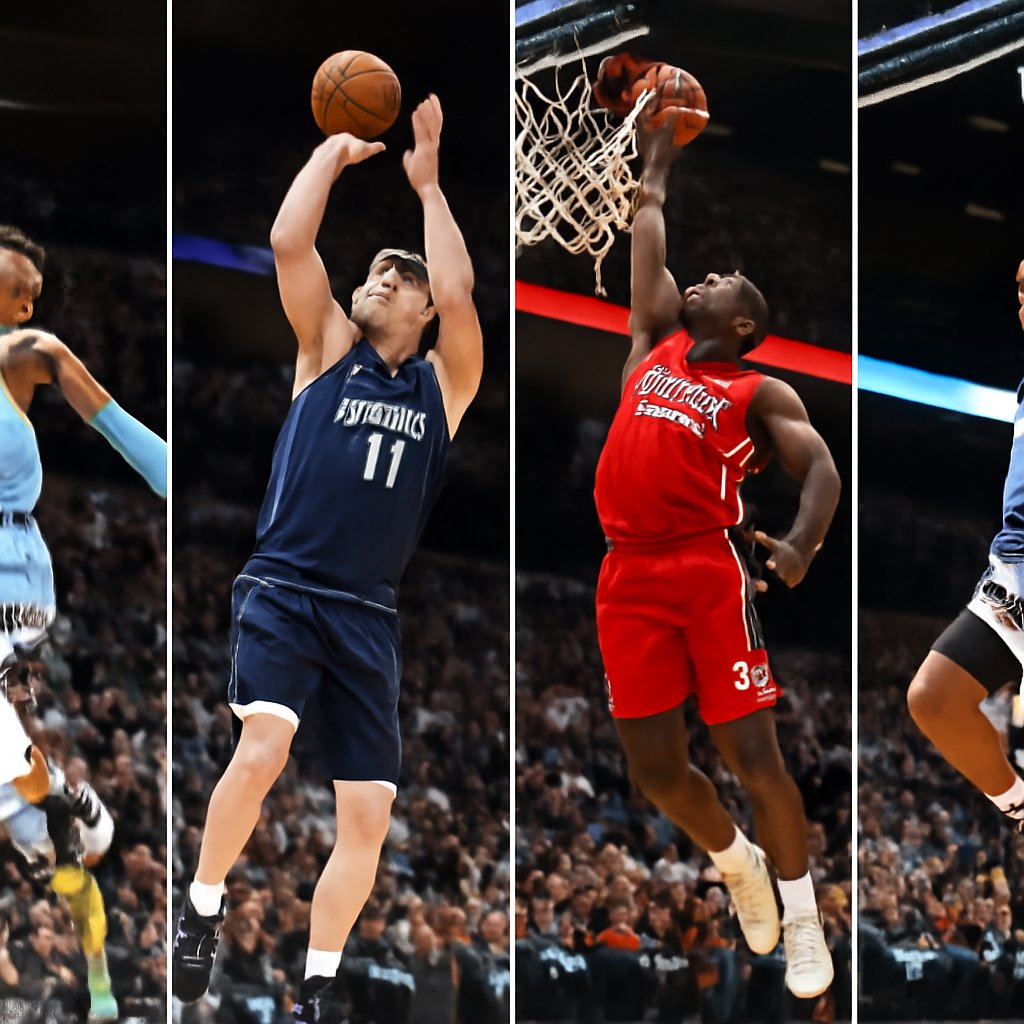
Basketball has always been more than a scoreboard or a highlight reel—it’s the heartbeat of neighborhoods, the way families gather on summer evenings, and the bridge that carries stories from one generation to the next. These rookies didn’t just post numbers; they walked into arenas carrying the hopes of their communities and then turned those early seasons into legacies that still ripple through both the NBA and the WNBA today.
Michael Jordan arrived in Chicago in 1984 as the third overall pick and immediately averaged 28.2 points, 6.5 rebounds, and 5.9 assists. That scoring explosion didn’t just lift a struggling Bulls franchise; it gave young players in city gyms something tangible to chase. The game has always been bigger than stats, and Jordan’s mid-range mastery forced defenses to adjust in ways that still echo in how coaches teach footwork to this day. What made Jordan’s rookie season even more remarkable was his ability to perform in crucial moments. He logged heavy minutes on a team that finished with a 38-44 record, yet his individual brilliance was undeniable. In his second season, those wins jumped to 47, with Jordan’s improved efficiency and leadership making the difference. He would go on to win the Rookie of the Year award, a launching pad for nine All-Star appearances and the six championships that would define the 1990s.
Magic Johnson, taken first overall in 1979, posted 18.0 points, 7.7 rebounds, and a league-leading 7.3 assists while showing a vision that stretched the floor for everyone around him. What gets lost in the highlights is how his blend of size and leadership modeled a style of play that later showed up in the WNBA’s emphasis on unselfish ball movement and big-guard versatility. Magic’s rookie season with the Lakers was marked by immediate chemistry with Kareem Abdul-Jabbar, and together they formed one of the most dynamic duos in basketball history. His ability to facilitate from the point forward position predated modern small-ball lineups by decades, and coaches across the league began to rethink how to deploy tall ball handlers. The Lakers won 60 games in Magic’s first year and captured the championship, with the young point guard showing composure that belied his age. His willingness to defer to teammates while still creating scoring opportunities set a template for successful team basketball that remains relevant today.
LeBron James entered Cleveland in 2003 averaging 20.9 points, 5.5 rebounds, and 5.9 assists while playing heavy minutes. His all-around game turned a lottery team into a playoff contender in just two seasons, and the maturity he displayed in those early playoff moments hinted at the four MVPs and four titles that would follow. Young athletes watching him understood that excellence could look like both scoring and lifting teammates. LeBron’s physical tools were extraordinary—his combination of size, speed, and basketball IQ made him a nightmare matchup from day one. The Cavaliers immediately went from 17 wins to 35 in his rookie season, demonstrating the transformative power of elite talent. His 2004-05 sophomore season saw him average 27.2 points per game, signaling that his rookie campaign was no fluke. The teenager who declared straight from high school proved that preparation and work ethic could bridge any experience gap, and his decision to return to Cleveland after his Miami years cemented his legacy as a franchise cornerstone rather than a mercenary.
Kobe Bryant joined the Lakers at 18 after being drafted 13th in 1996. Limited minutes kept his rookie scoring at 7.6 points, yet the explosiveness was already there. Over time that promise became 33.0 points per game in his prime, five championships, and 18 All-Star nods. His defensive tenacity and isolation scoring reminded us that growth in this league often happens in the quiet hours when no one is watching. Kobe’s patient trajectory is instructive for modern players and scouts alike. Rather than demanding immediate stardom, he absorbed knowledge from Shaquille O’Neal and Phil Jackson, learning the nuances of footwork and defensive positioning. By his third season, he was averaging 19.9 points and demonstrating the kind of two-way excellence that would define his career. His willingness to come off the bench as a rookie and earn playing time through effort set a professional standard that influenced how young players approach their debuts. The work ethic Kobe displayed in practice—staying after games to work on footwork, film sessions with coaches—became as legendary as his performances, showing that exceptional talent still requires relentless refinement.
Steph Curry arrived in Golden State in 2009 as the seventh pick and averaged 17.5 points with 5.3 assists despite injury setbacks. Those 166 threes he made as a rookie were early signs of the spacing revolution he would lead to four titles. In the WNBA we’ve seen similar gravity from players whose shooting stretches defenses and creates room for teammates to shine, proving Curry’s influence crossed every league line. Curry’s path to stardom was complicated by ankle injuries that limited his minutes in his first season, but what was apparent to anyone watching was his revolutionary approach to three-point shooting. He wasn’t just taking threes; he was attempting them from distances that were previously considered irrational. His 40.2% three-point percentage as a rookie—on high volume—signaled that the game was about to change. When he stayed healthy, his impact skyrocketed. In 2011-12, his third season, Curry averaged 22.9 points while shooting 45.4% from three, and by 2014-15 he was launching a record 11.2 three-pointers per game while winning his first MVP. His success vindicated the Warriors’ faith in his potential and opened the eyes of every franchise in the league to how the game could be played with proper spacing and shooting skill.
Tim Duncan came to San Antonio in 1997 as the first overall pick and delivered 21.1 points, 11.9 rebounds, and 2.5 blocks while winning Rookie of the Year. His steady post play anchored a defense that produced five championships. Consistency like his doesn’t always trend on social media, but it builds the kind of franchise stability that lets entire communities plan their summers around playoff runs. Duncan’s success was built on fundamentals that could seem boring in highlight reels but proved invaluable in winning basketball. His footwork in the paint, his timing on shot blocking, and his positioning on defense made him nearly unstoppable once he understood the subtleties of NBA play. The Spurs went from a 20-win season to 56 wins with Duncan’s arrival, one of the most dramatic single-season turnarounds in league history. His willingness to be coached, to accept feedback, and to constantly work on his craft set the standard for young players entering the league. Duncan’s reliability allowed Pop to build a system rather than a collection of stars, proving that sustained excellence flows from character and dedication rather than flash.
The numbers tell part of the story: Jordan’s 28.2 points helped add eleven wins to Chicago’s total; LeBron’s 20.9/5.9/5.5 line still sets benchmarks for versatile rookies; Curry’s three-point volume hinted at the revolution ahead; Duncan’s double-double anchored a 56-win Spurs season; Kobe’s early playoff minutes revealed defensive versatility that later earned two Finals MVPs; and Magic’s 7.3 assists per game fueled the Lakers’ fast-break identity. But what these statistics really represent is the beginning of mastery. Each of these players understood something profound about their craft even as rookies—whether it was the footwork that would carry Jordan through 20 seasons, the vision that allowed Magic to elevate teammates immediately, the versatility that made LeBron dangerous on every possession, or the shooting range that Curry would eventually extend to 40 feet.
The common thread running through all these rookie seasons is the combination of natural ability and professional approach. These players weren’t simply talented; they were students of the game who demanded excellence from themselves and their teammates. They understood that individual statistics were secondary to team success, that championships required sacrifice, and that their performance set the tone for everyone around them. Young players entering the league today still study the tape of these rookies, not just for the highlight-reel moments but for the fundamentals, the footwork, and the discipline that underpin greatness.
These paths show how rookie excellence, playoff poise, and genuine investment in teammates create legacies that outlast any single season. They remind us that basketball’s greatest gift is the way it turns individual promise into shared pride