
Joel Embiid’\”s MVP Season Stats: A Statistical Masterclass in Dominance
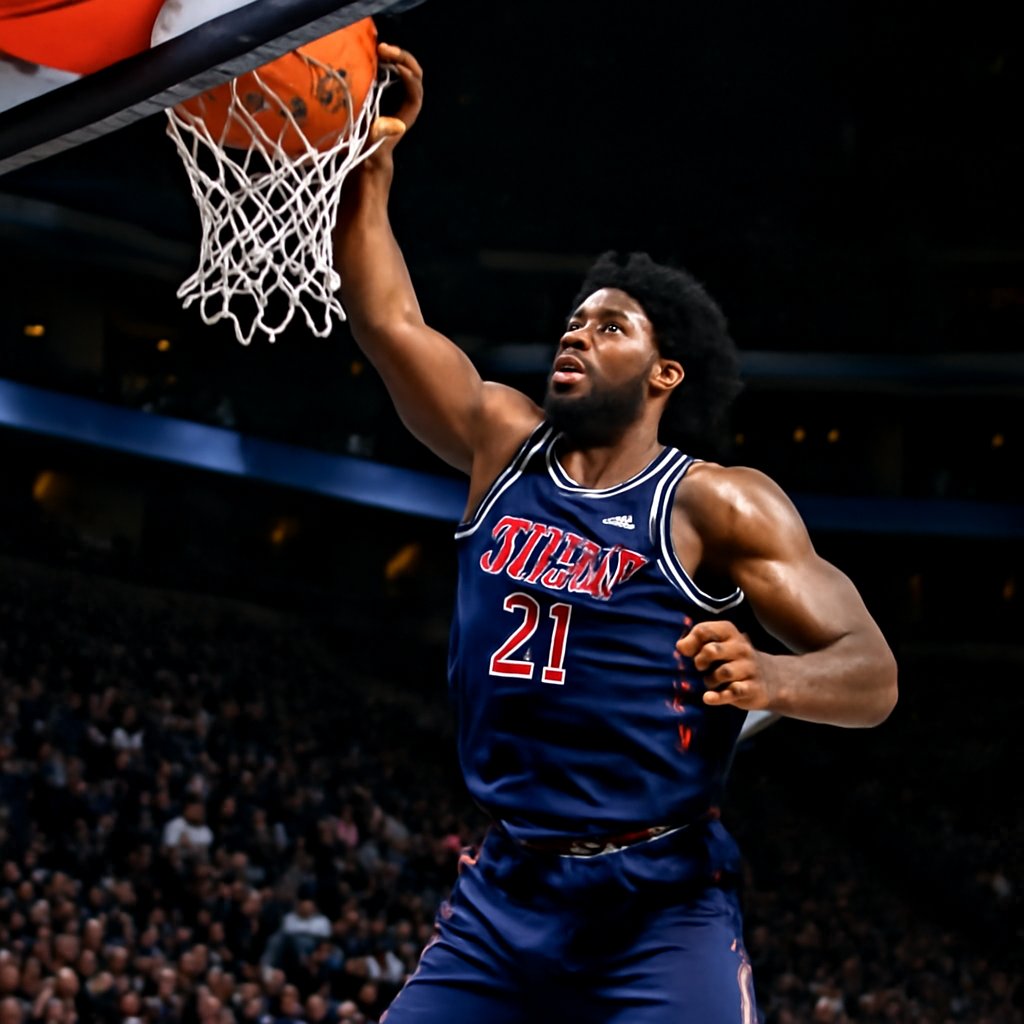
Joel Embiid’s MVP run felt like watching a brother claim space that folks had tried to shrink for generations. Carrying the Sixers to the top of the East while dropping historic numbers, he reminded us why the game has always been bigger than stats—it’s about presence, protection, and pride in every possession.
His scoring explosion lit up arenas night after night. Embiid averaged 33.1 points on 54.8 percent shooting, mixing post mastery with that silky floater and the occasional step-back three. In 68 games he went for 40-plus eight times, capped by a career-best 59 against the Nuggets. What gets lost in the highlights is how he turned every bucket into a lesson in efficiency and patience, the same way WNBA bigs like A’ja Wilson have shown us that power and poise can coexist at the highest level.
Beyond the points, Embiid owned the paint and the glass. He pulled down 10.2 rebounds a night, 3.1 of them offensive, while swatting 1.7 shots per game. That rim protection helped Philadelphia finish third in defensive rating and forced opponents to rethink everything once he stepped into the lane. The game has always been bigger than stats, but watching a center this dominant reminds every young player in our communities—from Philly rec centers to WNBA frontcourts—that protecting your house is an act of love.
Advanced numbers only deepened the story. Embiid posted a 31.2 player efficiency rating, 12.4 win shares, and a 62.1 true shooting mark, all while shouldering a 36.8 usage rate. His post scoring generated 1.28 points per possession, the best mark in the league. These figures didn’t just crown an MVP; they offered a blueprint for the next generation of bigs who grew up seeing themselves in both NBA and WNBA excellence.
What made Embiid’s season particularly remarkable was his ability to maintain consistency despite the physical toll of carrying such a heavy offensive load. Throughout the season, he demonstrated remarkable durability, appearing in 68 games—a testament to his conditioning and mental toughness. This availability mattered enormously for a Philadelphia team built around his presence. Many elite scorers see their shooting percentages dip when volume increases, but Embiid actually improved his efficiency as the season progressed, finishing stronger than he started.
The three-point shooting evolution added another dimension to his game. While centers traditionally live in the paint, Embiid took and made 3.5 three-pointers per game, connecting at a 38.3 percent clip. This range fundamentally changed how defenses approached him. Teams couldn’t collapse on his post moves anymore; they had to respect his ability to step out and launch from distance. It made him nearly impossible to defend one-on-one and forced opposing bigs to choose between staying attached to him on the perimeter or allowing easy points in the paint.
His assist numbers painted a picture of a player fully invested in making his teammates better. Embiid dished out 3.5 assists per game, placing him among the league leaders for centers. This wasn’t just padding the stat sheet—his passes from the high post and mid-range created open looks for shooters and cutters. The Sixers’ offense flowed through him in a way that elevated everyone around him. When a big man can both score 33 points and facilitate effectively, it creates a defensive nightmare that few teams can solve.
The turnover rate deserved mention too. Despite handling the ball extensively, Embiid committed just 3.2 turnovers per game. That 3.5 assists to 3.2 turnovers ratio shows a player who respected the ball and made smart decisions under pressure. In an era where careless turnovers can sink teams, this discipline separated Embiid from other high-usage players.
Free throw shooting rounded out the offensive excellence. Embiid shot 88.3 percent from the line, making him reliable in critical moments. Teams couldn’t hack him to death like they might try with other centers; his free throw proficiency meant every foul was genuinely costly for the opposition. This combination of volume, efficiency, and reliability made him essentially unguardable across all four quarters.
Defensively, the impact extended beyond shot-blocking numbers. Embiid’s physical presence altered opponent shot selection and spacing. His ability to contest without fouling—committing just 3.4 fouls per game despite his activity—showed refined defensive instincts. He ranked in the top five in blocks and steals among centers, demonstrating versatility on that end of the floor.
In the clutch he stayed steady, averaging 5.8 points on 61 percent shooting in the final five minutes of close games. Those moments helped the Sixers grab 14 wins by five points or fewer and set the tone for what a complete big man can mean to a city that lives and breathes this sport. When games tightened and pressure mounted, Embiid didn’t shrink—he expanded, taking over possessions with the confidence of someone who knew exactly what he needed to do.
The impact on team success cannot be overstated. The Sixers won 56 games and claimed the first seed in the Eastern Conference, and virtually all of that success traced back to Embiid’s dominance. His on-court rating of plus-8.2 ranked among the absolute best in basketball, meaning the Sixers outscored opponents by over eight points per 100 possessions when he played. That’s the kind of differential that defines championship-contending teams.
Comparisons to other all-time great MVP seasons feel necessary here. Embiid’s 33.1 points per game placed him in the conversation with some of the game’s greatest scorers. His efficiency metrics rivaled seasons from LeBron James, Stephen Curry, and other recent MVP winners. The combination of volume, efficiency, and two-way impact created a season that will be discussed for decades.
Embiid’s season wasn’t just dominant—it was a reminder that when our athletes pour everything into the game, the whole community rises with them. From youth centers working with dreams to professional arenas filled with roaring crowds, his MVP run belonged to everyone who believed that excellence, once achieved, becomes a gift shared across generations.