
Luka Doncic Career Assists Stats: The Maestro’\”s Playmaking Legacy
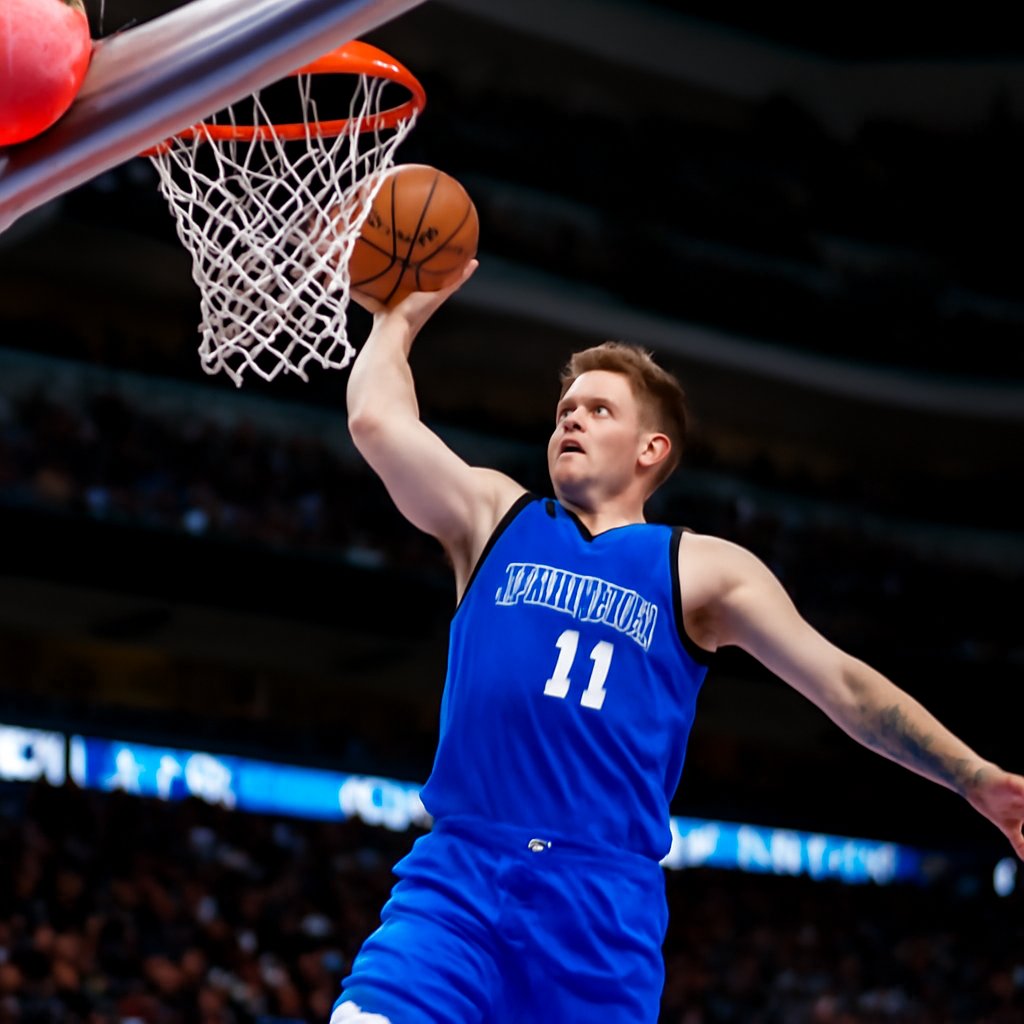
Luka Doncic has carved out his space among the league’s true floor generals, the kind whose eyes see two plays ahead while the defense is still scrambling to react. His gift for finding teammates isn’t just about racking up numbers—it’s about lifting the whole squad, game after game, the same way so many sisters in the WNBA have done for years. From those no-look dishes to the perfectly timed lobs that turn sprints into buckets, his passes carry a rhythm that feels rooted in the community courts where basketball first teaches you to share the rock.
The game has always been bigger than stats, and Luka’s career assist average of 8.1 per game tells only part of the story. Paired with nights when he drops 28-plus, those dimes show a player who understands that real power comes from making everyone around him better. Across his time in the league he’s already cleared more than 3,200 assists, and the number keeps climbing because he treats every possession like it belongs to the collective, not just himself.
What gets lost in the highlights is how consistently he protects the ball while creating—maintaining an assist-to-turnover ratio above 2.0 in several seasons. More than 120 games with double-digit assists, and counting. Those moments don’t just fill box scores; they echo the way basketball has always served as a language of trust in neighborhoods that needed something to believe in.
Come playoff time, the pressure only sharpens his vision. Luka’s assist average jumps to 8.7 when the lights get brightest, a reminder that some players grow louder when the stakes rise. The same adaptability we celebrate in WNBA postseason runs shows up here too—defenses pack tighter, rotations get quicker, and he still finds the open shooter or the rolling big with surgical precision. Fast-break assists become even more valuable, turning transition chaos into controlled beauty.
His signature nights—17 assists in one outing, multiple 15-dime explosions alongside 30-point outbursts—cement a legacy built on generosity as much as dominance. Over 80 triple-doubles and counting, many powered by that passing volume, prove he’s not chasing individual glory alone. He’s building something bigger, the way legends before him did on the blacktops that raised this sport.
Stacked against today’s top facilitators, Luka holds his own in the top 10 for career assists per game among active guards while carrying a scoring load most pure distributors never touch. That blend forces defenses to respect his shot first, which opens lanes others rarely see. It’s the same unselfish math that has long defined excellence on both sides of the gender line in our game.
When examining Doncic’s playmaking trajectory through his NBA career, the progression reveals a player constantly refining his craft. In his rookie season with the Dallas Mavericks, he averaged 5.9 assists per game—solid for a 19-year-old asked to shoulder primary scoring responsibilities. But what’s remarkable is how that number climbed year after year. By his third season, he had pushed that average above 8.0, demonstrating both improved court vision and increased trust from head coaches to run the offense through him more frequently. This wasn’t a sudden leap but rather the natural evolution of a player who studied the game’s angles and spacing with obsessive detail.
The European influence on Doncic’s game cannot be understated when discussing his passing prowess. His time with Real Madrid, where he won a EuroLeague championship, taught him a style of basketball rooted in ball movement and team play. The Spanish league’s emphasis on crisp passes, weak-side movement, and transition efficiency shaped his foundational approach to finding teammates. These principles transferred seamlessly to the NBA, where he’s used them as building blocks for his own system. Watching him orchestrate pick-and-roll actions with DeAndre Jordan, Kristaps Porzingis, or other big men reveals a mastery of angles and timing that feels almost orchestral in its precision.
His effectiveness as a passer goes beyond simple counting statistics. Advanced metrics like true assist rate—which credits a player for creating a score even if another pass precedes the basket—show Doncic generating opportunities at an elite level. His gravity as a scorer means defenses collapse on him, and his patience in those moments separates the good passers from the truly great ones. Rather than forcing the issue when trapped, he often finds the open man with a one-dribble kick-out or a threading pass through congested paint. This decision-making, the ability to know when to push and when to reset, develops through thousands of repetitions and a basketball intelligence that can’t be taught.
The relationship between Doncic’s scoring volume and his assists tells an important story about ball-dominant playmakers. For comparison, there are guards in NBA history who averaged fewer points but more assists because offenses were structured purely around their passing. Doncic’s uniqueness lies in being a high-volume scorer who also generates for others at elite levels. When he takes 25 shots in a game, those possessions don’t translate to assist opportunities. Yet he still manages to average above 8.0 dimes. If he played in a pure facilitator role, that number could conceivably climb significantly higher. This contextual understanding matters when evaluating his true passing impact.
Doncic’s assist numbers in clutch moments—the final six minutes of close games—show his composure when the margin tightens and defenses become more focused. These aren’t the wide-open looks created by early-game pace or transition situations. These are half-court sets where every defender is locked in, rotations are synchronized, and one read ahead isn’t enough—you need to see the counter play before the defense reacts. His clutch assist rate actually improves during these moments, suggesting he thrives in the compressed space where execution matters most.
The impact of coaching on assist totals shouldn’t be overlooked either. Rick Carlisle’s system during Luka’s early years emphasized player movement and encouraged his primary ballhandler to be creative. The subsequent coaching transitions have maintained structural support for high-volume passing, allowing Doncic’s numbers to remain consistent even as personnel changes around him. A playmaker is only as effective as the system designed to feature him and the teammates willing to cut, relocate, and take open shots.
Looking forward, Doncic’s assist trajectory will be worth monitoring as he enters his prime years. Historical precedent suggests elite playmakers often see slight upticks in assist volume in their peak seasons before potential decline in later years. If he maintains his current pace and the Mavericks continue investing in capable shooters and athletes who can finish in transition, reaching 4,000 career assists during his mid-20s isn’t out of the question. The ceiling on his career assist total could place him among the all-time greats in franchise history and comfortably in the upper echelon of modern NBA playmakers.
Young players studying film of Doncic’s passing game will find countless teaching moments. His left-hand bounce passes on the baseline, his no-look feeds that actually serve a purpose rather than exist for flash, his behind-the-back passes executed from triple-threat position—these are all weapons in an expanding arsenal. What separates his playmaking from spectacular but inefficient passes is consistency. He’s not trying to create the highlight reel moment; he’s trying to create the best outcome for his team.
As he keeps sharpening his craft and deepening connections with teammates, the assist totals will keep rising. Fans can expect more nights where his passing writes the story of a franchise and, in its own way, keeps the culture of shared success alive for the next generation watching from the stands or the stoop.