
Damian Lillard: Mastering Points and Assists Throughout His Illustrious Career
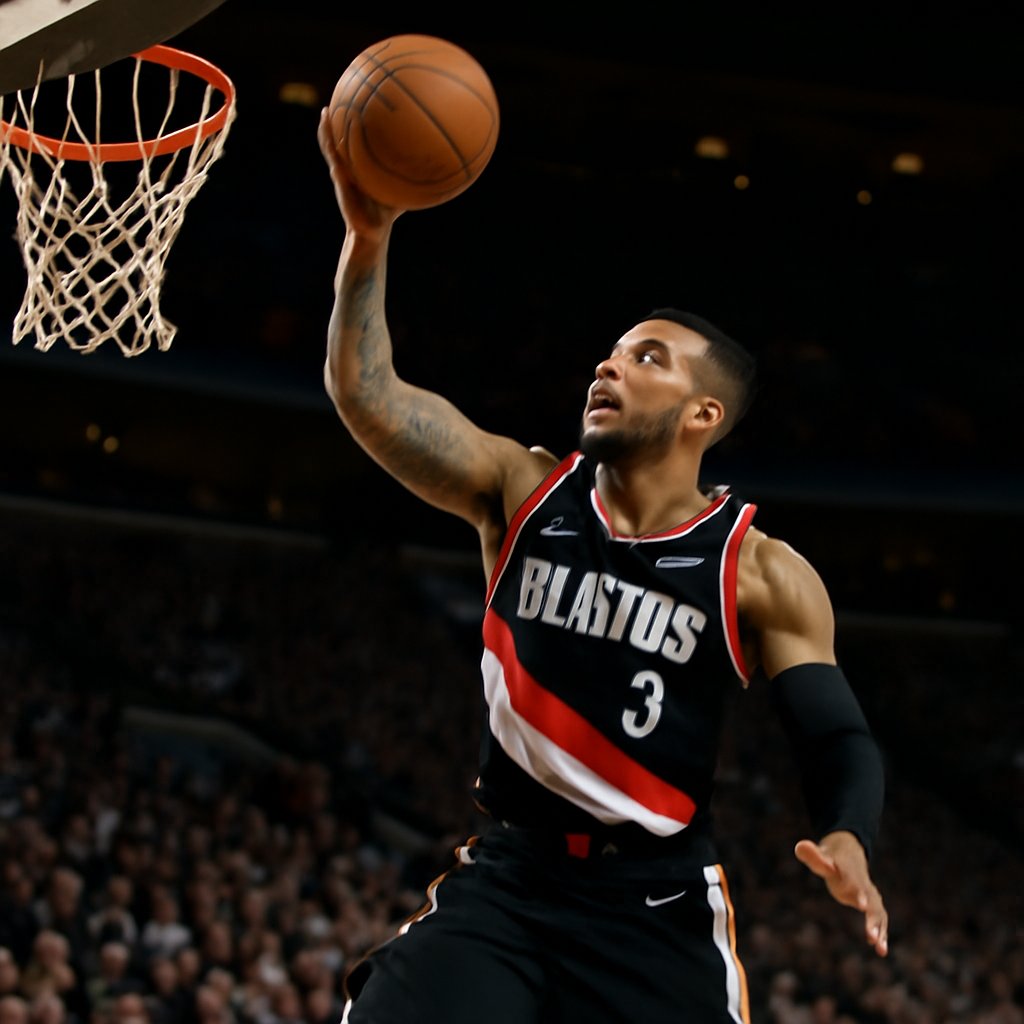
Damian Lillard has built one of those careers that makes you stop and nod when you see the numbers roll across the screen. Over 20,000 points and more than 5,500 assists tell the story of a guard who can both put the ball in the basket from anywhere and keep his teammates involved at an All-Star level. I laced up for four years playing college ball, so I know what it feels like to carry the scoring load one night and then have to flip the switch and set up others the next. That dual demand lives in every possession Lillard plays.
His scoring sits right around 24.8 points per game across more than 800 contests, with over 1,800 made threes and a free-throw mark north of 89 percent. Those step-back threes and pull-up jumpers have produced multiple 50-point nights, the kind of outbursts that used to light up the blacktop courts back home when we were kids dreaming of making it out. The advanced metrics back up what any player who has been in the gym at 6 a.m. already senses: Lillard’s volume never came at the expense of efficiency. He stayed a constant threat even when defenses sold out to stop him.
The assist side of the ledger shows the same discipline. Roughly 6.5 assists per game and peaks above eight while still averaging 25-plus points illustrate how he reads the floor. High assist-to-turnover ratios and his vision in transition turn broken plays into easy buckets for wings and bigs. In Black American communities, basketball has always been more than highlights; it is the language we use to talk about trust, timing, and lifting the group. Lillard’s hockey-assist setups and decision-making under pressure reflect that same understanding.
Reaching the 20,000-point club while climbing the all-time assists list among guards puts him in rare company. Multiple 2,000-point seasons and combined points-assists games where he dominates both columns show the sustained excellence that separates the greats. When defenses load up to take away his shot, his assists rise. When they sag, he punishes them from deep. That symbiotic effect raises the entire team’s offensive rating, exactly what the numbers have shown throughout his career.
Lillard’s presence forces constant adjustments, creating mismatches that ripple through game plans the way a strong point guard used to change the feel of an entire neighborhood pickup run. His blend of scoring gravity and playmaking vision keeps him among the most complete offensive engines in the league, and the stats simply confirm what the eye already sees.
What separates Lillard from many high-volume scorers is his consistency across different eras of the game. When he entered the league in 2012 after being drafted sixth overall by Portland, the three-point line wasn’t nearly as central to offensive schemes as it is today. Yet Lillard adapted seamlessly, understanding that range extended the court and created space for cutters and roll-men. His willingness to evolve his game—adding pull-up threes, stepback jumpers, and mid-range floaters—kept him relevant and dangerous even as defenses became more sophisticated.
The Blazers organization built their entire offensive system around Lillard’s capabilities during his tenure in Portland. Playing alongside All-Stars like LaMarcus Aldridge early in his career, and later with CJ McCollum, Lillard demonstrated an ability to complement elite talent while still maintaining his own scoring efficiency. His true shooting percentage consistently hovered in the 57-59 percent range, which for a primary ball-handler and high-volume three-point shooter represents elite-level efficiency. The defensive responsibility of guarding Lillard often falls to opposing teams’ best perimeter defenders, yet he still manages to get his looks and create for others.
One aspect that deserves deeper examination is Lillard’s performance in high-leverage situations. Clutch-time statistics show a player unafraid of the moment. His willingness to take—and make—game-winners from 40-plus feet out has become almost expected at this point. The famous “Dame Time” moments, like his playoff buzzer-beater against Oklahoma City, demonstrate a mental toughness that transcends what traditional stat sheets can capture. These are the plays that teammates remember, that build chemistry, and that elevate winning cultures.
His assist numbers become even more impressive when you consider the number of possessions Lillard ends with made shots rather than passes. A player who scores 25 points per game typically has fewer opportunities to rack up assists compared to a true pass-first point guard. Yet Lillard still finds ways to orchestrate offenses, reading pick-and-roll situations and making the right decision between attacking himself or finding the open man. His basketball intelligence allows him to operate in multiple offensive sets, from high-screen actions to dribble hand-offs and spot-up situations.
The trajectory of Lillard’s career also reflects his development as a leader and veteran presence. Early in his career, he was often characterized as a pure scorer—the guy who got buckets and not much else. But over time, coaching staff and teammates recognized his expanded role. He became a vocal leader in the locker room, someone who understood the nuances of team basketball beyond his statistical contributions. His presence in the franchise elevated not just the Blazers’ win-loss record but also the expectations and professionalism of the entire organization.
Looking at Lillard’s efficiency from different three-point distances reveals another layer of mastery. His comfort from 35-40 feet—and even beyond—puts pressure on defenses in ways that shorter-range volume shooters cannot. Teams must decide whether to extend far off the ball, opening driving lanes and corner three opportunities, or play closer and risk giving Lillard space in his optimal range. This spatial awareness and ability to impact the game without always having the ball in his hands showcases elite-level basketball IQ.
The durability factor cannot be overlooked either. Playing over 800 games while maintaining near-peak performance shows a commitment to conditioning, injury prevention, and smart load management. Guards who score and distribute at Lillard’s volume often see their efficiency drop in their later seasons, but Lillard has defied that trend through intelligent play-selection and continued investment in his physical and mental preparation. His longevity speaks to the thoroughness of his approach to the game.
Lillard’s impact on the modern NBA’s three-point revolution cannot be understated. He emerged during a transitional period and proved that a primary ball-handler could live beyond the arc without sacrificing team success. Younger guards coming into the league now have a blueprint that Lillard helped establish—the idea that you don’t have to choose between deep range and playmaking, between volume and efficiency, between individual excellence and team basketball.