
Kevin Durant’\”s Career Scoring Average: Breaking Down the Scoring Legend’\”s Numbers
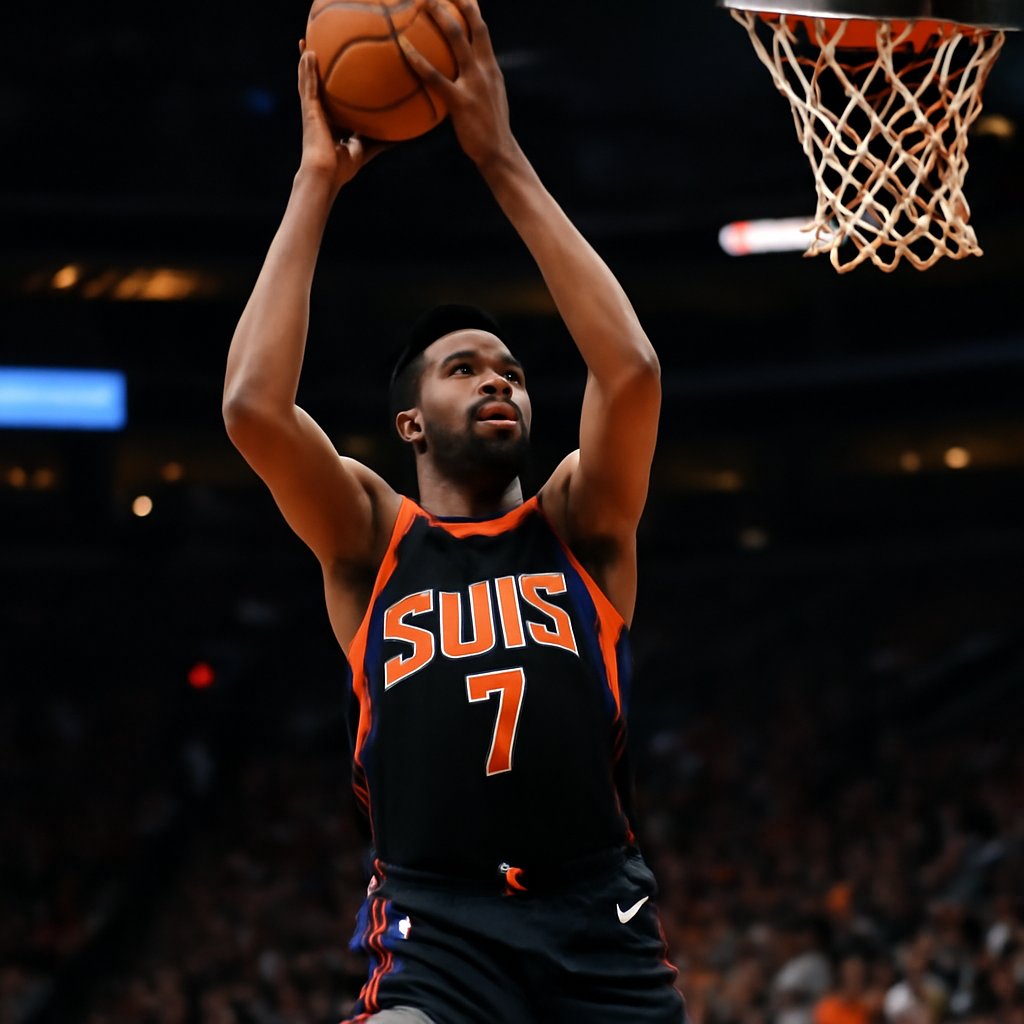
Kevin Durant’s journey through the league has always been about more than just putting the ball in the bucket, though the numbers tell a story all their own. From his first steps in Seattle to the way he’s still cooking in Phoenix, KD has shown how a 7-foot frame and guard instincts can reshape what scoring looks like for generations coming up behind him. The game has always been bigger than stats, and his path carries echoes of the same pride and resilience we see lighting up courts from the neighborhoods to the WNBA, where players like A’ja Wilson and Breanna Stewart are redefining efficiency with their own blend of size and skill.
In those early Seattle days, Durant arrived with the SuperSonics and averaged 20.3 points as a rookie, already hinting at the perimeter threat he’d become. By year two he bumped it to 25.3, adding volume while keeping his touch. What gets lost in the highlights is how those foundational years in a smaller market helped shape a scorer who understood the weight of carrying a franchise on young shoulders.
Once the team landed in Oklahoma City, his game took flight. He climbed to 27.7 points by his third season there, then 28.0 the next, mixing improved three-point shooting with that unstoppable mid-range pull-up. The Thunder years cemented him as the kind of first option who could iso anybody or spot up in the corners, the kind of production that feels like home-court pride on full display.
Joining Golden State in 2016 shifted things toward even sharper efficiency. His career mark stayed right around 27.0, but true shooting percentages climbed over 63 percent in stretches as the spacing around him opened new windows. Those championship runs in 2017 and 2018 brought 28.3 and 29.0 regular-season averages, plus that unforgettable Finals MVP where he dropped 35.2 per game on pristine splits. It’s the same kind of basketball IQ we celebrate when WNBA teams run beautiful off-ball actions that turn good scorers into unstoppable ones.
Brooklyn and then Phoenix tested the durability of that production amid injuries and roster shifts. Still, he delivered multiple seasons above 29 points, including 29.9 in 2021-22, and has held steady near 27-28 in Phoenix while fitting into a more spaced-out system. Watching him adapt at this stage reminds us how basketball’s community stretches across eras—mentors passing down the lessons that keep the culture thriving.
Over more than 1,000 games, Durant has cleared 27,000 points with that 27.0 career average. He owns four scoring titles and 11 seasons at 25 or better. His playoff line sits at 28.2, with multiple series where he cleared 30. And those 50-40-90 seasons stand out as proof that volume and efficiency can walk together. What sets his scoring apart is the rare mix of length and handle that lets him attack every spot on the floor. Mid-range and three-point marks rank elite for someone carrying that usage, and his game has aged with smarter shot selection rather than fading athleticism. That quiet evolution carries the same cultural pride we feel when the next wave of wings—whether in the NBA or WNBA—builds on the foundation he helped lay.
The evolution of Durant’s scoring efficiency throughout his career deserves deeper examination. When he first joined the Thunder, Durant was still establishing himself as more of a high-volume scorer working within the team’s system. However, once he had the chance to develop in a more structured basketball environment, his efficiency metrics improved dramatically. His three-point shooting percentage rose from 34.4% in his early seasons to peaks above 40% during his Warriors tenure, fundamentally changing how opposing defenses had to guard him. This evolution wasn’t accidental—it reflected intentional work on his craft and an understanding that true dominance comes from smart scoring, not just volume.
What makes Durant’s scoring prowess even more remarkable is his consistency across different scoring methods. His breakdown shows nearly balanced offensive production: he’s been a reliable catch-and-shoot threat from three, lethal on mid-range pull-ups, and nearly unstoppable in isolation situations. Few players have ever demonstrated such versatility at an elite level. This versatility has allowed him to thrive in different offensive systems, whether running the pick-and-roll heavy approach in Oklahoma City or the more spacing-dependent Warriors system. His ability to score through different mechanisms—spot-up threes, drive-and-kicks, post-ups, and transition opportunities—makes him nearly impossible to game-plan against.
The injury challenges Durant has faced in recent seasons add another layer to appreciating his scoring legacy. When he returned from his Achilles tear with the Nets, many questioned whether he could maintain his scoring efficiency. Instead, he proved that superb basketball IQ and technique can compensate for lost athleticism. His scoring actually remained elite even as he dealt with lingering injuries, demonstrating mental toughness that separates all-time greats from merely very good players. This is a lesson for younger scorers in the league—the best shooters often develop their skills so completely that even with less-than-peak athleticism, they can still compete at the highest levels.
Comparing Durant’s scoring to other modern wings and versatile big men provides context for his greatness. While LeBron James has similar career longevity, Durant has maintained a higher career scoring average. Compared to other wing scorers like Carmelo Anthony, Durant’s efficiency is markedly superior while maintaining similar volume. What Durant accomplished was matching prolific scoring volume with elite efficiency—a combination that has proven exceptionally rare in NBA history. Only a handful of players have maintained both 27+ PPG averages and 50% field goal shooting over extended stretches of their careers.
The tactical implications of Durant’s scoring evolution also merit consideration. His development as a three-point shooter forced NBA teams to completely rethink how they defend wings and power forwards. Before Durant proved that a 7-footer could be a consistent three-point threat at volume, conventional wisdom suggested that bigs should play closer to the basket. His success in redefining positional roles influenced everything from draft strategy to player development across the entire league. Young tall players now work extensively on their perimeter games specifically because Durant showed it was possible to be both a traditional post threat and a modern three-point weapon.
In the Phoenix Suns system alongside Devin Booker and Chris Paul (and later, as the team evolved), Durant found a different role than during his earlier superstar seasons. Yet his scoring remained effective, which speaks to his basketball intelligence. Rather than forcing volume, he adapted to the offensive flow, accepting slightly lower usage rates in exchange for higher efficiency. This maturation process demonstrates how great scorers must continue evolving rather than relying on past formulas. His ability to score 27-28 PPG in a more fluid offensive system showcases that elite scoring ability is about knowing when and how to attack, not just how often you take shots.
Looking at Durant’s statistical profile through advanced metrics reveals even more about his dominance. His Player Efficiency Rating (PER) has regularly ranked among the league’s elite, and his True Shooting Percentage spikes above 62% in his best seasons—extraordinary numbers when considering his volume. These advanced metrics confirm what the eye test shows: Durant doesn’t just score a lot; he scores with remarkable efficiency. For coaches and analysts developing young scorers, Durant’s combination of volume and efficiency represents the gold standard to pursue.