
Michael Jordan Greatest Finals Performances Analysis
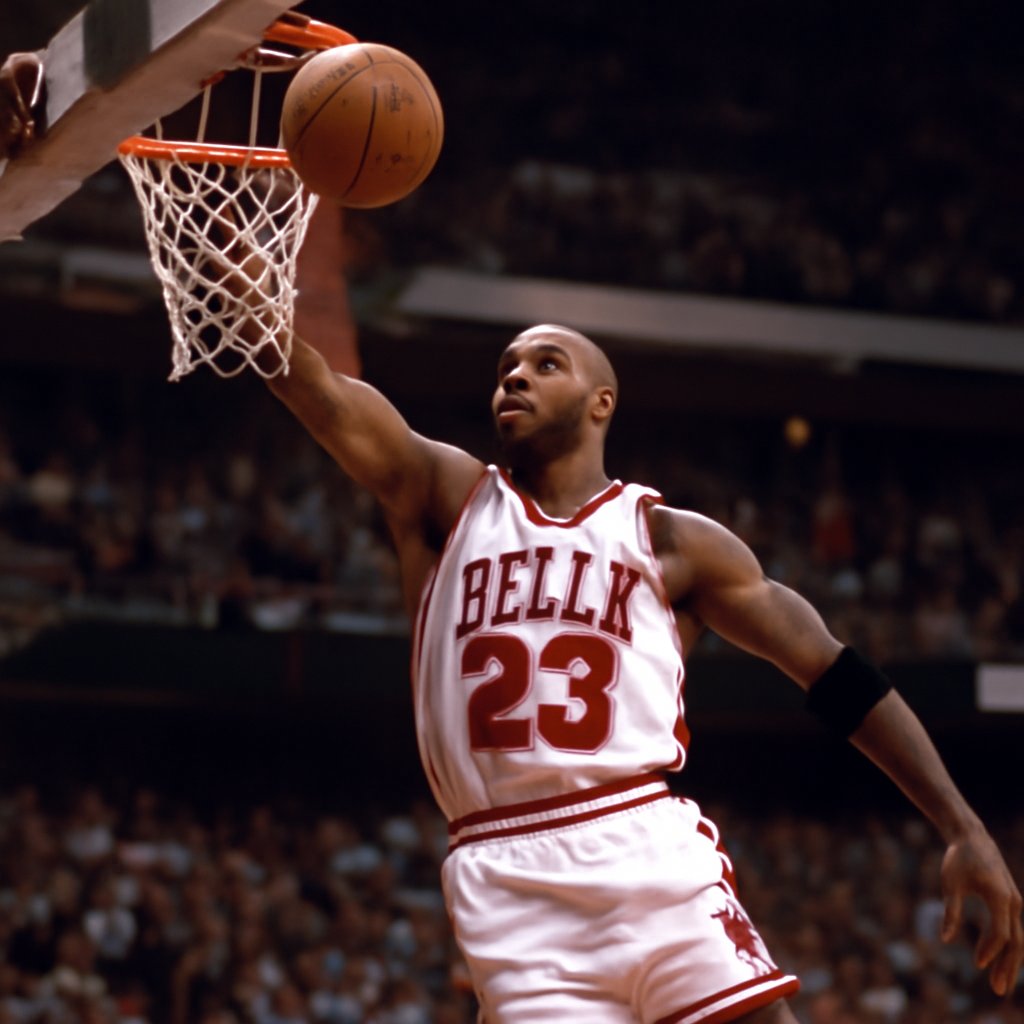
Man, when you break down Michael Jordan’s greatest Finals performances, it hits different because he set the bar for what it means to dominate when everything’s on the line. I laced up for four years playing college ball, so I know the physical toll and the mental edge you need in big moments, and Jordan’s six championship runs with the Bulls still stand as the gold standard. From scoring explosions to lockdown defense and that clutch leadership, he combined it all in a way that resonated deep in Black American communities where the game has always been more than sport—it’s a path, a statement, a way to lift up the block.
His first trip to the Finals in 1991 against the Lakers kicked things off right. Jordan put up 31.2 points, 6.6 rebounds, and 8.4 assists a game while carving up Magic Johnson and the squad in five games. The way he attacked from everywhere, shutting down passing lanes too, showed that two-way game that became his calling card. I remember grinding in the gym knowing how a strong mid-range jumper and driving ability can erase size advantages, just like he did to claim his first title and Finals MVP. What made that series special wasn’t just the scoring—it was how Jordan systematically targeted Magic on defense, forcing the Lakers legend into uncomfortable positions and disrupting the pick-and-roll game that had carried LA through the playoffs. That psychological edge, getting in the head of opposing players while executing flawlessly on offense, became the template for how modern stars approach Finals matchups.
The next year against Portland, he kept building on it with 30.4 points per game and that elite perimeter defense against a physical Clyde Drexel crew. Game 1 sticks out—six straight threes in the first half, shrugging at the booth like he knew the whole world was watching. Those plays helped the Bulls repeat and stamped him as the closer nobody wanted to face late. The ’92 Finals showcase his complete mastery of timing and rhythm; he wasn’t just beating Portland with volume, but with precision. His three-point shooting efficiency improved dramatically in that series, showing how he could adapt his game based on defensive schemes. Against Drexel’s length and athleticism, Jordan’s footwork and release point adjustments became the difference-maker. That series proved he wasn’t a one-dimensional scorer relying on athleticism—his basketball IQ and technical foundation meant he could thrive against any defensive setup.
By 1993 versus Phoenix, Jordan was operating on another level, averaging 41.0 points including that 55-point outburst in Game 4 to seal the third straight title. Multiple overtimes came down to his late execution, and the 8.5 assists showed how he elevated Pippen and Grant through playmaking. The advanced metrics back up what any player who’s been in the gym knows—efficiency plus volume under pressure separates the greats. That Phoenix series deserves deeper analysis because it featured some of the most competitive basketball in Finals history. The Suns, led by Charles Barkley, Kevin Johnson, and Dan Majerle, pushed the Bulls to the brink with their high-scoring offense and aggressive interior defense. Jordan’s 41.0 PPG average remains the highest single-series mark in Finals history, a record that’s stood for over three decades. What’s remarkable is that he achieved this while maintaining 48% shooting from the field—he wasn’t padding stats through volume without efficiency. The 55-point Game 4 performance, despite playing on an injured ankle, showcased his competitive fire and pain tolerance at peak levels.
After the first retirement and the 1995 return, Jordan came back even more complete from 1996 to 1998. Sweeping Seattle in 1996 meant 27.3 points while his defense kept teams under 90 in three of four games. That sweep represented a statement of dominance—Jordan was older, had been away from the game for nearly two years, yet returned as a Finals force without missing a beat. The efficiency in that series, holding opponents under 90 points in multiple games, reflects a team-oriented approach where Jordan’s presence alone changed how Seattle could operate offensively. Shawn Kemp and Gary Payton, both All-Stars in their own right, found themselves neutralized by Jordan’s positioning and activity on the perimeter. Then the 1997 series with Utah brought the Flu Game—38 points despite being sick as a dog for that 90-88 Game 5 win. It all wrapped with the 39-point Game 6 in 1998 and that game-winning jumper over Byron Russell, finishing the second three-peat and adding two more Finals MVPs.
The Flu Game deserves its legendary status because it represents the intersection of mental toughness and physical excellence under the worst circumstances. Playing on an empty tank, fighting off dehydration and fever, Jordan still delivered when his team needed him most. Karl Malone and John Stockton were in their prime, the Jazz had a legitimate championship opportunity, yet Jordan’s willpower and preparation allowed him to overcome genuine adversity. This isn’t hyperbole—the game footage shows a visibly struggling athlete who still executed complex offensive plays and made winning plays down the stretch. For young players studying the craft, that game teaches that sometimes preparation and mindset matter more than peak physical condition.
Across those six appearances Jordan averaged 33.6 points, 6.0 rebounds, and 6.0 assists while shooting 48.1 percent from the field. His defensive impact showed up in steals and blocks that flipped momentum, plus that Defensive Player of the Year pedigree in his prime. He went 6-0 without ever needing a Game 7, and he dropped at least 30 in 29 of his 35 Finals games. The 1993 single-series mark of 41.0 points, the 1997 Flu Game line of 38-7-5, the 1.8 steals per Finals game on average—those numbers tell the story. His 1998 Game 6 shot still gets replayed because it captured everything about rising in the moment. Beyond the box score stats, Jordan’s Finals performances revolutionized how the NBA approached championship basketball. Teams began prioritizing two-way players, understanding that Finals opponents would attack weaknesses relentlessly, so every player needed defensive credibility.
What separates Jordan’s Finals resume from other all-time greats is the consistency across different opponents and eras. He faced Magic Johnson’s Lakers, Clyde Drexel’s Blazers, Charles Barkley’s Suns, Karl Malone’s Jazz, and still dominated each matchup uniquely. His scouting reports adapted; against smaller, quicker guards he’d use size to his advantage; against bigger defenders he’d employ footwork and spacing. This versatility meant opposing teams couldn’t formulate a singular defensive strategy that worked for an entire series.
Comparing him to other legends just highlights the uniqueness. Jordan forced mismatches in the paint and mid-range that spacing schemes today still chase, and his preparation pushed entire teams to adjust. In our culture, those performances didn’t just win rings; they gave generations of Black kids something to visualize on the court, proof that excellence under the brightest lights could rewrite the narrative. The cultural significance extends beyond basketball—Jordan’s Finals dominance coincided with the NBA’s global expansion, making his performances visible worldwide. For young players globally, particularly in underrepresented communities, seeing an athlete of color commanding the world’s biggest stage at peak excellence opened pathways both literally and psychologically.
Jordan’s Finals body of work remains required study for anyone chasing that glory, from the Lakers breakthrough to the Jazz finish, because it blended stats, leadership, and that intangible fire that made teammates believe and fans lock in. Every championship contender now studies how Jordan managed pace, when to be aggressive versus patient, and how to impose his will while keeping teammates involved. The Finals MVPs he accumulated aren’t just trophies—they represent six different championship formulas, each adapted to unique roster compositions and opponent strengths.