
Basketball Positions: Complete Guide to All 5 Positions Explained
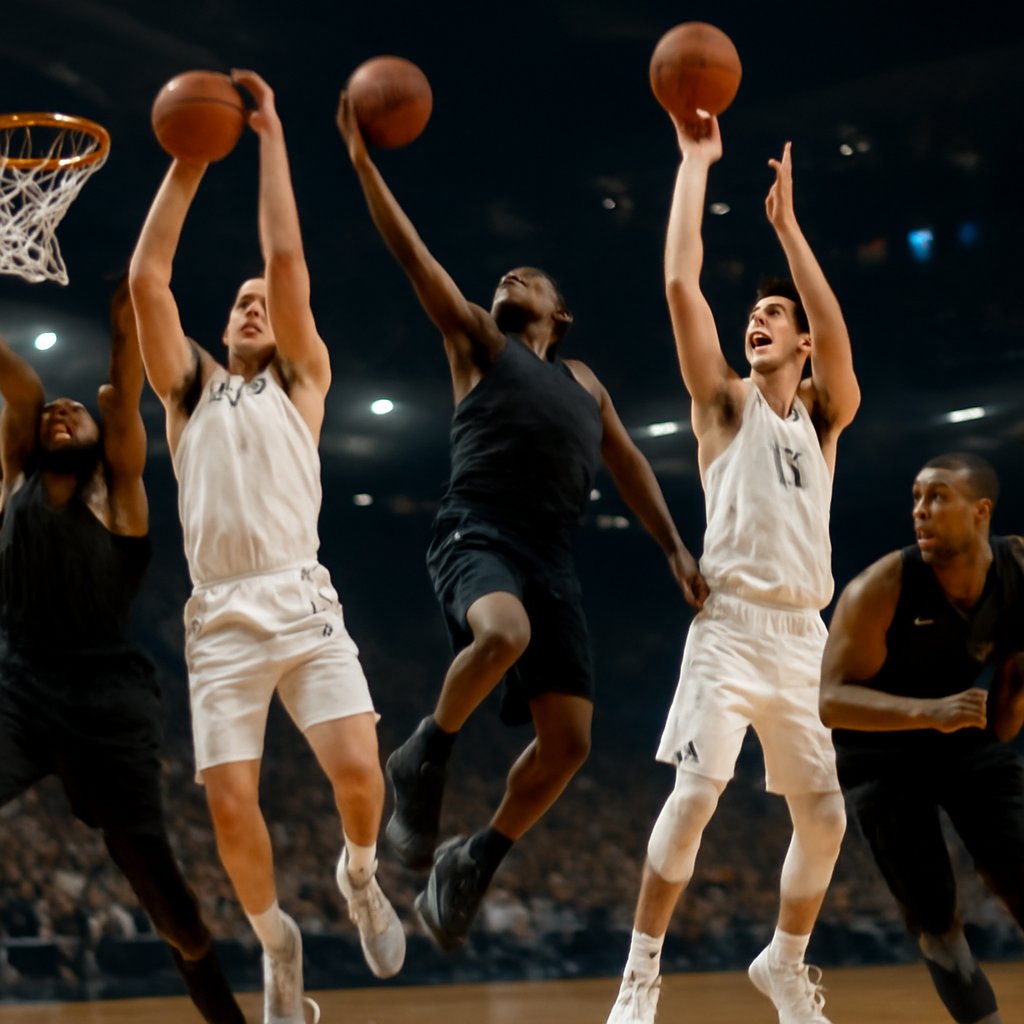
Basketball has always been more than a game of Xs and Os or numbered spots on the floor—it’s the heartbeat of neighborhoods, the way families gather on summer evenings, and the language that connects generations from the block to the league. Understanding the five positions helps us see how each player brings their own rhythm to that collective dance, whether it’s in the NBA, NCAA, or the WNBA, where the same spirit of resilience and creativity shines just as bright.
The traditional roles—Point Guard (1), Shooting Guard (2), Small Forward (3), Power Forward (4), and Center (5)—have held steady for decades, yet today’s pace-and-space style and versatile defenders keep stretching those lines. What gets lost in the highlights is how these positions still anchor team chemistry while letting individuals express the full range of their game.
At the point, the floor general sets the tempo and finds teammates in rhythm. Modern players at this spot range from 5’9″ to 6’3″, though exceptions like Luka Dončić at 6’7″ show how vision can outweigh size. Responsibilities include running sets, creating opportunities, cutting down turnovers, and guarding opposing guards. Nikola Jokic leads with elite passing and 9+ assists a night, while Trae Young pairs playmaking with scoring volume. In the WNBA, Arike Ogunbowale brings that same scoring versatility from the point, showing how the position fuels both individual flair and team success.
Point guards face unique pressure as the extension of coaching staff on the court. They must read defenses in real-time, adjust offensive schemes when plays break down, and maintain composure during high-leverage moments. The best ones develop a sixth sense for spacing—knowing when a cutter is open before they even start moving, recognizing when to slow the pace, and when to push tempo. Playing the point guard position demands not just basketball IQ but emotional intelligence; these players become leaders by example, and their decision-making directly impacts team culture. Young guards studying the craft often spend years learning how to manage minutes, conserve energy for crucial possessions, and lead without always having the ball in their hands.
Shooting guards add perimeter punch and defensive intensity, typically between 6’2″ and 6’6″. They stretch defenses with threes, move without the ball, and close out on shooters. Devin Booker delivers two-way excellence with 27-plus point nights and lockdown perimeter work, while Anthony Edwards brings emerging wing athleticism. Jewell Loyd in the WNBA captures how catch-and-shoot mastery and off-ball movement create spacing that opens everything up for her squad.
The shooting guard role has evolved dramatically from its roots as a pure scorer. Today’s SGs must excel at multiple defensive assignments, often guarding taller players than their predecessors while maintaining the agility to chase opposing point guards. They’ve become critical in transition—the second voice on fastbreaks, the player who fills lanes quickly and finishes in rhythm. The best shooting guards understand floor balance; they know when to be a facilitator and when the team needs them to be aggressive scorers. This position rewards preparation and footwork, as the margin between an open three and a contested one is often decided by a single step. Teams now invest heavily in shooting guard development because versatile wing scoring at this spot multiplies offensive options and creates matchup nightmares for opponents.
The small forward slot has grown into the most adaptable role, usually for players 6’6″ to 6’10”. They score from every level, switch on defense, and grab offensive boards. LeBron James still sets the standard with his all-around impact, Jayson Tatum brings high-volume scoring, and Paolo Banchero blends size with perimeter skills. Breanna Stewart of the New York Liberty embodies that same versatility and basketball IQ, reminding us that the game has always been bigger than stats—it’s about lifting the entire group.
Small forwards have become the NBA’s ultimate utility players. This position demands the widest skill range: the ability to defend players 2-3 inches taller, handle the ball in transition, create their own shot off the dribble, and shoot from distance. The modern small forward is often a team’s most important two-way player, someone who can guard an opposing team’s best perimeter scorer one possession and then slice to the basket for a layup the next. Physical demands on the SF position are immense—these players log significant minutes and must maintain focus on both ends of the floor. The position has also become a landing spot for teams’ highest draft investments, as front offices recognize that elite wings are the foundation of championship teams in today’s game.
Power forwards once lived in the paint but now stretch to the arc, standing 6’8″ to 6’11”. They protect the rim, crash boards, and finish pick-and-rolls. Giannis Antetokounmpo has redefined the spot with his perimeter game, scoring, and defense, earning back-to-back MVPs. Anthony Davis pairs interior power with guard-like agility, and Jaylen Brown adds athletic versatility. In women’s basketball, Stewart again shows how power forward and center can fluidly overlap, reflecting the positional freedom that lets players express their full selves.
The power forward transformation represents one of basketball’s most dramatic positional shifts. Twenty years ago, PFs were primarily interior players who posted up and cleaned glass. Today’s power forwards must be comfortable stepping out to defend guards on switches, yet still drop down to challenge drivers at the rim. The most valuable PFs now develop a three-point shot, which opens pick-and-pop opportunities and stretches opposing defenses to the perimeter. These big men also carry the responsibility of rim running on offense—finishing lobs in pick-and-roll situations—while being the anchor of defensive schemes. The position requires an interesting duality: enough size and strength to move opponents in the paint, but agility and footwork to defend smaller, faster players in space. Teams place enormous emphasis on developing young power forwards with this versatile skill set because the position has become central to modern offense and defense.
Centers anchor the defense and control the paint at 6’10” to 7’1″. They block shots, secure defensive rebounds — a lineage that runs straight back to the NBA all-time rebound leaders — and now even stretch the floor. Nikola Jokic changed expectations with his passing, Rudy Gobert offers elite rim protection, and Joel Embiid combines scoring with defensive presence. Brittney Griner at 6’9″ dominates inside for the Phoenix Mercury while adding perimeter elements, proving how the position continues to evolve without losing its cultural weight as the steady presence every community team needs.
The center position has undergone perhaps the most striking evolution in basketball. Traditional centers were rim runners and finishers; modern centers must be shot-blockers, floor spacers, and sometimes even primary playmakers. The game has challenged conventional big men to expand their skill sets or risk becoming obsolete. Yet despite this change, elite centers remain among the most impactful players in basketball—studies consistently show that rim protection and offensive rebounding remain crucial, and teams with dominant centers consistently make deep playoff runs. Centers also serve a mentorship role within teams; their presence in the paint provides stability and confidence. Many coaching staffs depend on their center’s emotional leadership and communication to organize defenses and set team culture. The position demands patience in development—truly elite centers often need several years to fully master positioning and defensive schemes—but when they do, they become the foundation everything else is built upon.
Modern basketball celebrates position-less play, where “small-ball” lineups and versatile wings blur old boundaries. The Golden State Warriors showed the power of ball movement and shooting from everywhere. Today, teams talk more about skills—floor spacers, wing defenders, pick-and-roll handlers—than rigid numbers. College and women’s programs are following suit, developing versatile defenders and bigs who can shoot.
The shift toward position-less basketball doesn’t eliminate the five-position framework—it simply adds flexibility within it. Coaches recognize that a 6’8″ player might defend a traditional center one possession but guard a perimeter shooter the next. This demands players develop multiple competencies and coaches employ sophisticated defensive schemes that exploit matchups. However, the traditional positions remain valuable descriptors for player archetypes and role definition. Understanding positions helps fans appreciate the strategy behind lineup construction and substitution patterns. Teams still need a primary ball-handler, a paint defender, and floor spacers arranged strategically. The modern approach acknowledges that these roles can be filled by different body types and skill sets than historical norms suggested, but the fundamental needs haven’t disappeared—they’ve simply become more fluid and interchangeable.
What stays true across every level is how these positions we
Sources
- NBA.com – Official NBA website with rules, positions, and player information
- ESPN NBA – Comprehensive NBA news, statistics, and basketball analysis
- Basketball Reference – Historical NBA data, player statistics, and position information
- NBA News – Official NBA announcements and articles about the league