
Draymond Green Defensive Versatility Analysis
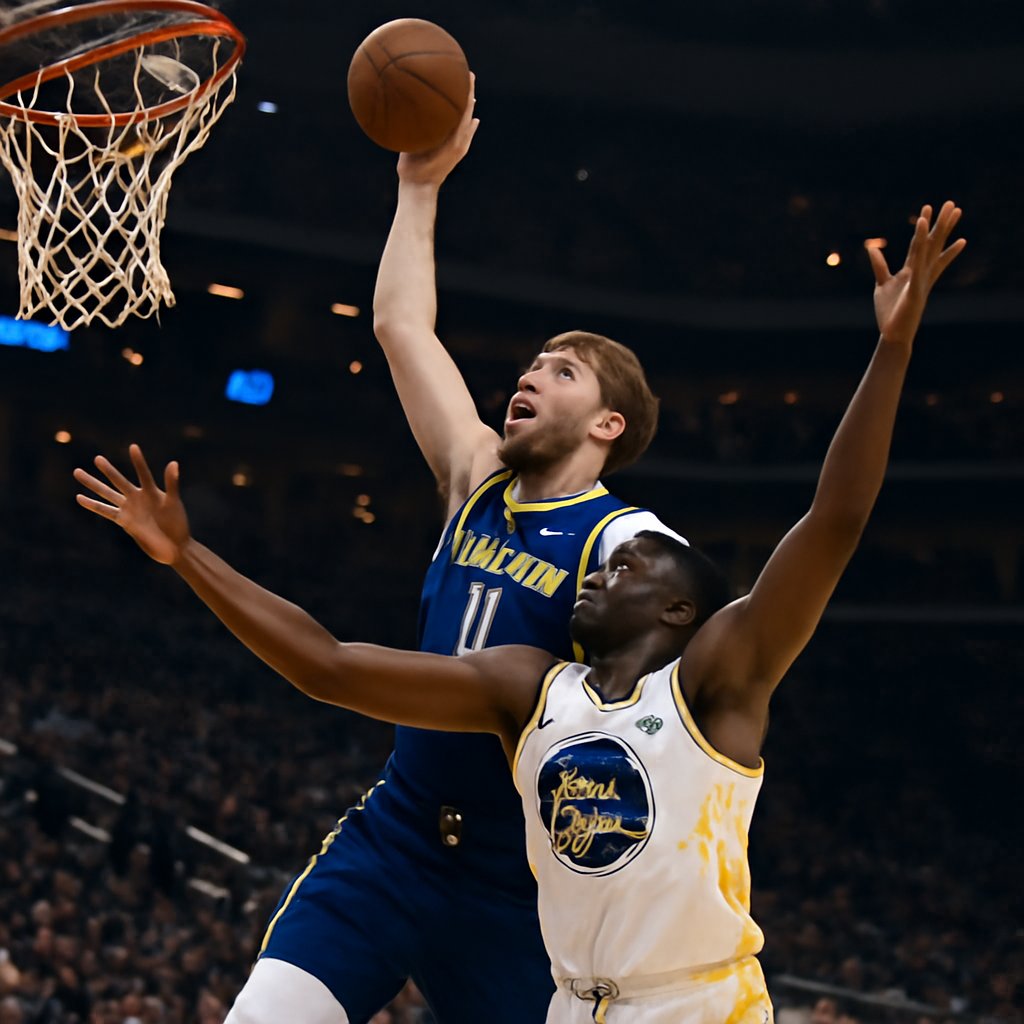
Draymond Green has been doing something special on the defensive end for more than a decade with the Golden State Warriors, showing the kind of positional flexibility that forces coaches to redraw their entire game plans. What gets lost in the highlights is how his basketball IQ, physical gifts, and constant chatter turn a defense into a living, breathing unit that switches across guards, wings, and bigs without missing a beat. The game has always been bigger than stats, and Green’s voice on the floor echoes the way basketball has long served as a community language—organizing, protecting, and lifting everyone around it, much like the versatile defenders we see lighting up the WNBA.
His growth didn’t happen in a vacuum. Early on, Green moved from a raw power forward into the anchor of Golden State’s schemes by perfecting help-side rotations and weak-side rim protection. He learned to read passing lanes and jump into gaps, piling up deflections and steals at rates frontcourt players rarely touch. Over time he sharpened his footwork to stay in front of quicker perimeter threats, turning what might have been a limitation into the foundation of the Warriors’ switch-everything identity. Teammates and coaches talk constantly about his vocal leadership, the same glue that lets teams trap without falling apart. That evolution has kept him essential as the league embraced positionless spacing, and it mirrors the adaptability so many Black players have carried from neighborhood courts into the pros.
The numbers back up the eye test across the board. Green has posted seasons with at least 100 steals while logging heavy minutes at both power forward and center. His career average sits near 1.3 steals per game, elite territory for frontcourt players in this era. He regularly tops the Warriors in deflections, often clearing five per game during title pushes. Tracking data shows he has contested shots against all five positions above league average for his career. In the playoffs, his defensive rating frequently dips below 105 when he plays more than 30 minutes. Multiple All-Defensive selections reflect the respect of peers and coaches alike. His help defense also sparks transition chances that fuel Golden State’s fast-break identity, and the on-off splits tell the story: opponent efficiency drops sharply when he’s on the floor.
One of Green’s most underrated defensive tools is his ability to hedge on perimeter pick-and-rolls without completely abandoning the paint. This skill set allows the Warriors to play aggressive, trap-heavy schemes that would normally expose a team’s interior defense. When ball handlers attack the rim, Green’s long arms and quick lateral movement enable him to recover and contest shots from multiple angles. His willingness to gamble on passing lanes—calculated risks rather than reckless gambling—creates turnovers that lead directly to fast-break opportunities. Opposing teams have to account for this constant threat, which often forces them into isolation plays that don’t fit their system or into higher clock-shot situations that favor Golden State’s depth.
The versatility conversation around Green extends beyond individual matchups into system-level implications. When he can credibly guard positions one through five, it fundamentally changes how Warriors coaches construct lineups. Smaller, more spacing-oriented configurations that would normally invite interior punishment instead become viable because Green provides rim protection from his own footwork and length rather than relying on a traditional shot-blocker. This flexibility has directly enabled the Warriors’ small-ball experiments, including lineups that might feature three or four perimeter scorers. The opponent can’t simply attack the paint because Green’s intelligence and positioning make conventional post-up scoring extremely difficult.
Green’s communication style deserves deeper examination as a defensive multiplier that rarely shows up cleanly in any statistical category. His constant vocal direction—calling switches, rotating assignments, flagging cutters before they make their moves—creates an added layer of organization that makes his teammates’ jobs significantly easier. Younger or less experienced defenders play with more confidence when Green is managing the floor. This leadership quality has proven especially valuable during lineup transitions and when injuries force the Warriors to deploy unconventional defensive units. Players have consistently noted that Green’s voice and presence reduce the mental load of defensive execution, allowing them to play more instinctively rather than thinking through every rotation.
Defensively, Green’s footwork evolution deserves particular praise. Early career footage shows a player who sometimes got beat laterally or fouled trying to contest shots. Through dedicated work on lateral quickness drills and slide footwork, he transformed himself into a defender who could stay low, maintain balance, and close out without putting himself in foul trouble. This technical improvement allowed him to guard smaller, quicker players—something unthinkable during his rookie seasons. The improvement demonstrates how positional versatility isn’t just about physical size or length; it’s a product of consistent skill development and willingness to address technical weaknesses.
The Warriors’ defensive schemes have evolved specifically to maximize Green’s strengths while minimizing exposure to any remaining weaknesses. Golden State routinely uses him in drop coverage against pick-and-roll actions, where his length and intelligence allow him to contest jump shots from big men. They also deploy him high in the pick-and-roll, hedging out to the ball handler and recovering to his man. This versatility in role assignment means opposing teams struggle to establish consistent scoring patterns because they’re never quite sure whether they’ll be attacking pick-and-roll through Green or around him.
That same versatility has shown up in the biggest moments. During championship runs, Green has taken on LeBron James, Kevin Durant, and Luka Doncic for long stretches. Switching onto smaller guards in pick-and-rolls while still protecting the rim creates the kind of matchup headaches that break opposing offenses. In high-stakes series his timing in double teams disrupts rhythm and forces turnovers. Even when his scoring dips, his presence keeps the Warriors among the league’s elite defensive units deep into postseason play. Analysts rightly point out that this skill set lets Golden State play smaller lineups that stretch the floor without giving up interior integrity.
The impact of Green’s defense on free throw and three-point attempt distribution deserves mention when evaluating his overall defensive value. Teams shooting against Golden State with Green on the floor often resort to mid-range attempts or heavily defended threes rather than getting clean looks at the rim or from the stripe. This shot-diet management is a product of both direct pressure and the overall tightness of the Warriors’ team defense, which Green anchors through both his individual efforts and organizational prowess.
The league keeps evolving, yet Green’s blueprint—intelligent positioning, elite communication, and the willingness to guard anyone—remains the model for what modern defense demands. Basketball’s power has always lived in these connections, the way one player’s voice and sacrifice ripple through teammates and into the stands, building pride in every community that claims the game as its own. As the game continues shifting toward perimeter-oriented offenses and spacing-heavy lineups, defenders who can play multiple positions while maintaining rim integrity become increasingly valuable. Green’s career stands as proof that such versatility, when combined with basketball intelligence and competitive drive, remains the foundation of championship-caliber defense.
Sources
- NBA.com – Draymond Green Player Profile – Official NBA statistics and career information
- ESPN – Draymond Green Stats – Comprehensive player stats and analysis
- Basketball Reference – Draymond Green – Advanced defensive metrics and historical data
- NBA Stats – Advanced Analytics – Defensive rating and versatility metrics