
How Mid Range Shooting Declined in NBA
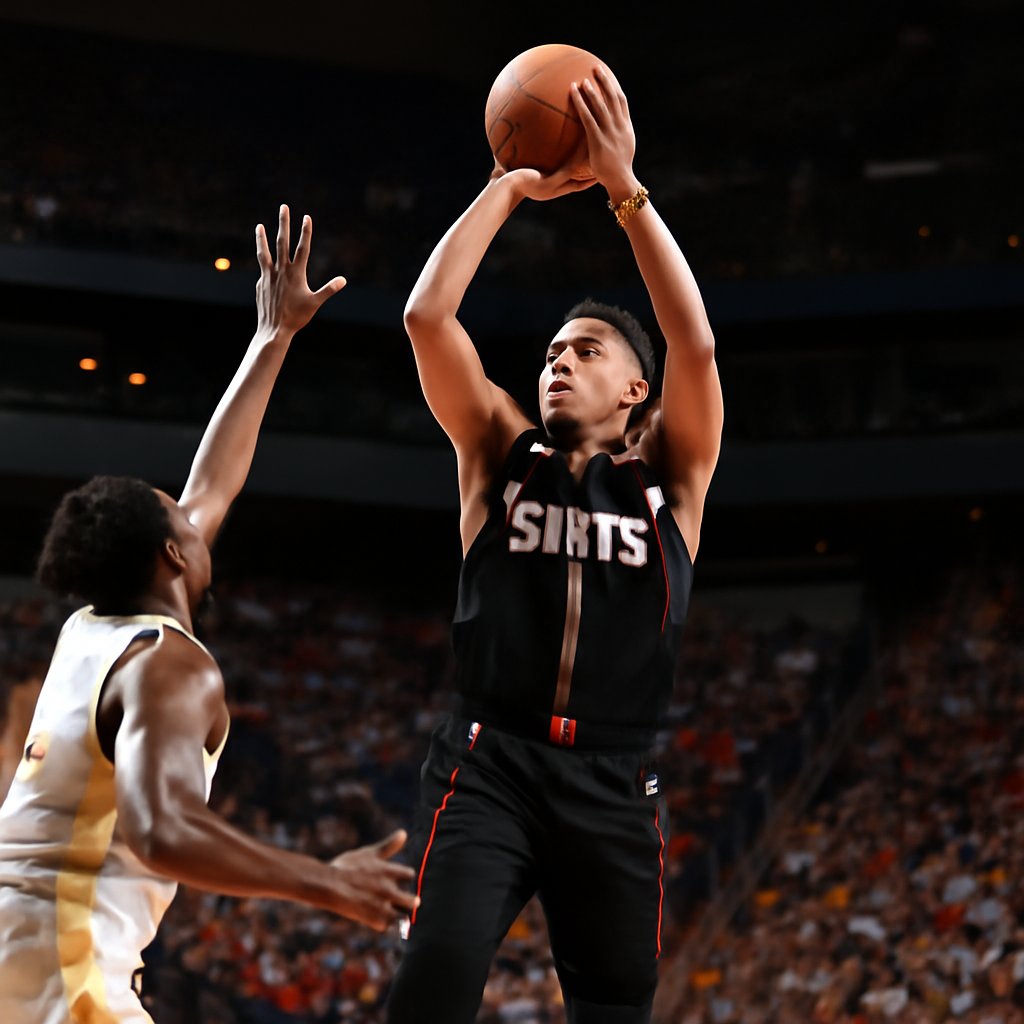
Back in the day when I laced up for four years playing college ball, the mid-range was where you proved you belonged. You felt the defender’s breath on your neck at the elbow, that 15-footer was the heartbeat of the game, especially in Black communities where kids from Philly to LA grew up copying MJ’s fadeaway and Kobe’s footwork on cracked blacktops. That whole era is fading fast in the NBA, though, and the numbers tell the story plain as day.
Mid-range jumpers used to sit at the center of offenses, with stars knocking down contested 15- to 19-footers like it was nothing. Around 2010 the shift kicked into high gear once front offices started running the data. A 40 percent mid-range shot only gets you about 0.8 points per possession, while corner threes and rim attacks clear 1.0-plus easy. The advanced metrics back up what any player who’s been in the gym knows: those long twos just don’t pay off the same.
In the 1990s and early 2000s, mid-range attempts made up nearly 30 percent of all field goals league-wide. Players built entire games around pull-ups and fadeaways, and playoff defenses had to respect every inch of space. Dirk Nowitzki carved out room against the best, but that style started looking old once the numbers took over. Tim Duncan’s bank shots and Karl Malone’s post moves were predicated on mid-range efficiency, but the modern game had no use for their approach anymore. The transformation wasn’t gradual—it was systemic and deliberate.
Analytics crews pushed true shooting percentage and shot mapping hard, and the Rockets under Daryl Morey basically wiped mid-range looks off the board by 2015. Coaches started yelling “drive or kick” instead of settling. That dropped mid-range frequency from 35 percent of shots in 2004 all the way under 20 percent by 2023. Young prospects now spend workouts stretching the floor or finishing through contact because scouts stopped valuing pure mid-range guys unless they could also bomb from deep. The result is a new wave of wings who space better than the generation before them.
The philosophical shift in how teams construct rosters has been dramatic. Teams realized that if you’re going to shoot outside the paint, you might as well shoot from 23 feet 9 inches—the distance to the three-point line—since the value jumps significantly. This created a spacing crisis for mid-range specialists. Unless a player could shoot three-pointers at 35 percent or better, or dominate in the paint, the mid-range became a black hole for shot value. Scout reports now include “three-point range” as a primary evaluation metric, whereas 15 years ago, a player being a “mid-range assassin” was considered elite offensive skillset.
Guys like James Harden and Damian Lillard leaned into pull-up threes and cut their long twos. DeMar DeRozan kept firing from the mid-range and forced teams to adjust spacing around him, though even his effectiveness took a hit in certain playoff matchups where teams could afford to live with his long twos. In the playoffs you see defenses daring opponents to take those inefficient shots, and series get decided that way. Golden State under Steve Kerr used motion to hunt open threes instead, while teams still living off isolations got bounced early. The models show that cutting mid-range volume lines up with better offensive ratings across the board.
What’s fascinating is how this shift reveals itself in player development trajectories. Young guards in the G League now barely work on mid-range pull-ups during skill development sessions. Instead, the emphasis falls on ball handling in transition, catch-and-shoot mechanics from three, and finishing in traffic. Players like Jamal Murray and Donovan Mitchell who can access the mid-range aren’t valued for that skill—they’re valued despite it. The teams tolerate their mid-range attempts because their three-point shooting and playmaking justify roster spots, not because the mid-range work is valuable.
The raw numbers lay it out: mid-range attempts per team fell from 28.4 per game in 2010-11 to 12.7 in 2023-24. Three-point tries jumped more than 150 percent in that stretch. Expected points sit at 0.82 on mid-range shots versus 1.05 on corner threes and 1.09 on wide-open threes. Playoff squads average 8 percent fewer of those attempts than lottery teams, showing that winning organizations have most aggressively adopted the three-point philosophy. Players taking over 10 mid-range shots a game went from 42 in 2005 down to just 7 now.
The cultural impact extends beyond statistics. Young basketball players growing up in the AAU circuit aren’t learning the footwork of Kobe or the range of Kevin Durant in the mid-range. Instead, they’re spending hours launching threes and working on speed-and-spacing concepts. High school coaches who emphasize mid-range development risk seeing their players overlooked by college scouts who prioritize NBA readiness. This creates a generational gap where fewer players even develop competence in mid-range shooting, making it even easier for NBA teams to ignore the category entirely.
However, mid-range shots haven’t completely vanished—they’ve just become situational. Post-ups from skilled bigs like Nikola Jokic generate mid-range attempts, and these shots work because they come with elite playmaking attached. Transition pull-ups and catch-and-shoot mid-rangers against packed defenses still possess value. The key difference is intentionality: teams no longer run plays designed to create mid-range looks. If a mid-range shot appears, it’s incidental to a larger offensive strategy, not the goal itself.
There’s an argument that the over-correction has created opportunities for savvy players. In a league where defenses are designed to prevent threes and pack the paint, a player who can reliably hit mid-range shots when a defense overcommits could exploit gaps. Yet the economics of roster construction make this a hard sell to front offices. Why allocate minutes to a mid-range specialist when you could have a three-point shooter who stretches the floor and diversifies your offensive options?
The game got faster and more electric because of it, but the mid-range still shows up in the right spots when a player can create it on demand. Basketball keeps evolving with the data, and that tension between old-school feel and new-school efficiency is what keeps the culture moving forward. The mid-range isn’t dead—it’s just no longer the foundation of how elite teams build their offenses, and that’s a fundamental change to how the sport operates at its highest level.