
How Three Point Shooting Changed Modern Basketball
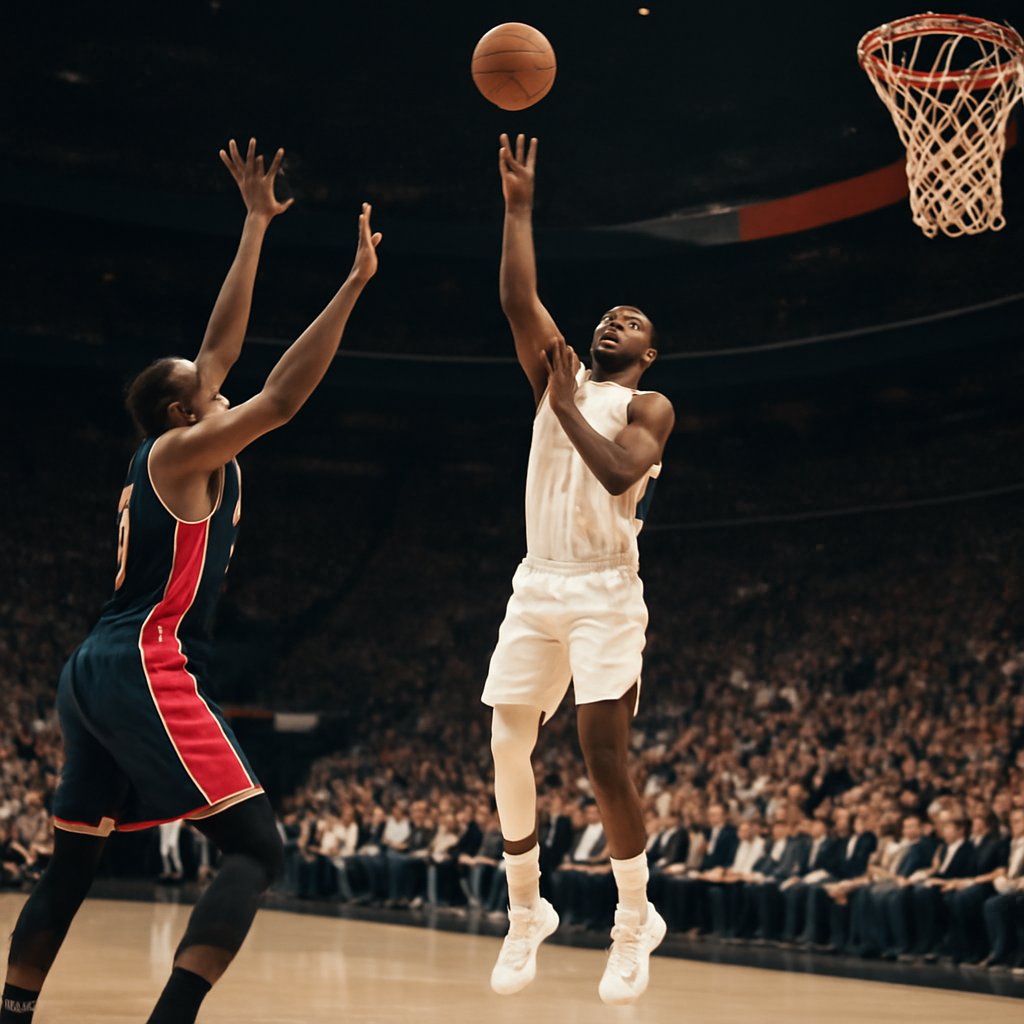
Three-point shooting didn’t just tweak the NBA—it rewrote the story of how the game flows from the community courts straight to the biggest stages. What started as a so-called gimmick back in 1979 has grown into the heartbeat of modern offense, lifting teams that knock down those deep ones into the top of efficiency rankings and title conversations. The WNBA has felt that same pulse, with players stretching defenses in ways that echo the league’s own evolution toward space and creativity.
Back before the arc, offenses lived in the paint and along the elbows, where bigs ruled with power and mid-range touch. Once that line arrived, coaches had to open things up, and by the mid-2010s the numbers made it clear: threes simply deliver more points per possession. The Houston Rockets under Daryl Morey leaned all the way in, chasing volume that turned expected value into wins. General managers started drafting and building around that truth, and the shift rippled outward.
The game has always been bigger than stats, though. What gets lost in the highlights is how this change lifted players who grew up on asphalt where every extra foot of range felt like freedom. Guards and wings who once lived at the rim added the three-ball and watched their offensive impact climb. Anyone clearing 40 percent from deep earns extra respect from defenses, which opens driving lanes and bumps up their usage and assists. Squads loaded with multiple 35-plus percent shooters move the ball better, protect it more, and create the kind of spacing that turns ordinary drives into highlight plays. In the playoffs that edge shows up when perimeter fire overcomes size, something we’ve seen in title runs that left traditional big-man lineups scrambling.
The Golden State Warriors turned that math into poetry during their run, moving without the ball to generate open looks at a historic clip. Milwaukee and Phoenix followed with stretch-big ideas of their own. Playoff basketball now carries record three-point volume, and series often swing on who stays hot from deep. That same emphasis has reached international and youth levels, shaping prospects who speak the language of long-range gravity fluently. The WNBA has its own version of this story, where elite shooters create the same gravity and open up the floor for teammates who learned the game in packed community gyms.
League-wide attempts jumped from 2.8 per game in 1980 to more than 35 today, pushing pace and scoring higher. Teams firing 40-plus threes win about 58 percent of their games. Stephen Curry’s 42.8 percent career mark on big volume reset what we expect from perimeter creators. Since 2015, playoff reliance on the three has climbed 22 percent. Players who drop eight made threes in a single playoff game help their teams win 75 percent of those contests. Multiple three-point threats add 8 to 12 points per 100 possessions through better spacing.
The three-point revolution fundamentally altered how scouts evaluate talent and how front offices construct rosters. Fifteen years ago, a big man’s ability to stretch the floor was a luxury—nice to have but not essential. Today it’s nearly non-negotiable at the highest level. Centers who can step out and knock down threes from 25 feet create matchup nightmares that defenses cannot solve. When a seven-footer spaces the floor, it collapses help defense and opens cutting lanes for guards and wings. Teams without at least one reliable three-point shooting big man find themselves at a structural disadvantage in playoff series.
This shift has extended the lifespan of certain player archetypes while shortening others. The traditional post player who only operated in the low block became increasingly obsolete. Meanwhile, point guards expanded their range and complexity, transforming into shot creators who could score from anywhere on the court. Wings evolved into primary ball handlers rather than spot-up threats. Even shooting guard has been redefined—no longer a position but a skill set that could belong to a 6’7″ forward or a diminutive speedster depending on team construction.
Defensive schemes have evolved in lockstep with offensive adaptation. Perimeter-oriented defenses now dominate the league, with emphasis on switching, scrambling, and contesting three-point attempts at all costs. Teams dedicate more resources to tracking opponent three-point shooting percentages and identifying hot shooters to shade toward defensively. The traditional help defense that once crowded the paint feels like ancient strategy. Instead, modern defenses must cover more ground, travel further, and remain disciplined against ball movement that exploits every gap in coverage.
The mental game has shifted too. Players spend more time in the gym shooting off-the-dribble threes and game-speed range extensions. Shooting coaches have become as valuable as strength and conditioning specialists, and some franchises employ multiple specialists dedicated to refining shot mechanics and consistency. The psychological component matters immensely—a player’s confidence from three can single-handedly change momentum in crucial moments. Late-game situations now frequently feature high-volume three-point attempts rather than drives to the basket, a fundamental change in basketball’s closing strategies.
International basketball has followed suit, with overseas leagues adopting shorter three-point lines in some cases to emphasize the importance of range shooting. Young players developing in Europe, South America, and Asia are introduced to perimeter shooting as a priority rather than a secondary skill. This globalization of three-point emphasis has produced an increasingly diverse pool of skilled shooters entering the NBA draft. Front offices now scout talent worldwide with an eye toward long-range capability that was unthinkable two decades ago.
The economics of the three-pointer cannot be overstated. A successful three-point shooter commands higher salary in free agency, longer contract extensions, and preferential role players around them. Franchises willingly invest luxury tax dollars into acquiring proven three-point threats because the math works at every revenue level. A player who shoots 38 percent from three on high volume effectively multiplies their team’s scoring output. The return on investment for developing and retaining elite shooters far exceeds investing in traditional post players.
Coaching philosophies have been completely reoriented around three-point generation. Offensive systems are designed to produce three-point attempts rather than mid-range shots or paint touches. Ball movement has become both a technical skill and an organizational priority, with video analysis revealing which player movement patterns generate the most wide-open looks. Practices emphasize three-point shooting volume and game-speed decision making, ensuring that when moments arrive, muscle memory and confidence take over.
At its core, this evolution touches roster building, defensive schemes, and what it takes to contend for championships. Versatile shooters who can stretch the floor while staying rooted in the culture of the game will keep rising in value. The ones who ignore that reality risk watching the rest of the league pull away, both in the standings and deep into June. Basketball’s gift has always been how it connects neighborhoods to the bright lights, and three-point shooting simply gave more voices in that conversation room to breathe.
Sources
- NBA.com Stats – Official NBA statistics and three-point shooting data across eras
- Basketball Reference – Historical NBA team and player shooting statistics
- ESPN NBA Statistics – Current season and historical three-point shooting trends
- NBA.com News – Articles analyzing changes in modern basketball strategy