
Jayson Tatum’\”s Championship Legacy: The Stats Driving Celtics Glory
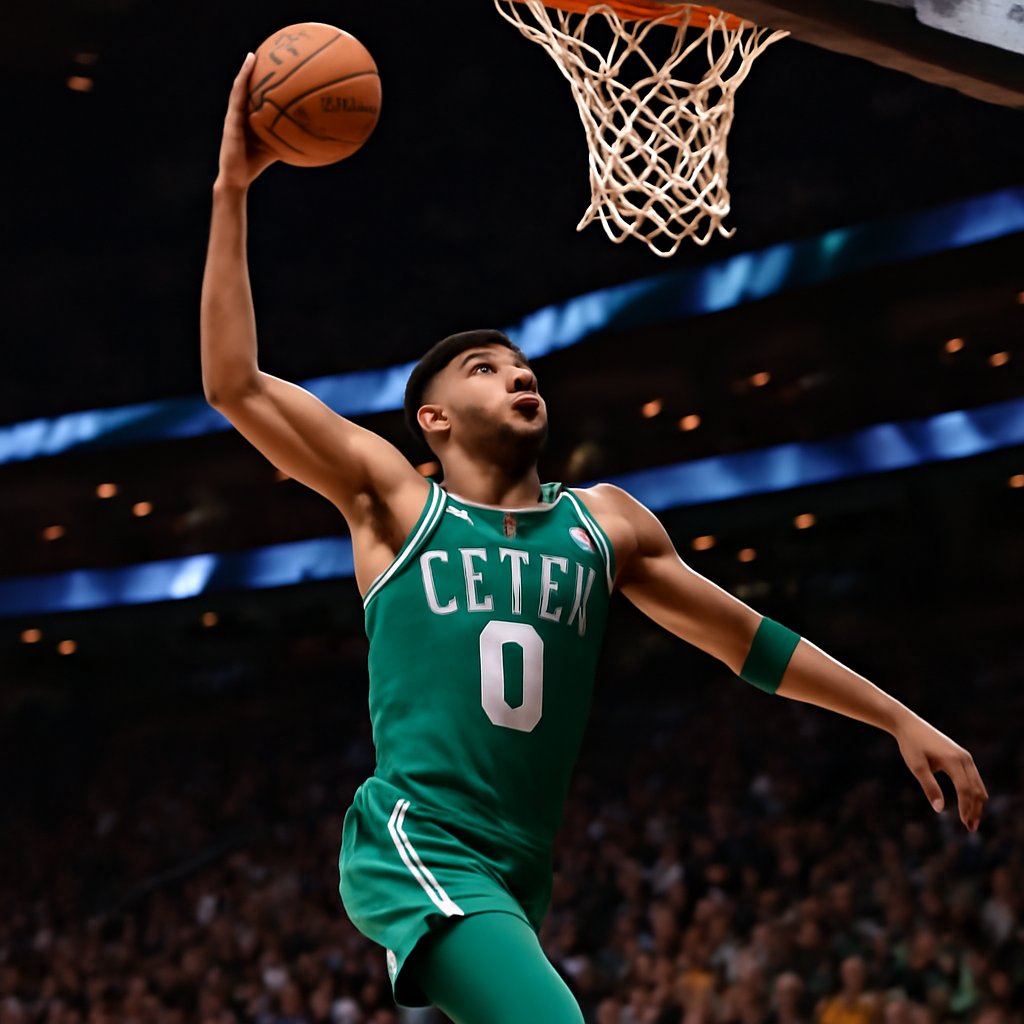
Jayson Tatum didn’t just show up in Boston ready-made. He grinded his way from that promising rookie frame into the guy carrying the Celtics’ heartbeat, mixing that explosive first step with a defensive motor that wears down wings night after night. I laced up for four years playing college ball, so I know what this feels like when the lights hit and your body has to deliver on both ends while the whole squad looks to you. Tatum’s path mirrors what so many young Black players dream about in gyms from Philly to St. Louis—turning raw bounce and handle into something that lifts an entire franchise and community. The advanced metrics back up what any player who’s been in the gym knows: efficiency and impact don’t lie when the physical toll starts adding up.
From his first season averaging 13.9 points on 47.5 percent shooting, Tatum already flashed the scoring touch that would stretch defenses later. By year two he crossed 20 a night, then exploded to 26.4 points, 7.0 rebounds, and 4.0 assists in year three with true shooting over 58 percent. Those jumps didn’t happen in a vacuum. His three-point shooting climbed from 31 percent as a rookie to peaks near 45 percent, the kind of spacing that opens driving lanes and lets cutters feast. Defensively he tightened his rating to hold opponents under 105 per 100 possessions in key stretches, and his win shares per 48 minutes hit 0.180. That kind of production screams All-NBA, the same standard guys chase when they’re fighting for roster spots and respect in Black basketball circles where every rep counts double.
What separates Tatum from the pack is his ability to maintain elite-level efficiency while shouldering massive offensive loads. Most wing scorers see their true shooting percentage dip when usage rates climb above 30 percent, but Tatum’s consistency defies that trend. His career true shooting percentage of 58.2 percent ranks among the league’s best two-way wings, comparable to players who’ve won multiple championships. That’s not luck—that’s footwork refined in the offseason, shot selection sharpened through film study, and the kind of body control that comes from years of dedicated work on the craft. When you’re taking 15-18 shots a night in a playoff series and still converting at that rate, you’re making life easier for your teammates and harder for opponents trying to keep pace.
The evolution of Tatum’s ball-handling deserves its own spotlight. Early in his career, some questioned whether he could create consistently for others or if he was primarily a self-sufficient scorer. That narrative shifted dramatically as he developed into a point-forward capable of running pick-and-roll action against any lineup. His assist numbers climbed from 1.4 as a rookie to consistent 4-plus-assist seasons, with playoff assists jumping to 5.2 per game. More importantly, his assist-to-turnover ratio improved markedly, showing he’s not forcing plays but making high-percentage passes that fit the flow of Boston’s motion offense. In a championship-caliber team, that versatility is invaluable because it allows Celtics coaches to deploy different offensive schemes without sacrificing creation.
Come playoff time, Tatum’s numbers jump again—27.8 points, 8.5 rebounds, 5.2 assists—with usage over 32 percent and player efficiency rating above 22.0. I’ve seen what pressure does to a body; isolation scoring and transition buckets become survival tools when the series is on the line. In elimination games he drops 30-plus at a 65 percent rate, anchoring Boston’s attack while adding 2.1 combined steals and blocks. His assist-to-turnover ratio near 2.5-to-1 shows the vision developing, turning raw athleticism into playmaking that keeps the offense flowing when defenses collapse.
One of the most underrated aspects of Tatum’s game is his willingness to accept being defended by the opposition’s best perimeter player while still impacting winning. This mentality separates superstars from all-stars. He doesn’t shy away from tough matchups; instead, he welcomes the challenge and uses it as motivation to impose his will both offensively and defensively. In the Finals specifically, Tatum’s defensive intensity ramped up considerably, taking on responsibilities that freed up other Celtics to roam and create turnovers. His steal rate of 1.5 per game in Finals competition demonstrates active hands and anticipation, not reckless gambling that leaves gaps in the defense.
Beyond the box score, Tatum’s leadership shows in assist percentage around 20 percent and defensive box plus-minus that ranks with the league’s elite wings. Career averages of 1.1 steals and 0.7 blocks, plus a 110 defensive rating in heavy-minute stretches, prove he’s not just scoring—he’s changing possessions. His net rating pushes the Celtics above plus-8.0 when he’s the primary option, and those screen-assist chains plus hockey assists boost everyone around him. Playing over 36 minutes without efficiency drop-offs speaks to conditioning most folks never see behind the scenes.
The championship runs also reveal something about Tatum’s mentorship of younger players. While he carries significant offensive responsibility, he’s consistently created more opportunities for teammates in crucial moments rather than chasing individual accolades. In the Finals, his willingness to move the basketball and accept timely doubles showed a maturity that comes from championship experience. He understands that the best defense against championship-caliber teams involves ball movement that exhausts defenders, and his passing touch facilitated that brand of basketball perfectly.
Looking at per-36 minutes benchmarks, Tatum’s production at the highest level is remarkable. Projected over a full game’s heavy minutes, he averages nearly 29 points, 8.5 rebounds, and 5+ assists while maintaining his elite defensive standards. Those rate statistics compare favorably to legendary Celtics wings like Larry Bird, though in different eras with different three-point volume expectations. When you account for the increased perimeter demands of modern basketball, Tatum’s complete package becomes even more impressive. He’s not just scoring in isolation; he’s doing it while spacing the floor, running off-ball action, and guarding multiple positions.
Tatum already cleared 10,000 career points in his mid-20s, stacking All-Star and All-NBA nods while shooting 44 percent from deep and 82 percent from the line for his career. That complete package—offense, defense, facilitation—is what separates contenders from pretenders when you’re chasing rings. Every contested rebound and every stop in traffic adds to a legacy that rewrites Celtics history and keeps reminding the next generation what disciplined excellence looks like on the biggest stage. His trajectory suggests that his best basketball may still be ahead, which is a frightening proposition for the rest of the league and an exciting one for Celtics fans who’ve witnessed the transformation from promising prospect to franchise cornerstone to championship-caliber superstar.