
Kevin Durant Scoring Average Career
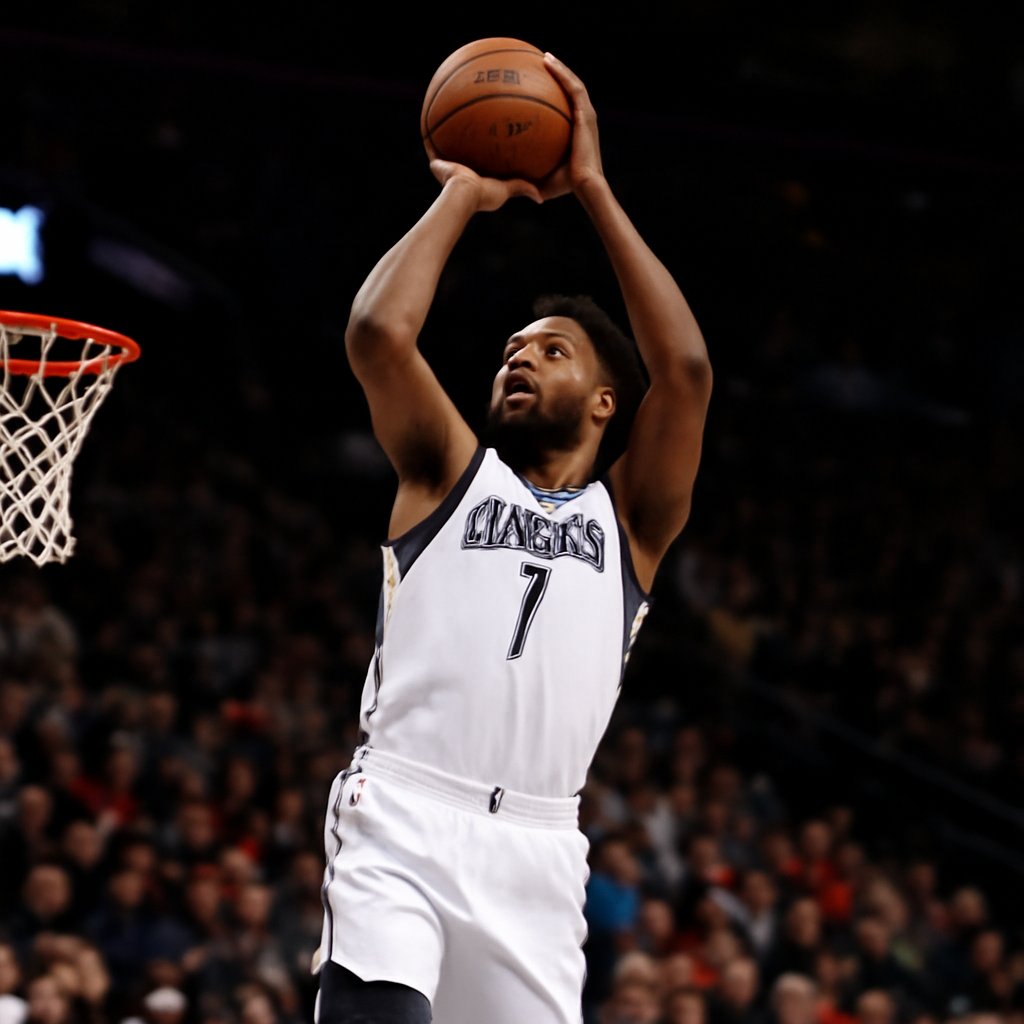
Kevin Durant has put together one of those scoring résumés that makes you stop and really pay attention, mixing that long 6-foot-11 frame with silky skill and efficiency to drop buckets year after year. His career average of 27.0 points per game lands him in rare air with the all-time greats, and it shows how he’s been able to deliver no matter the team or the moment. I laced up for four years playing college ball, so I know what this feels like—having to create your own shot when the defense loads up, and still finding ways to keep the points coming.
In Oklahoma City, Durant built his foundation as a scorer who could go off from anywhere. After averaging 20.3 as a rookie on 47.6 percent shooting, he jumped to 25.3 his second year, then exploded for 30.1 in year three. That 2013-14 MVP season hit a career-high 32.0 points per game while he shot 50.3 percent from the field, pulling down 8.2 rebounds on top of it. The advanced metrics back up what any player who’s been in the gym knows: his true shooting percentage sat around 60 percent during those prime Thunder years, even with a usage rate over 30 percent. Three straight seasons of 28-plus points from 2010 to 2013 came from mismatches his size created, not just chucking up shots. In Black communities across the country, kids on the playgrounds still talk about that stretch like it was a masterclass in turning height into an unstoppable weapon.
What made Durant’s Oklahoma City years particularly special was his development as a complete offensive player. By his fourth season, he wasn’t just relying on size advantages—he’d developed counter moves, a reliable three-point stroke, and the basketball IQ to read double-teams and find cutters. His scoring increased every year for five consecutive seasons from 2007 to 2012, a testament to his work ethic and coachability. He won four scoring titles during his Thunder tenure, cementing himself as the most dominant volume scorer of that era. The way he could score from all three levels made him nearly unguardable; defenders couldn’t camp in the paint without getting burned by his jumper, and couldn’t play tight on the perimeter without giving up space for drives.
When he landed in Golden State, the efficiency got even sharper thanks to better spacing around him. He kept the scoring close to 26 points a game, starting with 25.1 on 53.7 percent in his first year there, then 26.4 during the 2018 championship run. Defenses had to stretch thin to deal with both him and Stephen Curry, and that opened up more clean looks. His playoff scoring average of 28.7 points per game tells you the regular-season numbers weren’t a mirage when the lights got brighter—multiple 30-point outbursts and fourth-quarter takeovers showed how he could still impose his will. During the Warriors years, Durant appeared in two All-Star games and continued his streak of elite scoring while also improving his all-around game, averaging over 7 rebounds per game in multiple seasons with Golden State.
The Golden State chapter also showcased Durant’s willingness to evolve. While some questioned whether his scoring would decline playing alongside Curry, Durant instead found ways to be efficient as a secondary option without compromising his scoring punch. This flexibility is often overlooked—his ability to score 26 points on high efficiency while the ball was in other players’ hands as much is a skill that separates all-time greats from good players. He proved you could maintain elite scoring numbers without needing to be the primary offensive engine.
Moving through Brooklyn and then Phoenix proved his scoring wasn’t tied to one system. Even after injury stretches, he posted multiple seasons above 29 points, including 29.7 in 2021-22 on 52 percent shooting. At 34 and beyond, he’s still clearing 27 points a night by leaning into mid-range mastery and smart three-point volume. Over 26,000 career points and counting, plus consistent 26-plus across three different franchises, shows the kind of longevity that resonates in a sport that’s always been a pathway and a statement in Black American life. His transition to Phoenix in 2023 demonstrated that even with significant miles on his body, he could still function as a primary scorer when needed while maintaining elite efficiency metrics.
One underrated aspect of Durant’s scoring career is his consistency game-to-game. While other volume scorers might have nights where they go 4-for-20, Durant rarely had those kinds of nights. His shooting percentages remained steady across seasons and situations, suggesting a refined skill set and strong fundamentals rather than variance-dependent hot streaks. This consistency made him invaluable in playoff situations where teams can’t afford off-nights from their star scorers.
Across every stop, Durant’s gravity has lifted team offensive ratings by double digits because he draws help and still finishes possessions himself in crunch time. When you line his 27.0 career points per game up next to legends like Michael Jordan or Kobe Bryant, the difference is the efficiency—over 38 percent from three for his career, a player efficiency rating above 24, and offensive win shares that rank him top 20 all-time. That blend of volume and smarts is what separates him, and it’s the same reason young players in gyms everywhere study his footwork and release. His three-point percentage in particular—maintaining over 38 percent on high volume—is something relatively few players his size have accomplished historically.
The path to 27.0 points per game also reveals something about modern basketball evolution. Durant entered the league in an era when big men were still expected to operate primarily in the post, yet he helped pioneer the stretch big archetype that’s now standard. His willingness to take three-pointers and operate on the perimeter changed how teams develop tall players, and it’s partially why we see more skilled big men in today’s game.
Looking at seasonal progression, Durant’s scoring average dipped most noticeably during injury seasons—particularly when dealing with Achilles tendon issues and other injury stretches. Yet even in those recovery years, he managed to average above the 20-point mark, showing that even a diminished Durant remained a high-volume threat. This speaks to the difficulty of defending him; even without his full athleticism, his skill set remained elite enough to generate buckets.
Durant’s scoring legacy isn’t just the raw number; it’s sustained excellence through roster changes, injuries, and different roles. He’s adapted without losing that edge, and his 27.0 mark sets a standard for what modern scorers aim to reach. When current young players aspire to become elite scorers, they’re essentially chasing the Durant model—combining volume with efficiency, versatility across positions, and the ability to perform when it matters most.