
LeBron James Becomes NBA’\”s All-Time Leading Scorer: The Ultimate Stats Deep Dive
Man, when LeBron finally stepped over that all-time scoring line, it hit different. I laced up for four years playing college ball, so I know what it feels like to grind through fatigue, carry teammates on your back, and still find ways to put the ball in the bucket when the defense is keying on you every possession. LeBron didn’t just break Kareem’s mark—he did it with that same mix of power, vision, and straight-up will that’s always defined Black ballplayers who turned neighborhood gyms into proving grounds across this country.
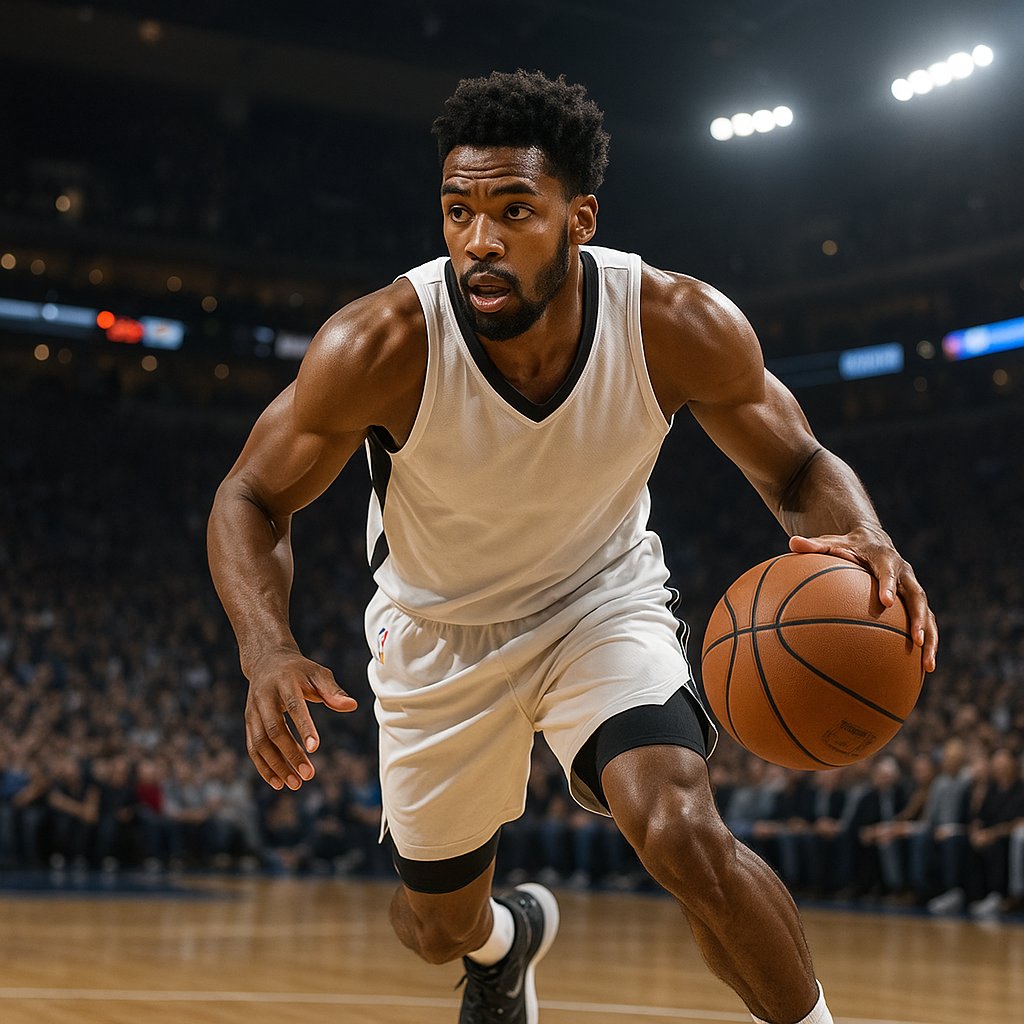
On the night he crossed the threshold, he dropped 38 points, grabbed 10 boards, and dished 7 assists. That line tells you everything about how his scoring has never been selfish volume—it’s always been part of a complete game. A step-back jumper here, those signature drives to the rim there, and fourth-quarter buckets that sealed it. The advanced metrics back up what any player who’s been in the gym knows: his true shooting percentage sat above 60 percent that night. Efficiency like that doesn’t happen by accident; it’s the result of years spent studying angles, timing, and how to make defenders pay for overcommitting.
His career numbers paint the full picture. More than 38,000 points and still climbing. A career field-goal mark hovering right around 50 percent even with the ridiculous shot attempts that come with being the focal point night after night. Over 2,000 made threes, which added that outside threat to the inside-out game that folks from my era had to respect. He came in as a rookie averaging 20.9 points per game and never looked back, peaking above 30 in his prime. Across more than 1,400 regular-season games, that works out to 27.1 points per contest. In the playoffs he’s been even more lethal—over 7,600 points at 28.9 per game, including those 40-point explosions when elimination was on the line. Plenty of his 50-point outings came on fewer than 25 field-goal attempts, which tells you the guy picks his spots like a vet who’s seen every defensive scheme twice.
What separates LeBron’s scoring achievement from being just another historical milestone is the context of how he accumulated these points. Unlike some scorers who feast in certain eras or against specific competition, LeBron has been consistently dominant across multiple generations of NBA talent. He’s dropped buckets on players from the tail end of the Jordan era through today’s analytics-driven game. His scoring output remained elite even as the league shifted toward three-point shooting and spacing. When other forwards were struggling to adapt to pick-and-roll heavy offenses or the expansion of the three-point line into every team’s offensive arsenal, LeBron simply evolved. He expanded his range, improved his footwork, and found new ways to score within the modern game’s parameters.
The longevity aspect deserves serious consideration here. LeBron has maintained scoring efficiency while playing 40-plus minutes per game during crucial stretches, something that typically wears down even the most durable athletes. His ability to recover between games, manage his body, and maintain peak performance into his late thirties changed how we think about NBA careers. He’s essentially played nearly two full careers’ worth of minutes while maintaining All-Star caliber scoring throughout. That’s a recipe for accumulating massive point totals, sure, but it also speaks to his commitment to conditioning and his understanding of his own body’s needs.
Comparing him to Kareem always sparks good debate in barbershops and on the block. Kareem got his 38,387 points mostly with that unstoppable skyhook across 1,560 games. LeBron got there in fewer contests, spreading his damage across drives, pull-ups, and perimeter shooting in a league that plays faster and packs the paint with bigger, more athletic defenders. Both showed that rare durability and basketball IQ, but LeBron’s assist and rebound totals alongside the scoring make his legacy feel more complete. His player efficiency rating stayed above 25 for long stretches, the same kind of sustained dominance Kareem brought, just adapted to today’s emphasis on spacing and three-point volume. Beyond pure numbers, consider that LeBron reached this milestone while also ranking among the all-time leaders in assists and rebounds—something Kareem, despite his greatness, couldn’t claim at the same level.
The analytics crowd loves to talk about his true shooting percentage sitting near 59 percent career-wise, helped by elite free-throw rates for a forward. Fourth-quarter scoring has always been his calling card—averaging over 8 points per game in crunch time across seasons. He cooks in isolation sets above 1.1 points per possession and runs the break like a guard even at his size. Multiple seasons where he averaged 28-plus points with turnover rates under 18 percent prove the scoring never came at the expense of making everybody around him better.
Looking at the year-by-year breakdown, LeBron’s scoring has remained remarkably stable despite changes in supporting cast and team situation. His first Cleveland stint saw him consistently put up 25-30 points per night. His Miami years, often criticized as “empty scoring” by haters, actually showcased improved efficiency alongside elite defense. His return to Cleveland came with another scoring explosion to lead the Cavs to their championship drought-breaking run. Then Lakers years proved he could still get buckets in a new system, in a new city, against a fresh set of defenders night after night.
Since he landed with the Lakers he’s piled on thousands more points while drawing so much defensive gravity that teammates eat because of it. That presence has rewritten franchise records and helped push team offensive ratings to historic levels. Looking ahead, if he stays healthy the record could grow by several thousand more. For a kid who came straight out of Akron and carried the weight of expectations that come with being the face of the league in Black America, this run has been about more than numbers—it’s been about showing what sustained excellence looks like when the whole culture is watching.
The debate about who’s the greatest scorer—LeBron versus Kareem versus Jordan versus Kobe—probably never gets fully settled, and maybe that’s the point. Each brought something different to the craft. Jordan had that ruthless mentality and footwork. Kareem had the most unguardable shot ever created. Kobe married footwork with competitive fire. LeBron combined scoring with playmaking and athleticism in ways that challenged our definitions of what a dominant scorer looks like. He proved you don’t need to be the highest volume shooter to accumulate the most points; sometimes it’s about efficiency, longevity, and the ability to impact winning in multiple ways simultaneously. That’s the real story behind these 38,000-plus points—they represent not just individual scoring prowess, but the blueprint for sustained basketball excellence in the modern era.