
LeBron James Claims NBA All-Time Scoring Record: The Stats Behind the Legend
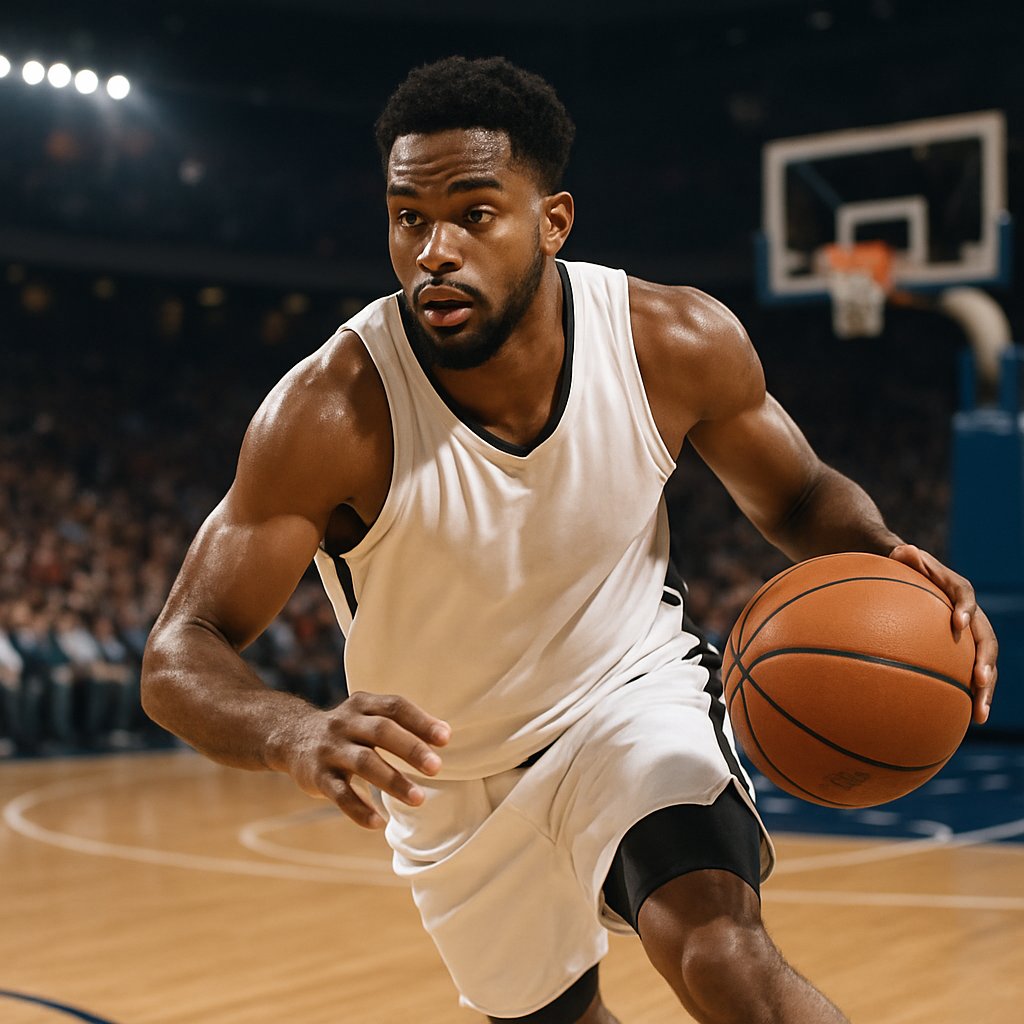
When LeBron James rose up for that fadeaway jumper and watched it drop through the net, the moment wasn’t just about passing Kareem—though with 38,388 points and still climbing, the numbers tell their own story of a man who has stretched excellence across two decades. What gets lost in the highlights is how a single bucket can ripple through neighborhoods where kids lace up on cracked asphalt courts, dreaming bigger because they see themselves in his journey. The game has always been bigger than stats, and LeBron’s chase has always carried that weight for Black communities that built this sport from the ground up.
That signature night showed the same blend of power and poise we have come to expect. He dropped 38 points on 16-of-25 shooting, knocked down three of six from deep, and still found time for nine assists and seven rebounds in 37 minutes. Defenses threw everything at him, yet he moved like someone who has learned every angle of the floor after all these years.
LeBron needed just 13 points entering the fourth to etch his name at the top, and he got there without forcing a thing. The Lakers felt the shift in energy the moment the record fell, a reminder that one player’s sustained greatness can lift an entire locker room. He entered the league as a rookie averaging 20.9 points and never once fell below 25 points per game in a full season, carrying that scoring touch from Cleveland to Miami and back again, then to Los Angeles.
The milestones stacked up steadily: 10,000 points in 368 games, 20,000 in 697, 30,000 in 1,093, and now 38,000-plus in 1,410. His 27.1 points per game ranks fourth all-time among players with at least 1,000 games, while his 59.1 true shooting percentage sits comfortably above several legends who came before. Against the historical greats, the efficiency stands out—Kareem at 24.6 points on 55.9 percent true shooting across 1,560 games, Kobe at 25.0 on 55.0 percent in 1,346, Jordan at 30.1 on 56.9 percent in 1,072. LeBron’s mix of volume and care for the ball has rewritten what we expect from a perimeter player deep into his 20th season.
What makes this achievement even more remarkable is the context of how the NBA game itself has evolved during LeBron’s career. When he entered the league in 2003, the three-point line was a more selective weapon, and teams didn’t rely on perimeter shooting with nearly the frequency they do today. Yet LeBron adapted seamlessly, becoming a reliable three-point threat while maintaining his dominance in the paint and mid-range. His 40.3 percent career three-point shooting on volume attempts demonstrates a versatility that separates his scoring from purely positional dominance. He’s scored from every conceivable distance and angle, making him uniquely difficult to defend across an entire game.
The durability required to achieve this milestone cannot be overstated. LeBron has played in 1,410 games—a staggering number that reflects not just longevity but consistent availability. He’s missed remarkably few games due to injury throughout his career, a testament to his conditioning regimen and physical maintenance. While other scorers like Jordan, Kobe, and even Wilt Chamberlain had higher per-game averages, none combined elite scoring with the iron-man durability that LeBron has displayed. He’s essentially played 17 full seasons without significant downtime, which speaks to both mental toughness and an investment in his body that has become legendary around the league.
The year-by-year progression also reveals something crucial about LeBron’s approach to the game. Rather than declining sharply after his athletic prime, he’s methodically adapted his scoring. In his early years with Cleveland and Miami, LeBron was more explosive and reliant on athleticism. His current iteration relies on spacing, footwork, and basketball intelligence. He’s learned to hunt mismatches, use his passing threat to create scoring opportunities, and position himself in areas where defenders must respect multiple options. This evolution has allowed him to maintain 25-plus points per game well into his late thirties, something few thought possible when he entered the league as a teenager.
The cultural significance of this record extends beyond basketball statistics. LeBron’s journey from Akron, Ohio to the NBA’s highest-scoring throne represents a particular kind of aspiration that resonates across demographics. He’s maintained a presence in his home communities, building schools and creating pathways for youth who might otherwise lack resources. When kids see the all-time scoring record attached to a player who uses his platform for social good, it sends a message about what’s possible and what responsibilities come with excellence. At 38, the projections still point upward—another 4,000 points possible if he keeps averaging around 25 through age 42, pushing the record past 42,000. What inspires me most is how his presence has lifted teammates too, creating space for others the same way we see in the WNBA when stars like A’ja Wilson draw constant attention and open lanes for their sisters. That kind of gravity changes how teams scheme, how young girls and boys study the game, and how communities rally around the sport that has always given us a stage. LeBron’s run continues to prove that longevity at this level is its own kind of cultural inheritance.
The statistical dominance also invites comparison with other all-time greats across different eras. While Kareem’s skyhook was virtually unguardable in his time, LeBron’s complete toolkit—his size at the wing position, his court vision, his ability to score in transition and in the halfcourt—has made him nearly as difficult to defend. The gap between LeBron and the third all-time scorer, Karl Malone, is substantial and growing, ensuring that barring injury, this record will stand for decades. His nearest active competitors in scoring are still well behind, with no current player showing signs of mounting a serious challenge to the all-time mark within the next 15 years.
Looking forward, LeBron’s continued pursuit of scoring records will likely reshape how we view longevity in basketball. He’s proven that with proper training, mindset, and support systems, elite athletes can extend their productive windows far beyond what previous generations thought possible. For NBA scouts, coaches, and players studying the game, LeBron’s career arc offers a blueprint for sustainability—one built on continuous improvement, flexibility in roles, and an unwavering commitment to excellence that transcends individual statistics.