
Magic Johnson Passing Records and Influence
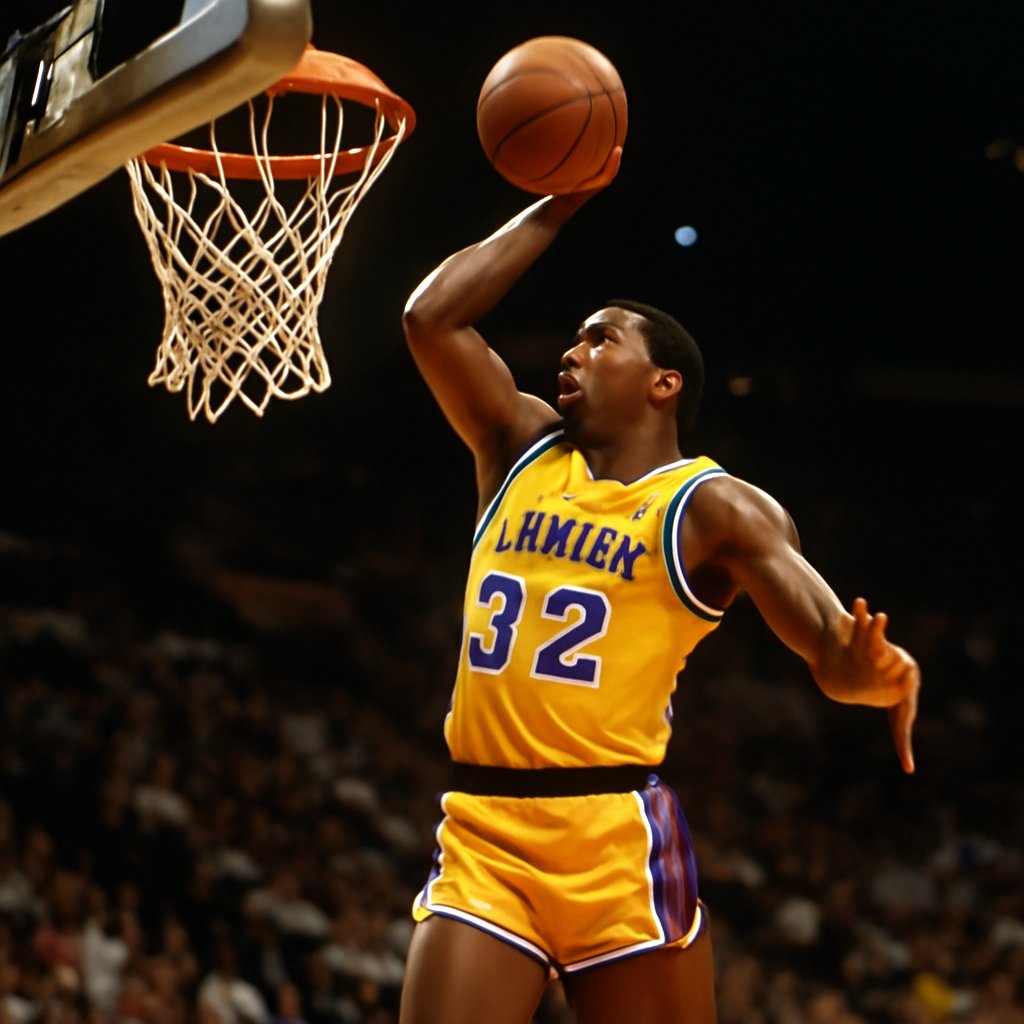
Magic Johnson’s story starts in Lansing, where a young Earvin learned that basketball could hold a neighborhood together when everything else felt unsteady. His no-look passes and lightning-fast outlets didn’t just rack up assists; they turned teammates into believers and turned fans into family. The game has always been bigger than stats, and Magic understood that from the jump.
From Everett High School, where he averaged 28.8 points and 16.6 rebounds, to Michigan State’s 1979 NCAA title run, his vision stood out early. Those years in Michigan built the foundation for a style that would later light up the NBA. Drafted first overall by the Lakers in 1979, Magic stepped into a partnership with Kareem Abdul-Jabbar and immediately shifted how teams played in transition. His rookie year average of 7.3 assists was just the beginning of a career that would rewrite the point guard position.
What gets lost in the highlights is how his passing lifted everyone around him. Magic finished with 10,141 career assists and led the league four times, including that career-best 13.1 per game in 1983-84. He posted 1,078 assists in the 1984-85 season alone and maintained elite efficiency across twelve seasons. In the playoffs he added 2,346 more assists over 190 games, many of them in the five championship runs of 1980, 1982, 1985, 1987, and 1988. His career assist-to-turnover ratio of 2.9 to 1 speaks to the calm decision-making that defined Showtime.
The remarkable aspect of Magic’s assist totals is not just their volume but their consistency and context. During the early 1980s, when defensive rules were tighter and pace-of-play was different than modern eras, accumulating over 13 assists per game was extraordinarily difficult. Magic achieved this feat while also being a primary scorer, often leading the Lakers in points during crucial playoff moments. His ability to dominate both facets of the game simultaneously set him apart from traditional point guards who were often one-dimensional in their approach to the game.
Magic’s court vision extended beyond simple outlet passes to trailing teammates. He pioneered the art of finding cutters in tight spaces, orchestrating pick-and-roll offense before it became the NBA staple it is today, and creating scoring opportunities for role players that elevated their confidence and production. Players like Byron Scott, Michael Cooper, and James Worthy thrived partly because Magic consistently put them in positions to succeed. This multiplier effect on teammate performance is something that statistics alone cannot fully capture, yet it represents perhaps his greatest contribution to basketball.
The Lakers’ dynasty wasn’t just about talent; it was about the unselfish culture Magic helped create in the locker room. He showed future stars that assists and team success mattered as much as individual scoring. That same spirit echoes today when WNBA guards like Courtney Vandersloot or Skylar Diggins-Smith prioritize the extra pass in clutch moments, proving the values Magic embodied travel across leagues and generations.
Beyond the regular season, Magic’s postseason performance deserves special recognition. His ability to elevate his game during the playoffs, including his legendary 42-point performance in Game 6 of the 1980 Finals while playing center, demonstrated that his passing prowess never diminished when stakes were highest. In fact, playoff basketball often requires even more precise decision-making, as defenses tighten and margins shrink. Magic’s 2,346 playoff assists represent excellence under pressure, a quality that separates good playmakers from great ones.
His influence stretches far beyond the box score. Players such as Chris Paul, Steve Nash, and LeBron James have pointed to Magic’s game as the blueprint for versatile, positionless basketball. Coaches now design offenses that reward spacing and multiple playmakers because of the standard he set. Globally, his flashy yet precise style helped the NBA reach new audiences, and youth programs still teach his fundamentals of vision and timing. Magic earned twelve All-Star nods and ten All-NBA selections while turning no-look and behind-the-back passes into teaching tools studied by kids everywhere.
The statistical innovations Magic introduced changed how the game was played for decades. His success with transition basketball and fast-paced offense influenced coaching philosophies across all levels. Teams began investing more heavily in guards who could facilitate rather than simply score, recognizing that playmaking ability could be just as valuable as shooting prowess. The “Showtime Lakers” weren’t just entertaining; they were demonstrating that basketball could be both beautiful and effective, fundamentally altering how the sport approached strategic design.
Magic’s impact on player development cannot be overstated. He understood that making his teammates better wasn’t just about passing them the ball—it required building their confidence, encouraging them to take on bigger roles, and showing them how their contributions fit into the larger team narrative. This mentorship approach, which he carried into his post-playing career as an executive, established a template for how veteran stars should invest in their teammates’ growth and development.
The competitive context in which Magic played also deserves acknowledgment. The 1980s NBA featured some of the most defensively intense basketball ever played in the league. Hand-checking was legal, physical contact was permitted, and defenses could be far more aggressive than in modern eras. Despite these constraints, Magic’s assist numbers remained elite, a testament to his exceptional court awareness and decision-making under duress. His ability to succeed in such a defensive environment makes his records even more impressive when viewed through a historical lens.
Magic’s legacy also encompasses how he changed perceptions about what a point guard could be. Before his arrival, point guards were often viewed as limited facilitators who stayed on the perimeter. Magic demonstrated that a guard could be 6’9″, dominate physically when needed, guard multiple positions, and still operate effectively as a primary playmaker. This versatility opened new possibilities for player development and roster construction that teams still employ today.
The game has always been bigger than stats, and Magic’s legacy proves it. From record-setting numbers to the way he made teammates better and communities prouder, he remains the gold standard for what a point guard can mean to the sport. Future generations will keep studying his film not just for the assists, but for the heart he poured into every outlet pass. His contributions to basketball extend far beyond statistics, influencing the very philosophy of how the game should be played with style, substance, and an unshakeable commitment to making those around him better.