
Mini Basketball Hoop Guide: Types, Tips & NBA Ties
Ask any NBA junkie how they fell in love with the game, and there’s a solid chance a mini basketball hoop is part of that origin story. Whether it was clipped to a bedroom door or mounted in the office above a trash can, that little rim taught countless future hoopers their first crossover moves and fadeaway shots. Today, the mini hoop market has exploded into a legit industry, with some models even mimicking the pro-grade tech found in actual NBA arenas.
This guide breaks down everything you need to know — from why mini hoops matter for skill development to how to pick the right one, plus a few numbers that show just how massive this niche has become.
Why the Mini Basketball Hoop Became a Cultural Fixture
Basketball is the most accessible major sport in America, and the mini basketball hoop is a huge reason why. According to the Sports & Fitness Industry Association, basketball participation in the U.S. sits above 28 million players annually, and youth engagement often starts indoors, long before a kid ever steps onto a regulation 10-foot court.
Mini hoops solve a real problem: not everyone has a driveway, a backyard, or access to a gym. A door-mounted or wall-mounted hoop turns any hallway into a personal practice gym. NBA players themselves have talked about early reps on smaller setups — Stephen Curry’s father Dell has mentioned in interviews how repetition, even on shortened setups, built the muscle memory that later translated to NBA-range accuracy.
The Skill-Building Case
- Shooting form repetition without needing a full court
- Hand-eye coordination drills for kids as young as 3-4 years old
- Low-pressure environment to work on trick shots and creativity
- Convenient stress relief for adults who want quick shooting breaks during work
Types of Mini Basketball Hoops on the Market
Not all mini hoops are created equal. The category has splintered into several distinct product types, each built for different spaces and skill levels.
Over-the-Door Hoops
These are the classic entry point — lightweight, foam rim or breakaway rim designs that clip over a standard door. Brands like SKLZ and Franklin Sports dominate this segment, often bundling a mini foam ball for safety indoors.
Wall-Mounted Arcade-Style Hoops
Popular in game rooms, these often include electronic scoreboards, dual hoops for head-to-head competition, and even sound effects mimicking an arena buzzer. Some higher-end models include breakaway rims just like the ones engineered for NBA competition, which the official rules require to reduce injury risk during dunks.
Desktop and Mini Tabletop Hoops
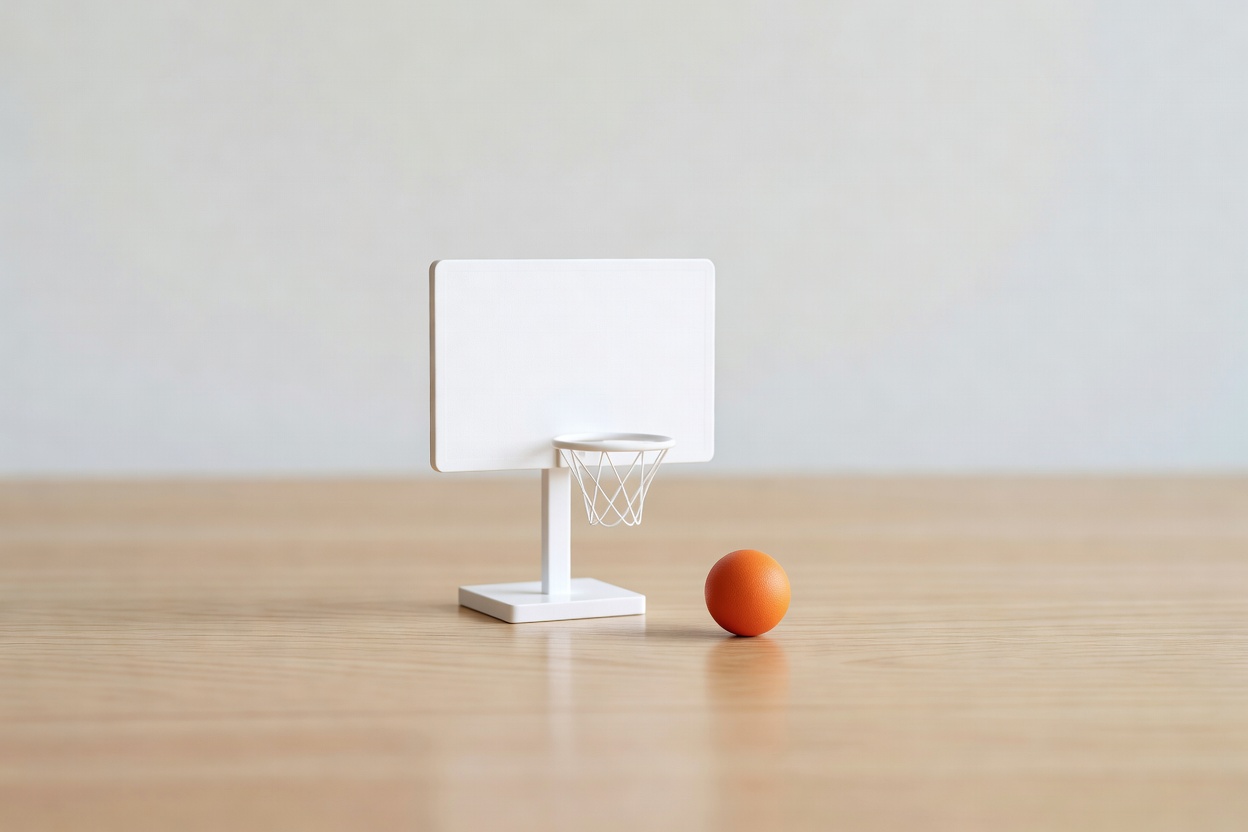
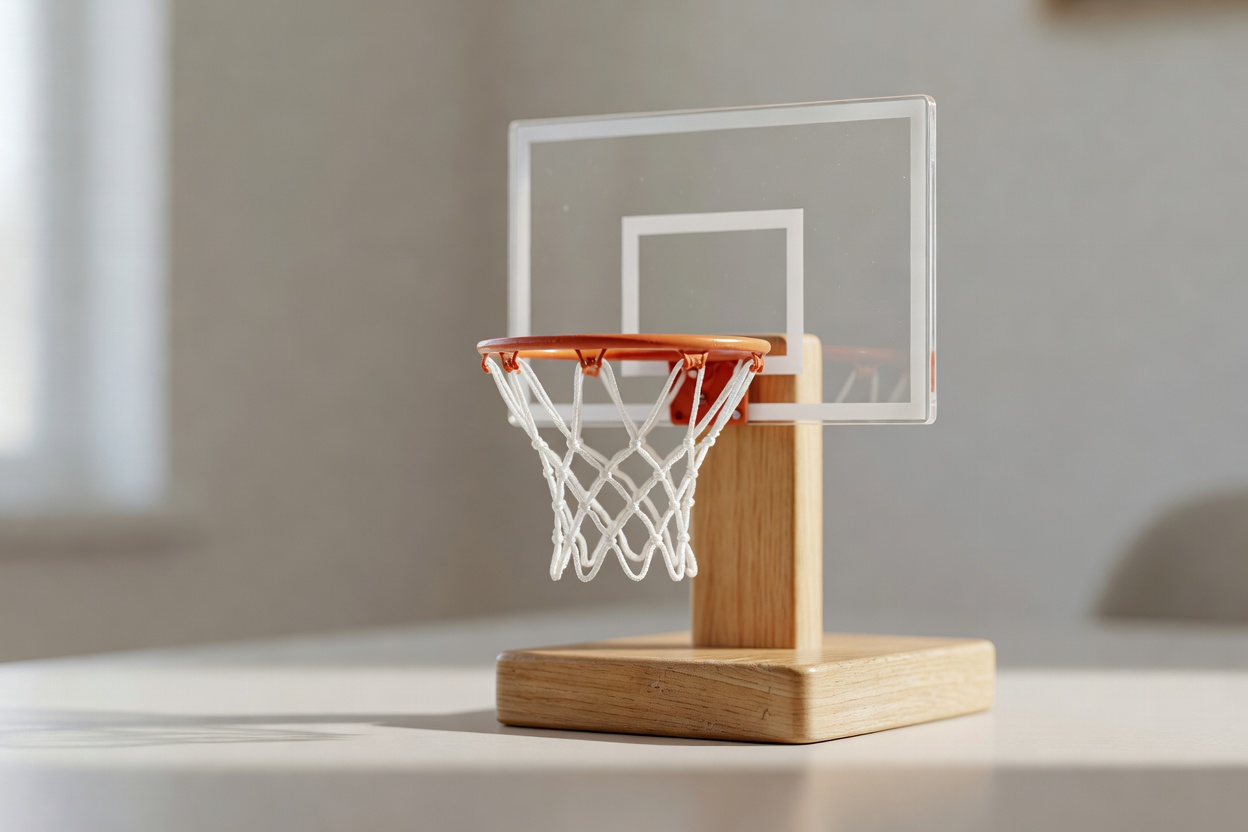
These tiny setups, often paired with a crumpled paper “ball” or foam mini ball, have become office desk staples. They’re a favorite among NBA front-office employees and streamers who want a quick dopamine hit between tasks.
Freestanding Mini Hoops
Adjustable-height, weighted-base hoops that work great for younger kids learning to dunk or shoot with proper arc. Many models scale from toddler height up to 5-6 feet, extending their usefulness for years.
Mini Basketball Hoop Buying Guide: What Actually Matters
If you’re shopping for a mini basketball hoop, focus on these factors before checking out:
- Rim durability — spring-loaded breakaway rims last longer under repeated dunks and mimic real hoop feel
- Backboard material — polycarbonate backboards resist cracking better than thin plastic
- Mounting hardware — over-door hoops should include non-marking hooks or padded brackets to protect doors
- Ball type — foam balls are safest indoors; mini rubber balls offer better bounce for driveway-style outdoor setups
- Size scalability — adjustable-height options give kids room to grow instead of needing a hoop upgrade every year
Price Ranges to Expect
Basic over-door hoops typically run $15-$30. Arcade-style dual hoops with scoreboards land between $150-$400 depending on brand and electronics. Premium freestanding adjustable hoops for driveways or garages can range from $50-$150.
How Mini Hoops Connect to Real NBA Training
It might sound like a stretch, but shooting mechanics transfer regardless of rim size. Elite trainers who work with NBA players — including strength and skills coaches featured on NBA.com — often emphasize repetition-based drills that build muscle memory through thousands of reps, not necessarily full-court reps every time. A mini hoop lets players (and fans) drill wrist snap, follow-through, and release consistency without needing a gym.
Coaches have also pointed to visualization benefits. Practicing form on a mini hoop, even from a seated position, reinforces the shooting motion mentally — something sports psychology research backed by outlets like the American Psychological Association supports through studies on mental rehearsal and motor skill retention.
Fun Ways NBA Fans Use Mini Hoops
- Office March Madness bracket challenges using a desktop hoop
- Trick shot content for social media (Dude Perfect built an empire on this concept)
- Warm-up rituals before watching nationally televised games
- Family H-O-R-S-E tournaments during holiday gatherings
Final Buying Tips for Fans and Families
Match the hoop to the space and the player. A toddler needs an adjustable freestanding hoop with a soft foam ball, not an arcade-style rim with a breakaway spring. A die-hard fan who wants game-day hype should look at dual-hoop competitive models with scoreboards. And if desk-side stress relief is the goal, a $15 tabletop hoop delivers more value per dollar than almost any other office gadget.
Whatever setup you choose, the mini basketball hoop remains one of the simplest, most affordable ways to keep the game alive in everyday spaces — bedrooms, garages, offices, and hallways alike. It’s proof that you don’t need a regulation court to fall in love with basketball, or to keep that love burning long after your playing days on an actual team have ended.