
Most Blocks in NBA History Career Leaders
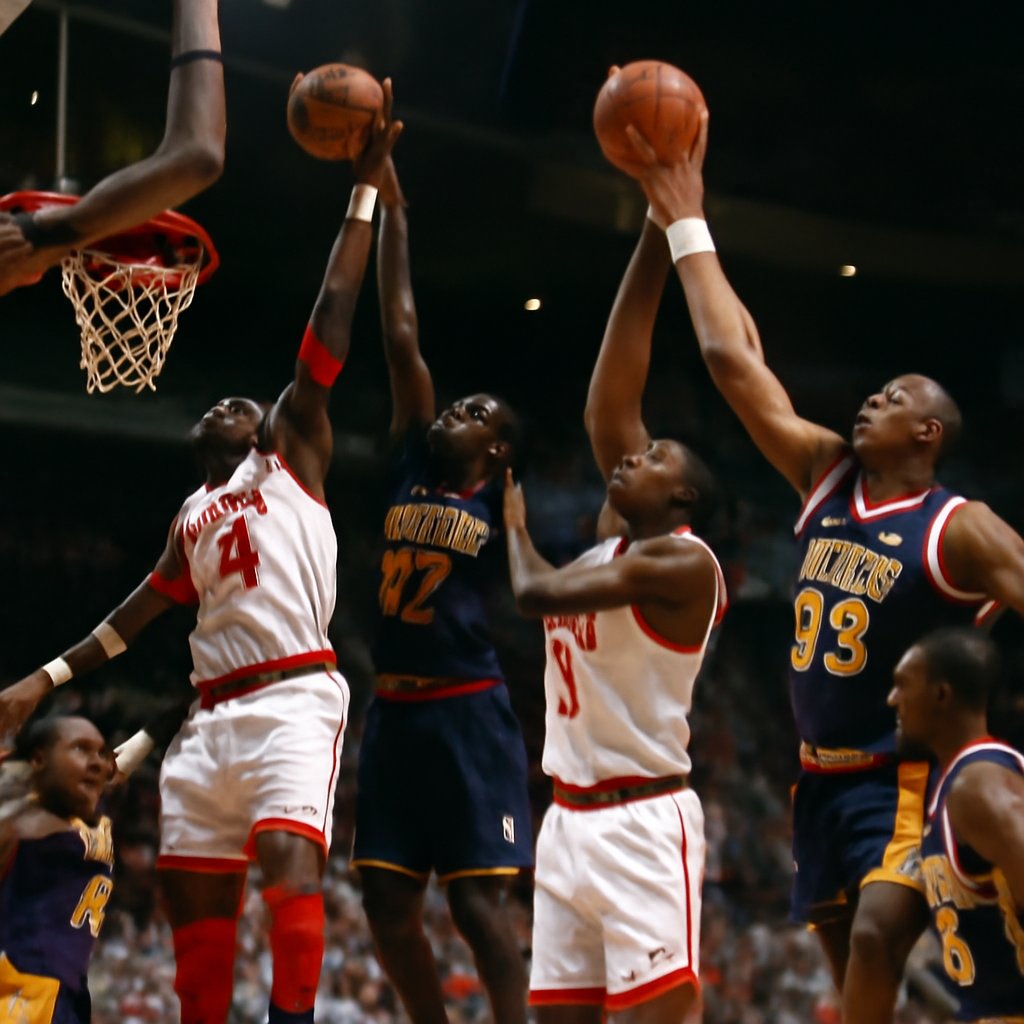
Man, looking at the most blocks in NBA history career leaders takes me right back to those days I laced up for four years playing college ball, battling in the paint where one good swat could shift the whole energy of a gym full of folks from the neighborhood. These numbers ain’t just stats—they’re about the big men who turned rejection into power, the kind of defense that echoes through Black American culture like a Sunday pick-up game turning into legend.
Hakeem Olajuwon sits at the top with 3,830 career blocks over 1,238 games, averaging 3.1 a night mostly with the Houston Rockets. The Dream’s footwork and timing felt like something you couldn’t teach, that Nigerian-born center combining grace with force in a way that made opponents think twice before attacking the rim. His ability to anticipate offensive moves came from legendary work ethic and film study—he’d spend hours in the gym understanding how different players operated, then position himself perfectly to make the swat without fouling. That’s the kind of intelligent defense that separates the all-time greats from just tall guys protecting the rim.
Dikembe Mutombo follows with 3,289 blocks across 18 seasons and multiple teams, his four Defensive Player of the Year awards backed by that signature finger-wag that became a cultural calling card—pure intimidation that any player who’s been in the gym knows changes how the other side plays. What made Mutombo special wasn’t just his length at 7-foot-2, but his motor and willingness to defend anybody on the floor. He could guard centers in the post, block shots on the perimeter, and still have the energy to chase guys down the court. That versatility, combined with his shot-blocking instincts, made him the kind of defender who could single-handedly change a team’s defensive identity.
Kareem Abdul-Jabbar’s 3,189 blocks came with that long wingspan anchoring the Bucks and Lakers for two decades, his skyhook just the offensive side of a complete defensive anchor. Few people talk about Kareem as a defensive force today, but his ability to alter shots near the rim was a massive part of why those Lakers teams won championships. Playing in an era where centers actually stayed in the paint more often, Kareem made the most of his positioning and length, proving that you could be one of the greatest offensive players ever while still contributing elite defense.
The advanced metrics back up what any player who’s been in the gym knows: these totals reflect eras when physical interior play rewarded rim protection. Mark Eaton, all 7-foot-4 of him, piled up 3,064 blocks in just 11 seasons with the Utah Jazz, leading the league four times even with limited offense. What’s remarkable about Eaton is that he did this with minimal training in the modern sense—no specialized strength coaches, no advanced analytics telling him exactly where to stand. He relied on pure size, positioning, and understanding the game. His presence alone changed how opposing teams attacked the Jazz, forcing them to shoot from further out or go to perimeter-oriented offenses before that even became fashionable.
David Robinson added 2,954 while taking home MVP and leading the Spurs to their first title. The Admiral’s combination of athleticism, basketball IQ, and skill was rare for a shot-blocker—most guys who averaged nearly 3 blocks per game couldn’t also score 21 points a night with efficient footwork in the post. Robinson proved that elite defenders could also be elite scorers, a template that guys like Dwight Howard and eventually Joel Embiid would follow. Patrick Ewing dropped 2,894 with the Knicks, mixing scoring with elite protection at the same elite level, his power dunks and blocked shots both becoming part of his intimidating presence in the paint.
Tim Duncan reached 3,020 and represents a different model of shot-blocking entirely—the technical, fundamentally sound approach where technique matters as much as athleticism. Duncan didn’t have the explosive athleticism of Mutombo or Olajuwon, but his understanding of spacing, angles, and footwork made him nearly impossible to finish on. He’d use his body positioning to make it nearly impossible for opponents to even attempt shots in his area, turning prevention into the ultimate form of defense. Dwight Howard added 2,228 as the game stretched into the 2000s and 2010s, showing how size could still dominate even as spacing increased and three-point shooting became more prominent.
I remember watching Mutombo lead the league in blocks four straight seasons from 1994-95 to 1997-98—that’s the kind of dominance that ripples through communities where basketball ain’t just a sport but a way out and a source of pride. Eaton’s single-season record of 456 blocks in 1984-85 still stands as a monument to what a dedicated big could do before spacing changed everything. Five of the top 10 all-time leaders had their primes in the 1990s, when slower paces and defensive emphasis let these guys thrive, and the top 10 average more than 2.8 blocks per game.
The context of era matters when you’re evaluating shot-blocking stats. In the 1980s and early 1990s, teams played at slower tempos with more isolation basketball, which meant more opportunities for interior defenders to impact the game. Opponents lived in the paint, and shot-blockers could accumulate ridiculous numbers just through volume. Today, with spacing, pick-and-roll offenses, and guys launching threes from 30 feet, traditional centers see fewer rim attempts and lower shot-blocking opportunities overall. That’s why comparing Eaton’s 456 blocks in 82 games to a modern player’s numbers requires context—the game itself has fundamentally changed.
Today, guys like Anthony Davis chase those marks while Rudy Gobert has already cleared 1,500 and keeps climbing, even as the perimeter game has cut down per-game averages. Gobert’s success in the modern era shows that elite shot-blocking remains valuable, even if the opportunity and per-game rate is lower. His ability to anchor defenses and cover mistakes has made him one of the most impactful defensive players in the league, proving that blocks remain a meaningful stat even when volume is down across the board.
Shot blocking still forces lower-percentage attempts and ties straight to playoff success, the same way it did when Olajuwon’s graceful swats or Mutombo’s towering presence defined championship defenses. Teams that make deep playoff runs almost always have elite rim protection—whether it’s traditional shot-blockers in the paint or modern defenders who can protect the rim while also defending the perimeter. The value hasn’t changed, just the way it gets measured and deployed within modern defensive schemes.
These leaders turned the art of rejection into something that inspires the next generation coming up in gyms across the country. Young big men still dream of the next evolution of rim protection, blending the fundamentals of the past with the modern game’s demands. That’s the real legacy of these shot-blocking legends.