
NBA All-Time Scoring Leaders
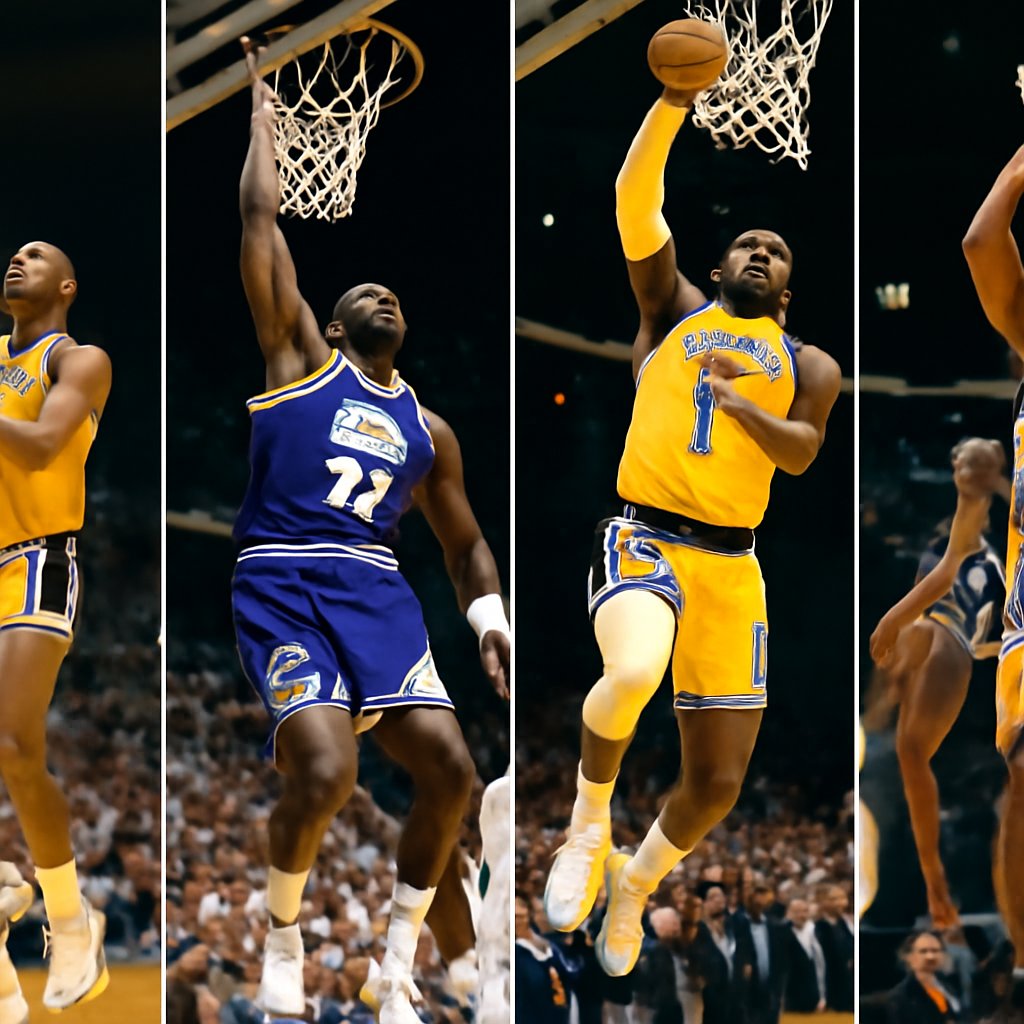
Man, when LeBron James crossed that threshold on February 7, 2023, and pushed past Kareem Abdul-Jabbar’s 38,387 points, it hit different for anybody who’s ever laced up and felt the weight of carrying a team’s offense night after night. I played four years of college ball myself, so I know exactly how the body starts talking back after a long season, and what LeBron has done across 21 seasons at 27.2 points per game shows a level of physical maintenance that most players can only dream about. His total now sits at 40,361 and counting, and the fact that he’s still dropping over 25 a night at 39 tells you everything about modern training and recovery.
Kareem built his mark on that unstoppable skyhook, averaging 24.6 over 20 seasons, the kind of consistent weapon that Black kids in every neighborhood gym have tried to copy since the 70s. LeBron’s game is built different though, mixing scoring with playmaking and defense in a way that reflects how the league has opened up spacing and pace. The advanced metrics back up what any player who’s been in the gym knows: longevity plus efficiency wins the long war for total points.
Here are the top 15 all-time scorers, numbers holding steady from the official records: LeBron at 40,361-plus in 21 seasons, Kareem at 38,387 in 20, Karl Malone at 36,928 in 19, Kobe Bryant at 33,643 in 20, Michael Jordan at 32,292 in 15 with that ridiculous 30.1 average, Wilt Chamberlain at 31,419 in 14, Shaquille O’Neal at 28,596 in 19, Hakeem Olajuwon at 26,946 in 18, Elvin Hayes at 27,313 in 16, Oscar Robertson at 26,710 in 14, Dominique Wilkins at 26,668 in 15, Kevin Durant at 27,500-plus in 17, another Wilt mark at 26,395 in 13, Jerry West at 25,192 in 14, and Lenny Wilkens at 25,389 in 15.
Only two active players sit on this list right now: LeBron leading the way and Durant in 12th. Durant’s size and shooting touch let him score from anywhere, the same kind of skill set that has always drawn kids from the courts where basketball serves as both escape and expression in Black communities across the country. If he stays healthy, he can keep climbing.
The Distance Between Dominance and Longevity
What separates the all-time greats on this list reveals itself when you dig into their scoring patterns. Michael Jordan’s 30.1 points per game average stands as the highest in NBA history, yet he trails Karl Malone by over 4,600 points in career total. That gap isn’t a knock on Jordan—it’s the brutal mathematics of time. Jordan played 15 seasons; Malone played 19. Every additional season compounds opportunity. LeBron understood this better than most, structuring his career decisions around sustainability rather than peak dominance. He took less demanding roles as he aged, shifting from primary scorer to facilitator, which paradoxically extended his ability to accumulate points because the team didn’t ask his body to break down at 28 the way some systems demand.
Wilt Chamberlain’s 31,419 points in just 14 seasons, averaging an astronomical 30.1 points per game (tied with Jordan), speaks to an otherworldly athleticism that the modern game simply cannot replicate. Playing against defenders without three-point lines and with rules that allowed hand-checking, Chamberlain dominated in ways that don’t translate directly to contemporary comparison. Yet watching footage shows a man so physically dominant that even accounting for era differences, he’d still be historic. The interesting question isn’t whether he’d average 50 points today—he wouldn’t—but whether any player with his size, strength, and coordination could dominate at 25 points per game in any era.
Efficiency Versus Volume: The Scoring Equation
The conversation about all-time scoring leaders always circles back to one central tension: is it better to score 30 points on great efficiency or 24 points on elite efficiency? Kareem’s career true shooting percentage of .540 represents a remarkable balance of volume and effectiveness. LeBron’s .576 true shooting percentage across more games played showcases how rule changes and modern spacing have benefited contemporary scorers. Kevin Durant’s .616 true shooting percentage stands as one of the finest offensive seasons in basketball history, a combination of size, skill, and spacing that may never be replicated.
These percentages matter because they tell the story of how much harder or easier it was to accumulate points in different eras. A player shooting .550 true shooting percentage in the 1970s was doing something fundamentally different than a player shooting .550 today. The defensive intensity, the physicality allowed, the spacing of the floor—all of these compressed the range of possible effectiveness in earlier decades.
How Scoring Eras Have Shifted the Game
Scoring eras have shifted dramatically. Early days ran low at 91.6 league points per game with no three-pointer and heavy physicality. The expansion years jumped to 110.2 once the arc arrived. The modern stretch from 1976 to 1995 sat around 106.3 while defenses adjusted. The three-point revolution period dipped to 101.8 amid more isolation, and today’s analytics era holds at 106.1 with pace-and-space emphasis. Players like LeBron and Durant thrive in this environment because rules reward spacing and skill over the brute force Wilt and Kareem faced.
The three-point line’s introduction in 1979 fundamentally altered what scoring meant. Suddenly, teams could space the floor in ways that created driving lanes and reduced defensive efficiency. This evolution accelerated dramatically after 2014 when the Warriors demonstrated that five-out spacing and high three-point volume didn’t just work—it won championships. Players drafted after 2010 grew up shooting three-pointers as fundamental to their scoring arsenal. Someone like Durant benefited from this developmental shift; he didn’t learn to shoot threes later. He learned them from childhood, making his scoring profile radically different than even Kobe’s despite similar overall volume.
The Role of Pace and Possessions
Another critical factor in scoring accumulation involves pace of play. The NBA averaged 98 possessions per team per game in the mid-1980s. Today it sits around 100-102, but the distribution of those possessions matters enormously. In the 1980s, with more isolation ball and fewer transitions, individual possessions took longer to develop but fewer half-court sets occurred overall. The modern pace-and-space game features more transition attempts and faster ball movement, creating more scoring opportunities within each possession for the primary scorer.
Karl Malone benefited from a relatively high-pace Jazz system during his best years, playing alongside John Stockton in pick-and-roll sets that generated consistent scoring opportunities. LeBron’s career witnessed the shift from isolation-heavy ball to spread pick-and-roll and dribble handoffs, allowing him to score in more ways. The infrastructure of the game changed beneath his feet, but his skillset adapted because his playmaking ability translated across systems.
The Future of the Scoring Record
Longevity remains the real separator. Jordan’s 30.1 average over just 15 seasons still stuns, but Kareem’s steadier 24.6 over 20 seasons produced more in the end. LeBron splits that difference perfectly. Rules changes and the three-point line give today’s scorers tools earlier generations never had, yet the physical grind of 82-game seasons plus playoffs never changes.
LeBron’s record looks safe for a while, though Durant still has time if injuries allow. The league’s focus on load management might make matching these totals even harder going forward. When a 20-year-old prospect enters the league today, the team immediately begins thinking about playoff rests, strategic absences, and preserving him for October rather than maximizing regular season totals. Giannis Antetokounmpo, Jayson Tatum, and Luka Doncic all possess the scoring ability