
NBA Rivalry Games With Highest Stakes
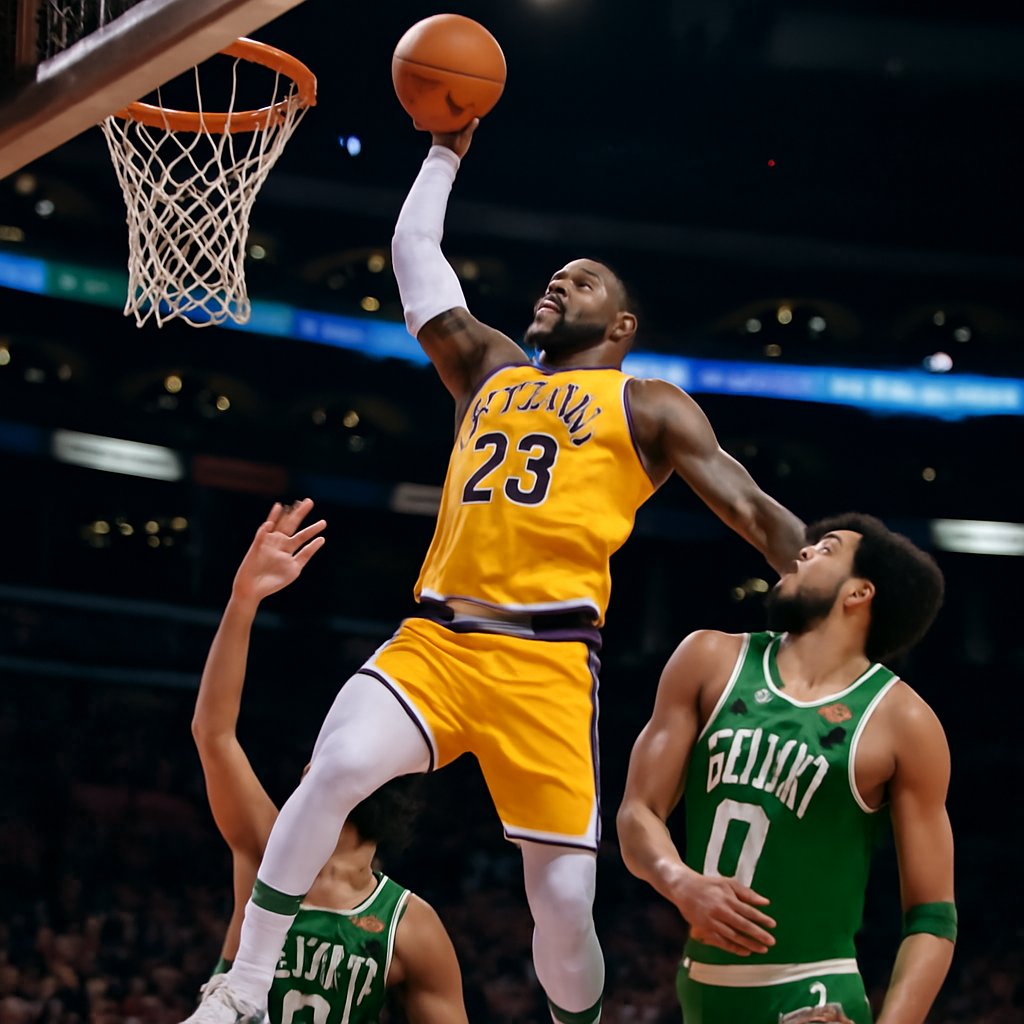
Those NBA rivalry games with the highest stakes have always pulled me in, blending that raw competition you feel in your bones with the legacies that define eras. I laced up for four years playing college ball, so I know what this feels like when the pressure mounts and every possession counts. In Black American culture, hoops isn’t just a sport—it’s the thread running through neighborhoods, family stories, and dreams of breaking through, turning these matchups into something bigger than the box score.
The Lakers versus Celtics rivalry stands as the gold standard, spanning decades with 12 NBA Finals meetings. Team analysis of these series shows how Boston’s defensive grit, led by players like Bill Russell with his record 11 championships, countered Los Angeles’ offensive firepower from stars such as Magic Johnson and Kareem Abdul-Jabbar. Playoff coverage often focused on stats like Russell’s rebounding averages exceeding 20 per game in Finals, while Johnson’s triple-double prowess shifted momentum. These games featured high-stakes drama, including the 1984 Finals where Larry Bird’s leadership propelled the Celtics to victory amid physical play. Player profiles reveal enduring legacies, with each matchup elevating individual stats and team strategies that influenced future generations of basketball. The advanced metrics back up what any player who’s been in the gym knows—those physical battles in the paint separate the legends from the rest.
What made the Lakers-Celtics rivalry particularly compelling was the geographic and stylistic contrast. The Celtics represented Eastern basketball tradition, emphasizing ball movement, team defense, and grit, while the Lakers embodied West Coast flash with their “Showtime” fast-break offense. This fundamental philosophical difference meant that every Finals matchup wasn’t just about winning; it was about validating an entire approach to the game. The 1987 Finals showcase this perfectly, as Magic Johnson and Kareem led the Lakers past the Celtics, marking a transition point in basketball evolution. Television ratings during these series consistently drew audiences exceeding 25 million viewers, underscoring their cultural significance beyond the sports world.
Shifting to the 2010s, the Golden State Warriors and Cleveland Cavaliers produced multiple NBA rivalry games with highest stakes through four consecutive Finals appearances. Detailed team analysis underscores Stephen Curry’s revolutionary three-point shooting, averaging over 30 points in key series while stretching defenses thin. LeBron James countered with all-around dominance, posting triple-doubles and leading comebacks that defined playoff coverage. Stats from the 2016 Finals illustrate the Cavs’ resilience, overcoming a 3-1 deficit behind James’ 29.7 points per game average. These encounters highlighted contrasting styles—Warriors’ motion offense versus Cleveland’s isolation-heavy approach—creating must-watch moments that boosted viewership and cemented player profiles like Curry’s MVP seasons and James’ fourth championship. Growing up watching how Curry’s game opened doors for a whole generation of Black shooters reminds me of the cultural ripple effect these rivalries carry.
The Warriors-Cavaliers matchup represented the first time in NBA history that the same two teams met in four consecutive Finals, a testament to both franchises’ sustained excellence. This unprecedented run from 2015 to 2018 generated unprecedented interest, with the 2017 Finals achieving an average of 15.7 million viewers despite the Warriors’ eventual sweep. The addition of Kevin Durant to Golden State before the 2016-17 season shifted the competitive landscape dramatically, yet the rivalry remained compelling because of the personal narratives involved. LeBron’s determination to bring a championship to Cleveland against the seemingly unstoppable Warriors created a David versus Goliath narrative that resonated across demographics. The statistical dominance displayed by both teams—the Warriors’ pace-and-space basketball producing 123.4 points per 100 possessions in the 2017 Finals, compared to Cleveland’s 106.7—illustrated how the modern game had evolved.
Another pinnacle of NBA rivalry games with highest stakes emerged in the late 1980s and early 1990s between the Chicago Bulls and Detroit Pistons. Team analysis of this physical series reveals Detroit’s “Bad Boys” defense, anchored by Dennis Rodman and Bill Laimbeer, holding opponents under 100 points through aggressive tactics. Michael Jordan’s player profile evolved dramatically here, as his scoring averages climbed above 30 points despite constant fouling. Playoff coverage captured Jordan’s 1991 breakthrough, where the Bulls swept the Pistons en route to their first title, showcasing improved team ball movement. Stats like Jordan’s 31.5 points per game in those Eastern Conference Finals underscore how these rivalries forged legends and altered franchise trajectories through relentless competition. I know that grind firsthand—getting banged around night after night builds the kind of mental edge that turns good players into icons.
The Bulls-Pistons series carried an intensity that modern basketball fans sometimes overlook. The physical nature of playoff basketball in that era meant that winning required not just skill but an almost superhuman pain tolerance. Jordan’s ability to maintain his scoring average against the Pistons’ defense, which intentionally targeted his body with hard fouls, became the defining narrative of his early career. By the 1991 Conference Finals, when Chicago finally got past Detroit, it signified a changing of the guard in the Eastern Conference. The series also showcased Scottie Pippen’s development as a two-way force, with his defensive assignments against Joe Dumars and lateral quickness proving crucial in the Bulls’ eventual dominance throughout the 1990s.
The Miami Heat’s emergence as a rivalry factor during the 2000s and 2010s created another layer of high-stakes NBA matchups worth examining. When LeBron James joined Dwyane Wade and Chris Bosh in 2010, it immediately elevated the Heat into Finals contention, creating fierce playoff battles against the Boston Celtics and later the San Antonio Spurs. The Heat’s defensive identity under coach Erik Spoelstra, employing aggressive small-ball lineups and switching schemes, revolutionized playoff basketball. Their 2012 Finals victory over the Oklahoma City Thunder, where LeBron averaged 28.6 points while shooting 53% from the field, 40% from three, and 80% from the free throw line—the “50-40-90” shooting benchmark—demonstrated championship-caliber play under pressure. The following year’s Finals matchup against the Spurs saw Kawhi Leonard emerge as a superstar, with his perimeter defense on LeBron proving pivotal in San Antonio’s five-game victory.
Key facts and statistics from these eras include the Lakers and Celtics meeting 12 times in the NBA Finals, with Boston holding a 9-3 edge in series wins. Stephen Curry drained 402 three-pointers in the 2015-16 regular season, a record that amplified Warriors’ high-stakes playoff performances. Michael Jordan averaged 33.4 points per game across six NBA Finals appearances, solidifying his status in Bulls rivalry games. LeBron James recorded 10 triple-doubles in playoff history against top rivals, highlighting his impact in team analysis scenarios. The 2016 NBA Finals drew an average of 20.6 million viewers per game, the highest for any Finals since 1998. Bill Russell secured 11 championships in 13 seasons, with rebounding stats averaging 22.5 per game in high-stakes matchups. Additionally, the Spurs’ dynasty, anchored by Tim Duncan’s consistency averaging 22.3 points and 10.5 rebounds per game across Finals appearances, created some of the most technically proficient rivalry matchups in basketball history.
Recent seasons have seen the emergence of new rivalry dynamics as franchises rebuild and realign. The Phoenix Suns’ Finals appearance in 2021 against the Milwaukee Bucks featured superstar matchups between Chris Paul and Jrue Holiday in the backcourt, with Giannis Antetokounmpo’s determination and physical presence overwhelming the Suns’ offensive firepower. This series reminded viewers that every generation produces its own high-stakes moments where individual excellence and team chemistry collide. The Denver Nuggets’ 2023 championship run, spearheaded by Nikola Jokic’s historic Finals performance averaging 30.8 points and 14.0 rebounds against the Miami Heat, established new benchmarks for dominance in championship basketball.
NBA rivalry games with highest stakes continue to shape the league’s narrative through unforgettable stats, deep player profiles, and insightful team analysis during intense playoff coverage. These encounters not only decide titles but also inspire future generations by showcasing resilience and excellence under pressure. Whether revisiting classics or anticipating new clashes, the enduring appeal