
NBA Triple Double Leaders Career Statistics
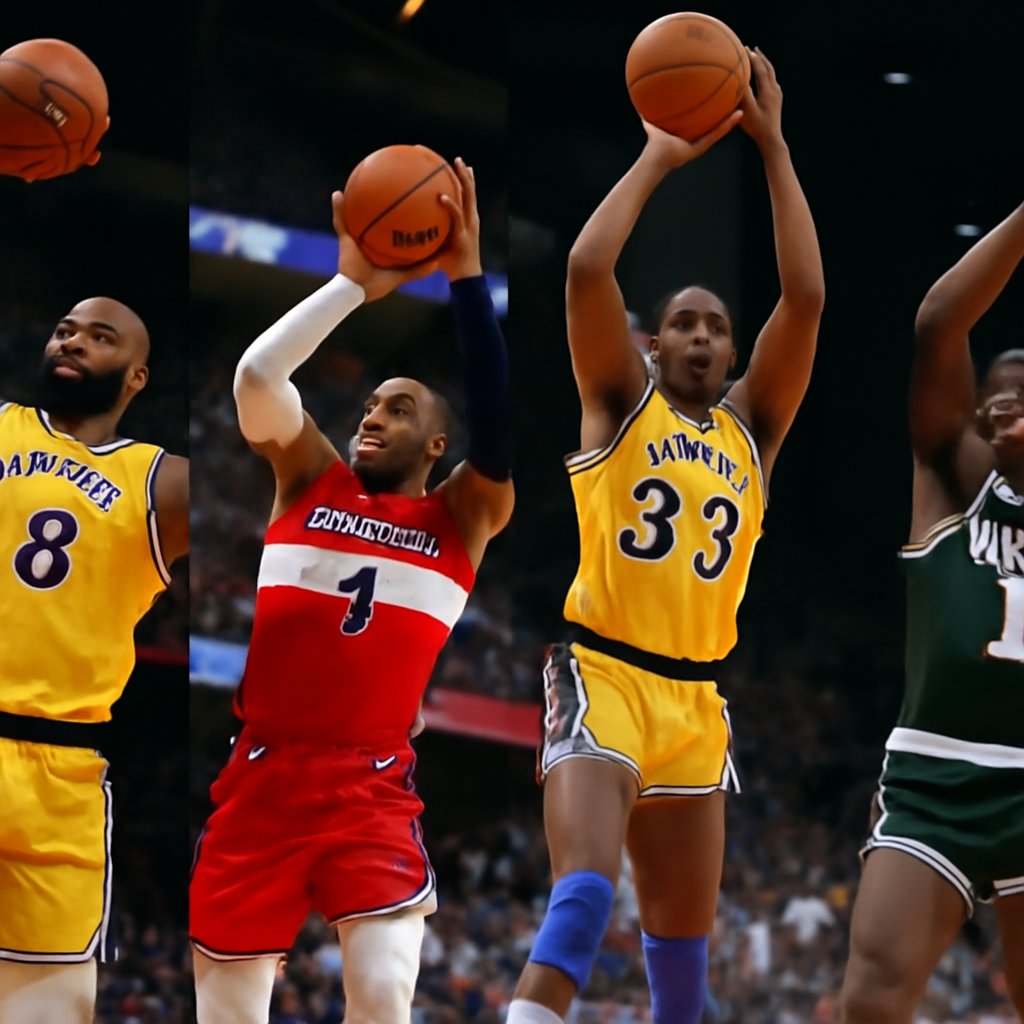
Man, when you talk about NBA triple-double leaders, you’re really talking about the cats who could do it all on the floor—score, board, and dish without missing a beat. I’ve laced up for four years playing college ball, so I know what this feels like: that rare night where your legs are burning from chasing rebounds, your wrists are sore from the assists, and somehow the points just keep coming. From Oscar Robertson’s old-school mastery in the ’60s to Russell Westbrook rewriting the modern book, these numbers tell the story of versatility that separates the greats. The advanced metrics back up what any player who’s been in the gym knows—triple-doubles aren’t just stats, they’re proof you controlled the whole game.
Triple-doubles only got official tracking in 1979-80, but the real ones were putting up those lines way before that. I think about how basketball has always lived in Black American neighborhoods—from pickup runs on cracked asphalt to the big leagues—as a way to show out with every skill you got. Early on, the pace was slower and the focus stayed inside, so those numbers came slower. Rule tweaks and up-tempo styles later opened the door for more of them.
Oscar Robertson set the standard early with 181 career triple-doubles, a ton of them while grinding for the Cincinnati Royals. His 1961-62 season dropped 41 alone, a record that held up for years. Wilt Chamberlain was out there exploding too, even if some of his were undercounted back then. Those brothers laid the foundation.
Russell Westbrook sits at the top right now with 198 career triple-doubles through the 2024 season. His motor never stops—high-usage nights with the Thunder and Wizards turned into consistent production that wore on defenses. Robertson’s 181 is right behind him, then Magic Johnson with 138 from those Showtime Lakers runs. LeBron James checks in fourth at 113, showing you can stretch this across decades and different teams.
Younger guys like Nikola Jokic and Luka Doncic are climbing fast. Jokic doing it from the center spot brings a whole new flavor, the kind of big-man vision that flips traditional roles. Jason Kidd and John Stockton pop up in the historical lists too, guards who mixed elite passing with rebounding hunger.
Understanding the mechanics of a triple-double helps you appreciate why these performances matter so much in real-time evaluation. You need at least 10 points, 10 rebounds, and 10 assists in a single game—sounds straightforward until you realize how rarely all three click together. The assists usually come from being your team’s primary playmaker, the rebounds demand boxing out and pursuing loose balls like they’re gold, and the scoring requires either getting your own buckets or teammates setting you up when you’re already tired from the other responsibilities. That’s why position matters too. Guards like Westbrook and Kidd had to fight for boards against bigger bodies. Centers like Jokic had to venture out and make plays while protecting the paint. Forwards like LeBron could hunt all three more naturally given their size and responsibility mix.
The strategic value of a triple-double extends beyond the stat sheet into actual winning. When your best player is recording a triple-double, it usually means the offense is flowing through multiple actions rather than isolation sets. Ball movement increases. Role players get more looks. Defensively, a player chasing assists and rebounds often stays active and engaged on that end too. Teams that consistently generate triple-doubles from their lead ball-handlers tend to move the needle in team efficiency metrics. It’s not just about one player doing everything—it’s about that player’s all-around engagement raising the collective level.
Beyond the individual shine, these totals line up with winning basketball. Teams with a triple-double engine tend to dictate tempo and keep things balanced, which matters even more when the playoffs hit and pressure spikes—like Magic in the Finals. Analysts pull these career numbers when sizing up MVPs and franchise pieces, and you see that connection in Black basketball culture where community pride rides on players who elevate everyone around them.
The evolution of triple-doubles reflects how basketball strategy itself has transformed. In the ’80s and ’90s, the halfcourt game dominated, and triple-doubles often came from extended offensive sets where a guard could orchestrate play and grab offensive boards. Nowadays, with transition basketball and spacing, some triple-doubles happen faster. A fast break can generate an assist, a defensive rebound, and a bucket in seconds. The three-point line stretches defenses and opens driving lanes where bigs can get involved in more play-making. Yet paradoxically, the emphasis on specialization and three-point shooting in the modern era makes traditional triple-doubles harder too. Players focus more on their primary role rather than diversifying across all three stat categories.
Era adjustments matter because pace and three-point volume changed everything. Adjusted looks show Robertson’s edge over his peers was something special. Westbrook’s 17-season chase highlights the physical toll—those extra possessions and transition runs add up.
When you examine the players who hit 100+ career triple-doubles, a few patterns emerge. First, they almost always play point guard or are positionless talents like LeBron and Jokic. Second, they play in fast-paced systems or create their own pace. Third, they have incredible longevity—hitting 100 triple-doubles requires being productive and healthy for years. Fourth, and this matters, they have the green light to hunt stats when opportunities present. A player on a loaded championship team might average more PPG but fewer triple-doubles if the usage is distributed. Westbrook’s record partly reflects his willingness to impose his will and orchestrate offense in ways that rack up assists.
The single-game record deserves attention too. Westbrook’s 42 triple-doubles in the 2016-17 season remains stunning—that’s practically one every other game for a full season. He averaged a triple-double that year, an accomplishment nobody before or after has matched over an entire campaign. It drove his MVP narrative that season, though the Thunder didn’t have playoff success to match. Still, the consistency over 82 games showed what peak Westbrook was capable of doing night after night.
For young players studying the game, looking at triple-double distribution teaches you something about reads and responsibility. Jokic’s rapid climb up the list—becoming the fastest center to 50 triple-doubles in 2023—shows how the position is evolving. Traditional bigs were finishing at the rim or posting up. Now, elite centers are initiating offense, making skip passes, and turning over the ball in pick-and-roll situations where they operate as secondary playmakers. That shift alone changes what a triple-double means for a modern center versus one from the ’80s.
The rarity of the achievement also puts it in perspective. Triple-doubles show up in roughly 3% of regular-season games since official tracking started in 1980. That means any given night, you’re unlikely to see one. When playoffs come, they’re even rarer because defenses tighten and spacing reduces. Magic Johnson’s 30 playoff triple-doubles across Finals runs remains the postseason record and speaks to his excellence when everything mattered most.
Key facts stay straight:
– Westbrook owns the record at 198.
– Robertson hit 181 mostly in an 82-game schedule without today’s tracking tools.
– Magic’s 138 came with five championships attached.
– LeBron blended scoring and vision for 113.
– Jokic became the fastest center to 50 in 2023.
– Westbrook’s single-season mark is 42 from 2016-17.
– Only seven players ever cracked 100 career triple-doubles.
– They show up in about 3% of regular-season games since 1980.
– Magic leads playoffs with 30.
– Women’s and international games are tracking them more too.
– PER jumps on those nights.
– Westbrook holds the Thunder mark, Robertson the Royals/Kings one.
These numbers keep giving us a clear window into what excellence looks like when a player masters multiple lanes at once. Positionless ball means fresh names will keep rising, but Robertson and Westbrook set the bar that future Hall of Famers will chase.