
Nikola Jokic Triple-Double Mastery Powers Unforgettable MVP Runs
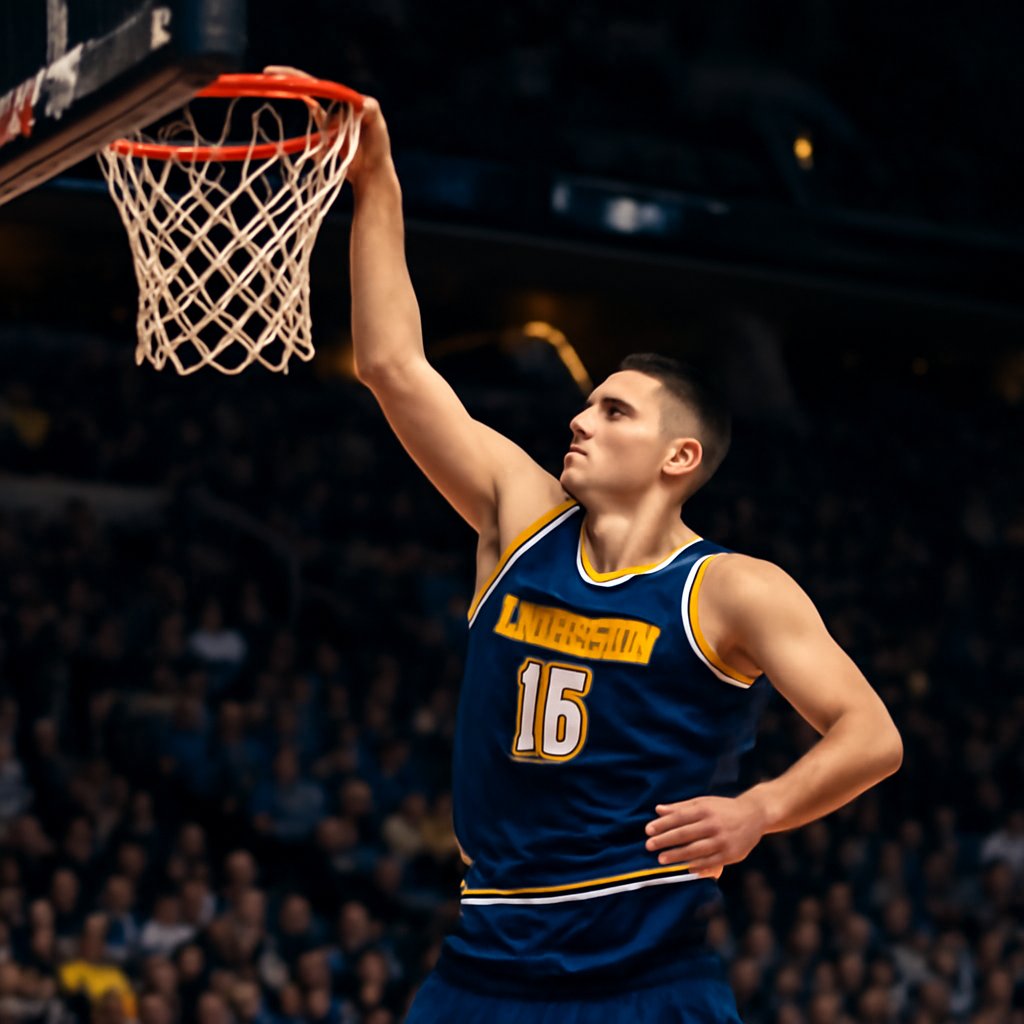
Nikola Jokic has been rewriting the blueprint for what a big man can do on the floor, stacking points, boards, and dimes into triple-double runs that carried him to those back-to-back MVPs. His numbers turned Denver into a machine that made every game feel like a clinic. I laced up for four years playing college ball, so I know the physical toll of carrying that kind of load night after night—your legs burn, your hands stay sore from setting screens and catching passes in traffic, yet Jokic made it look like second nature.
Those MVP stretches showed him averaging more than 26 points while pulling down double-digit rebounds, often climbing past 13 or even 14 on the glass during winning streaks, and dishing close to 8 assists with stretches hitting 8.5. The advanced metrics back up what any player who’s been in the gym knows: when a 7-footer sees the floor like a point guard, defenses fold. His field-goal percentage sat above 58 percent in those stretches and true shooting cleared 65, all while keeping turnovers low for a guy touching the ball as much as any guard.
Every one of those triple-doubles lifted the Nuggets’ offensive rating and got the ball moving. Teammates got cleaner looks because Jokic drew help and then found cutters with timing that can’t be taught in a film session. In the Black community, basketball has always been more than a game—it’s the language of the block, the way kids in parks from Philly to Oakland learned to create something out of nothing. Jokic’s version of that creation, played at center, echoes how the culture has pushed the sport toward skill and vision over just raw size.
Compared with the handful of other bigs who earned MVP hardware on triple-double production, Jokic’s edge showed up in efficiency and consistency rather than pure athleticism. His rebounding came from positioning and angles, the same instincts you develop when you’re battling in the paint without relying on vertical explosion. Signature nights like the 30-point, 15-rebound, 10-assist masterpiece or the near quadruple-double with steals added in proved he could fill every column without chasing personal glory.
Those performances didn’t just pad a résumé; they translated into wins and elevated the entire roster’s shooting percentages by creating better spacing. His player efficiency rating and box plus-minus numbers sat at the top of the league during those seasons, reflecting impact on both ends. Jokic’s approach reminded me of the old heads who used to say the real stat is whether your team walks off the floor with the W.
What makes Jokic’s triple-double consistency even more remarkable is understanding the context of modern NBA defense. Teams employ switching schemes, aggressive pick-and-roll coverage, and constant double-teams targeting the ball handler. For a center to navigate that environment and still manufacture 8-plus assists per night while maintaining elite scoring efficiency speaks to a level of basketball IQ that separates generational talents from mere statistical anomalies. During his MVP seasons, Jokic was often the focal point of Denver’s offense, meaning defenses built schemes specifically designed to disrupt his rhythm. Yet he consistently found ways to beat the defense, whether through no-look passes, high-low reads, or simply using his size to see over the top of defenders.
The physical demands of Jokic’s role cannot be overstated. Centers traditionally conserve energy on the perimeter and focus efforts in the paint, but Jokic’s game demands that he be involved in every possession’s creation. He’s setting screens 30 feet from the basket, rolling to the rim, popping to the mid-range, and initiating offense from the top of the key. The cardiovascular and muscular endurance required to sustain this across 82 games, plus playoffs, rivals that of any backcourt player—except he’s doing it at 7-feet-2-inches and 280+ pounds. That’s an exceptional athletic feat that often gets overlooked because it doesn’t come with highlight dunks or chase-down blocks.
Looking at his shooting mechanics during these MVP runs reveals another layer of mastery. Jokic’s three-point shooting evolved significantly, reaching percentages in the low-to-mid 30s while attempting four or five threes per game during certain stretches. For a center, spacing the floor at that volume while maintaining 35+ percent accuracy fundamentally changes how defenses can operate. They can’t pack the paint to stop penetration because Jokic will punish them from outside. This spacing benefit cascades through the entire team—when your 7-footer is a legitimate three-point threat, it opens driving lanes for your wings and guards in ways that traditional big men simply cannot.
His rebounding prowess deserves its own deep dive. Jokic’s rebounding wasn’t about out-jumping opponents; it was about positioning, anticipation, and effort. He’d study shot trajectories, understand percentages from various spots on the floor, and position himself accordingly. On nights where he grabbed 14 or 15 rebounds, he was often guarding the perimeter or the weakside, meaning he wasn’t always closest to the ball off the miss. That’s instinctive rebounding—the kind that comes from thousands of hours of basketball IQ development. Young centers looking to elevate their game can learn more from watching Jokic’s rebounding tape than from any vertical jump training program.
The assist numbers tell a different story entirely. When Jokic was averaging 8+ assists during his MVP campaigns, he was creating offense in ways that don’t always show up in traditional stat sheets. Hockey assists—passes that led to another pass resulting in a made basket—were a staple of his game. More importantly, his ability to collapse defenses created advantages for teammates that were easier to execute. A kick-out three-pointer to a wide-open shooter is only possible because Jokic drew three defenders into the paint. Those secondary benefits compound across an entire season, leading to team offensive ratings that were among the highest in franchise history.
Denver’s success during Jokic’s MVP years wasn’t built on explosive individual performances alone—though those certainly happened. It was built on consistency. Night after night, triple-double after triple-double, Jokic delivered the exact production needed. Some nights that meant 28 points, 11 rebounds, 8 assists on 60% shooting. Other nights it was 22 points, 14 rebounds, 11 assists on 52% shooting. The Nuggets knew they were getting a high-volume, high-efficiency creator every single game. That reliability in a scoring-heavy league is invaluable. Teams could build their entire offensive infrastructure around what Jokic would provide, adjusting role players and complementary pieces accordingly.
His durability during these stretches cannot be overlooked either. Sustaining MVP-caliber production while logging 35+ minutes per night, night after night, demonstrates both physical conditioning and mental toughness. Rest and recovery became crucial elements, and the Nuggets’ coaching staff managed his workload strategically, knowing that his availability was more important than any single regular-season victory. Yet even with managed minutes in certain situations, Jokic’s per-minute production remained elite, suggesting that his efficiency wasn’t a byproduct of fresh legs in limited roles but rather a genuine mastery of his craft.