
Player Profile: Anthony Edwards Rising Star
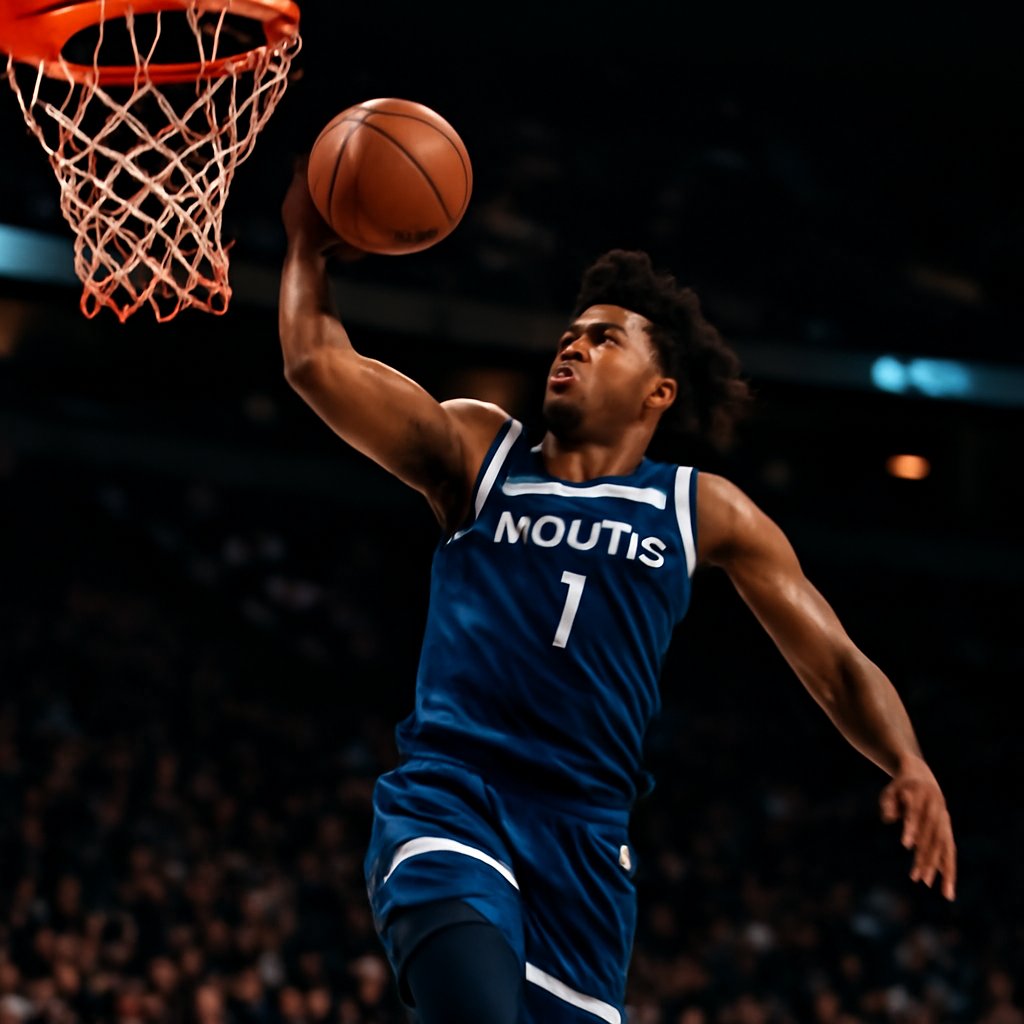
Anthony Edwards carries that special fire you see in so many kids who grew up with a ball in their hands on Atlanta playgrounds, the kind of energy that turns Sunday afternoon runs into lifelong dreams. His journey from Holy Spirit Preparatory School to one season at Georgia, where he averaged 19.1 points, 5.2 rebounds, and 2.8 assists, already hinted at the two-way force he would become. What gets lost in the highlights is how that lone college year prepared him for the weight of being a franchise pillar, the same weight so many WNBA standouts like A’ja Wilson have shouldered while lifting entire communities along the way.
Selected first overall by the Minnesota Timberwolves in the 2020 NBA Draft, Edwards wasted no time injecting life into a franchise hungry for its next leader. As a rookie he put up 19.3 points, 4.7 rebounds, and 2.9 assists per game on 39.5 percent from three, flashing the explosive first step and defensive instincts that had scouts buzzing. His growth on the perimeter, using that 6-foot-4 frame to disrupt passing lanes, showed early signs of the two-way impact that would define his prime. Edwards finished fifth in Rookie of the Year voting, but those closest to the game knew bigger things were coming.
By his sophomore and junior seasons the numbers climbed fast. In 2022-2023 he averaged 24.6 points, 5.8 rebounds, and 4.4 assists, earning his first All-Star nod while sharpening his mid-range game and off-ball movement. The 2023-2024 campaign brought career highs in scoring and threes, with Edwards leading the Timberwolves in points during their 56-win season. His improved decision-making in crunch time and ability to guard multiple positions helped Minnesota post one of the league’s best net ratings. The game has always been bigger than stats, though, and Edwards’ gravity opened driving lanes and higher assist opportunities for teammates like Karl-Anthony Towns and Rudy Gobert, echoing how Black basketball communities have long valued the player who makes everyone around him better.
In the 2024 playoffs he averaged 27.6 points, 6.5 rebounds, and 5.1 assists over 16 games, including a 40-point masterpiece against the Denver Nuggets that helped push Minnesota to the Western Conference Finals. His defensive versatility let coach Chris Finch switch schemes freely, and his improved playmaking under pressure stood out when it mattered most. Career marks through 2023-2024 sit at 23.8 points per game, with three-point shooting rising from 29.1 percent as a rookie to 39.8 percent in 2023-24. He has earned two All-Star selections, posted a career PER of 18.4 and 28.3 win shares, and averaged 1.2 steals per game in recent seasons. In July 2024 he signed a five-year, $193 million extension, securing his place as the Timberwolves’ cornerstone for years ahead.
The evolution of Edwards’ offensive game deserves deeper examination. Coming into the league, many questioned whether his scoring could translate beyond explosive athleticism. Yet his willingness to invest in fundamentals has been remarkable. His mid-range game, once virtually non-existent, developed into a reliable option that defenses must respect. This expansion of his offensive toolkit makes him exponentially harder to defend, as opponents can no longer simply give him space or load the paint. His ability to attack closeouts with his first step remains elite, but now defenders face genuine consequences for overplaying any particular area of the floor.
Edwards’ defensive trajectory has been equally impressive to follow. While his length and athleticism were always apparent, his positional awareness and commitment to the process have grown noticeably. Playing alongside Rudy Gobert, one of the league’s premier rim protectors, has created a perfect laboratory for Edwards to refine his perimeter defense without bearing the entire weight of the defense. Yet he’s proven capable of defending opposing team’s best wings on consecutive nights, showcasing the versatility that modern NBA rosters desperately need. His steal rate has remained consistently strong, and scouts note his improving ability to recover after getting beat off the dribble.
Looking at Edwards’ comparison class provides useful context for understanding his trajectory. He possesses similarities to other young two-way wings who emerged as franchise cornerstones, though his scoring punch and playmaking improvements have accelerated his timeline relative to many peers. What distinguishes Edwards is his swagger and confidence, sometimes to the point of controversy on social media, but that same competitive fire translates directly to the court. Players who carry that inner conviction often elevate their teammates through sheer force of will, and Edwards has demonstrated this repeatedly throughout his tenure in Minnesota.
The Timberwolves’ roster construction around Edwards warrants consideration when evaluating his impact. The addition of Karl-Anthony Towns and acquisition of Rudy Gobert created a Big Three dynamic that forces opponents into difficult decisions defensively. When teams key on Edwards, he has both the playmaking skills and basketball IQ to recognize and reward open teammates. Conversely, when defenses spread to cover his teammates, his scoring versatility and attacking prowess provide a pressure release valve. This balanced attack, with Edwards as the engine, positioned Minnesota as genuine Western Conference contenders heading into the 2024-25 season.
Injuries have mercifully spared Edwards thus far in his career, but maintaining that health remains paramount to his ascension into the elite tier of NBA wings. His playing style, while not reckless, does involve significant perimeter creation and aggressive downhill attacks that naturally carry inherent risk. Smart load management and continued attention to strength and conditioning will be crucial as the mileage accumulates. The Timberwolves organization appears committed to this balance, having the depth to rest Edwards when necessary without sacrificing competitive standing.
Beyond the numbers and statistics lies Edwards’ significance as a representation of modern NBA talent. Young, confident, digitally savvy, and unafraid to express himself, Edwards embodies how the sport continues to evolve off the court as well. His relationship with fans through social media and streaming platforms reflects how players now cultivate their brands independent of traditional media narratives. This direct connection to the fanbase creates investment that transcends wins and losses, though the Timberwolves’ success certainly amplifies his popularity.
Edwards’ story reflects the pride so many of us feel watching young Black talent carry the game forward with both skill and heart. As Minnesota builds around his leadership, his continued growth will shape not just a franchise but the next generation of hoopers who see themselves in his rise. The ceiling for Anthony Edwards remains remarkably high, and if his trajectory of improvement continues, he could very well join the conversation of elite NBA wings within the next season or two. Minnesota has found its franchise cornerstone, and basketball fans everywhere benefit from watching his continued evolution on the biggest stage.