
Player Profile: Joel Embiid Scoring Evolution
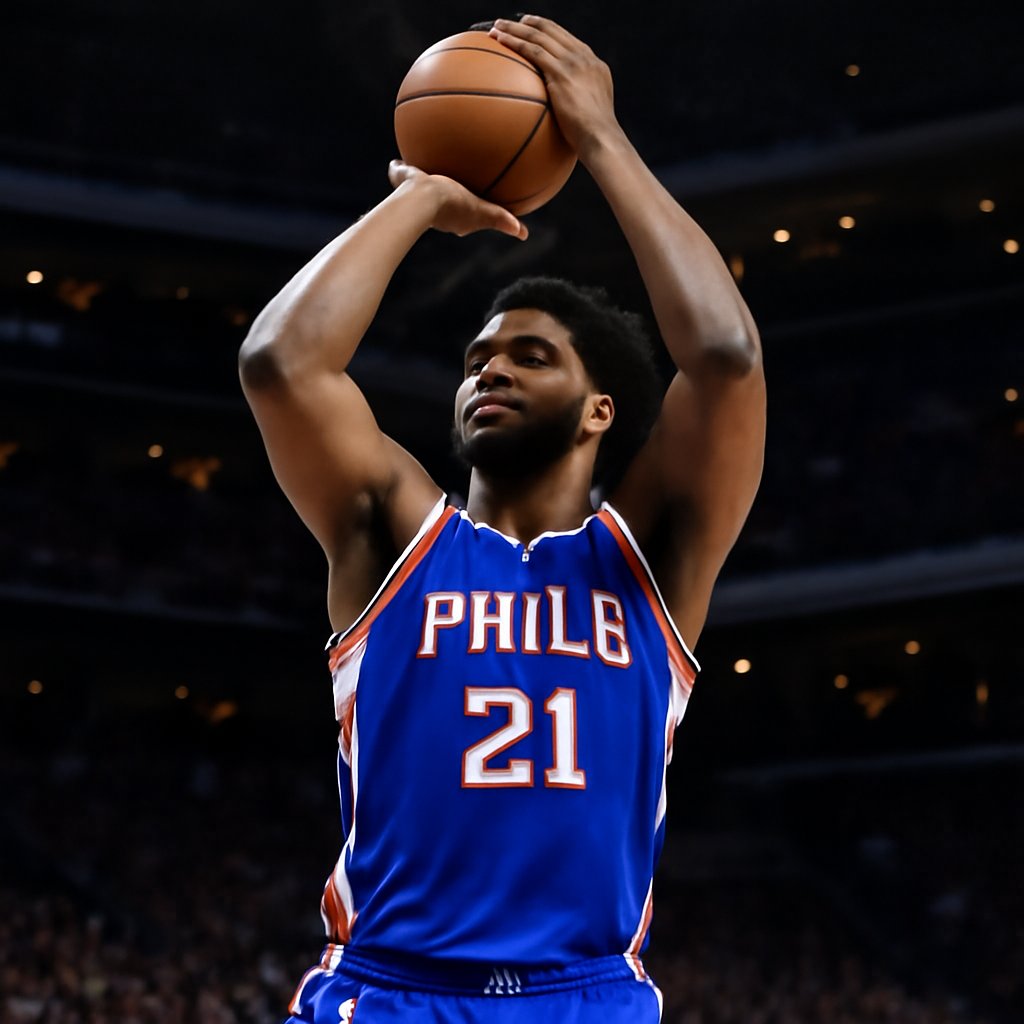
Joel Embiid’s rise from that raw, injury-banged prospect picked third back in 2014 to dropping 30-plus a night has been one of the realest transformations we’ve seen in the league. I laced up for four years playing college ball, so I know exactly how it feels when your body betrays you early and you have to rebuild everything from the ground up—feet, timing, confidence. Embiid turned that stress fracture nightmare into pure dominance, refining his footwork, stretching his range, and finishing with that nasty touch around the rim that smaller defenders just can’t match.
Those first couple seasons after he finally hit the floor in 2016-17 tell the story of a big man learning to trust his body again. He averaged 20.2 points in just 31 games, leaning heavy on post-ups and second-chance buckets because the explosiveness wasn’t fully there yet. By 2017-18 he bumped it to 22.9 points on 48 percent shooting, and you could see the mid-range game starting to click. The Sixers leaned on his interior gravity paired with Ben Simmons, creating the kind of spacing that let him operate without getting swarmed. I remember grinding through my own recovery periods in college—those extra hours in the gym on footwork drills under the coaches—and Embiid was clearly putting in that same unseen work. His foul-drawing became a weapon early, topping the league in free-throw attempts multiple times, using that 7-foot frame to punish smaller bodies in the paint the way Black bigs have done for generations in this game.
The transition from a post-centric player to a versatile scoring threat really accelerated during the 2018-19 and 2019-20 seasons. That’s when you started seeing Embiid operate more from the perimeter and midrange, taking advantage of defenses that weren’t ready for a 7-footer with his footwork and range. He averaged 27.5 points in 2019-20 while shooting 48 percent from the field and 30 percent from three—numbers that seemed almost unfathomable for a center just a few years prior. His usage rate climbed to elite levels, but what impressed scouts most was his ability to maintain efficiency even with the volume. That’s the mark of a truly special offensive player. The coaching staff, particularly Doc Rivers during his time with the team, helped unlock a more nuanced approach to Embiid’s game, incorporating more pick-and-roll actions and spacing him out further from the basket.
The addition of James Harden in February 2022 created another layer to Embiid’s evolution. Suddenly he wasn’t forced to dominate every possession, which actually improved his efficiency in crucial moments. Playing alongside another all-star scorer meant defenses couldn’t double him as aggressively, and it taught Embiid valuable lessons about reading weak-side rotations and making quicker decisions. His assist numbers ticked up, and more importantly, his shot selection improved even with the increased volume. That season showed how an elite scorer can actually elevate his game when paired with complementary talent rather than getting bogged down by every possession.
The 2021-22 and 2022-23 seasons were when everything clicked into that MVP-scoring-title level. Embiid took home the scoring crown at 33.1 points per game in 2022-23, the highest mark for a center since Shaq, and added the league MVP. He started knocking down threes at 33 percent and added that reliable step-back that kept defenses from sagging. Inside the arc he stayed elite, converting better than 65 percent at the rim per the tracking numbers. The advanced metrics back up what any player who’s been in the gym knows—his true shooting percentage cracked 65 percent that year, proving you can carry volume and efficiency at the same time. Adding consistent perimeter shooting pulled bigs out of the lane, opened driving room, and let guys like Tyrese Maxey play off his gravity. That spacing shift changed how Philly attacked night in and night out.
What’s particularly impressive about Embiid’s scoring evolution is his offensive diversity. He’s not just one-dimensional—he can score in the post with back-down moves, face up from midrange, launch threes off the catch or off the dribble, and attack closeouts. His free-throw shooting has remained elite throughout his career, consistently above 85 percent, which gives him the ability to draw fouls and convert at the line when the game is tight. Scouts point to his footwork as foundational to this versatility. The guy trained extensively on footwork drills, understanding that foot placement and angles matter just as much as strength when you’re 7-feet tall playing against bigger, more athletic defenders. He’s mastered the up-and-under move, the step-back, the turnaround, and the straightaway three—basically every tool in the modern big man’s toolkit.
His understanding of spacing and floor positioning has matured significantly over the years. Early in his career, Embiid sometimes forced tough shots or tried to beat double-teams in isolation. Now he’s much quicker to kick out to shooters, recognize when the help defense is coming, and move to open spots. His AST:TOV ratio improved notably in recent seasons, showing he’s not just taking what he wants but making the right plays. This evolution mirrors how great scorers like Kevin Durant and LeBron James adapted their games—by understanding that true dominance comes from making your teammates better while still maintaining enough of an offensive burden that defenses can’t ignore you.
Playoffs have been the ultimate test of that growth. In 2022 he put up 23.6 but took some heat for efficiency drops against physical frontcourts. The next year he lifted to 27.0 across 11 games, showing more poise attacking closeouts and kicking out of doubles. Late-game shot selection got sharper and free-throw accuracy held up better when legs were heavy. The organization leaned into load management to keep him fresh, a reality every vet who’s battled durability issues understands. Lately he’s added more off-ball movement and pick-and-pop actions, expanding beyond pure post play while keeping that interior power intact.
What makes Embiid’s scoring evolution particularly noteworthy is how it’s influenced the trajectory of modern NBA center development. Scouts and coaches now evaluate big men with multi-dimensional scoring in mind—the days of pure rim-runners or back-to-basket specialists are largely behind us. Embiid proved that a player with his size and strength could develop perimeter skills without losing interior dominance. Teams investing in young centers now prioritize shooting touch, footwork development, and high-basketball IQ. The investment pays dividends because you get more spacing, more flexibility in offensive sets, and ultimately better efficiency across the board.
His career path shows the climb from 20.2 points as a rookie to 27.5 across nine seasons, with three straight seasons leading the league in free-throw attempts and 31 games of 30-plus in 2022-23 alone. Playoff career line sits at 24.6 points, 11.3 boards, and 2.8 assists over 48 games. Three-point shooting went from zero in the early years to 32 percent for his career. He earned All-NBA First Team nods in 2022-23 and 2023-24 and stayed top-five in MVP voting. That arc keeps shaping how teams build around skilled bigs today, blending power, shooting, and smarts the same way earlier generations of Black centers carried the culture of the game—from neighborhood gyms to the highest stage. Health and continued tweaks will decide how far it still goes.