
Russell Westbrook Triple Double Season Impact
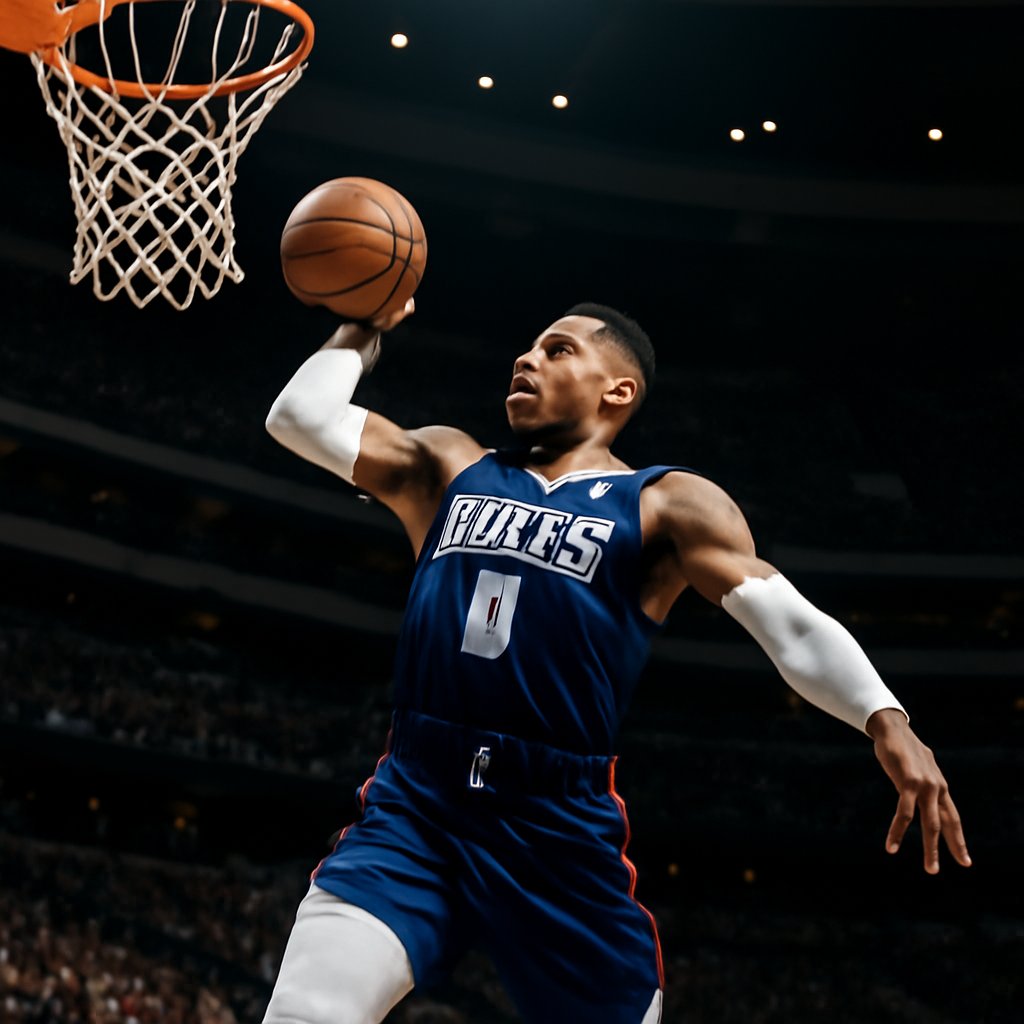
Russell Westbrook’s triple-double seasons didn’t just rewrite record books—they reminded folks what it means to carry a whole squad on your back when the lights get brightest. Coming off Kevin Durant’s exit to Golden State, Westbrook turned a potential down year in Oklahoma City into something special during 2016-17, averaging 31.6 points, 10.7 rebounds, and 10.4 assists while dropping 42 triple-doubles, the first player since Oscar Robertson to average one for a full season. The game has always been bigger than stats, and watching him pour everything into those Thunder jerseys showed how one player’s all-around hunger can lift an entire community that sees itself in that fight.
What gets lost in the highlights is how Westbrook’s high-tempo style created space for teammates like Steven Adams and Victor Oladipo, turning outlet passes and second-chance buckets into a collective rhythm that echoed the way basketball has long served as a lifeline in Black neighborhoods from Watts to the Midwest. His usage rate topped 40 percent yet his efficiency stayed elite, proving that volume and smarts can coexist when the heart is in it. The Thunder still managed 47 wins that year, a testament to resilience in the face of roster upheaval.
The 2016-17 season represented a watershed moment in NBA history, not just for Westbrook’s individual achievement but for what it signified about the evolution of the point guard position. Before this season, the notion of a player averaging a triple-double across an entire 82-game schedule seemed nearly impossible. Oscar Robertson had accomplished it during the 1961-62 season with the Cincinnati Royals, but that was over half a century prior. Westbrook’s feat showed that in the modern era, with pace-and-space basketball becoming more prevalent, such dominance was attainable through sheer will and skill. His relentless attacking mentality, combined with his willingness to initiate offense and crash the glass, fundamentally changed how teams approached roster construction around their star point guard.
The numbers alone tell a compelling story, but the context makes them even more remarkable. After Durant’s departure left Oklahoma City in a precarious position, many expected the Thunder to tank or at least struggle significantly. Instead, Westbrook put together one of the most statistically dominant individual seasons in NBA history. Beyond the triple-doubles, he recorded five seasons with at least 42 triple-doubles between 2016 and 2020, establishing himself as the greatest triple-double generator the league has ever seen. In the 2017-18 season, he followed up his MVP year by posting 25.4 points, 10.1 rebounds, and 10.1 assists per game, averaging another triple-double and becoming only the second player in NBA history to accomplish this feat in consecutive seasons.
Those playoff runs brought both fire and frustration, with Westbrook delivering multiple triple-doubles in a first-round series against Houston before the supporting cast hit consistency walls against tougher defenses. The 2017 postseason showcased his ability to elevate his game when it mattered most, recording triple-doubles in critical playoff moments and pushing the Thunder to the second round despite facing a Spurs team featuring LaMarcus Aldridge and Kawhi Leonard. However, the limitations of relying heavily on one player became increasingly evident as the Thunder faced more complete teams with better defensive schemes designed specifically to contain him.
Later stops in Washington and LA showed how the same production kept him in MVP talks while highlighting the need for better roster balance, something we see play out across leagues. When Westbrook joined the Wizards in 2020, pairing with Bradley Beal, the expectations were sky-high. He immediately delivered another triple-double season with 22.2 points, 11.7 rebounds, and 11.7 assists, becoming the first player ever to record multiple triple-double seasons. Yet despite these extraordinary individual performances, the team struggled to find consistency, finishing 33-47 and missing the playoffs. This pattern would repeat itself in subsequent seasons, illustrating a crucial basketball lesson: even the most magnificent individual performances require complementary pieces and systematic execution to translate into team success.
The data reveals something particularly striking about Westbrook’s triple-double hunting. Critics argued he sometimes prioritized assists and rebounds over optimal shot selection, yet his on-court efficiency remained surprisingly solid for someone with such high usage rates. In 2016-17, his true shooting percentage of 55.5% was respectable for a player attempting over 23 field goals per game. This efficiency validated the approach—he wasn’t simply padding stats but making winning plays and taking high-percentage shots even while maintaining aggressive playmaking and rebounding duties.
Westbrook’s influence stretches to today’s guards who value versatility, from Luka Doncic to Trae Young, and it sparked fresh conversations about real value versus padding, pushing analysts toward hustle metrics that capture the full picture. The debate over triple-double relevance that emerged during his peak years forced the basketball community to grapple with harder questions: What truly constitutes winning basketball? How do we measure the intangible benefits of a player’s relentless activity and rhythm-setting? These conversations have ultimately enriched basketball analysis, leading to more nuanced discussions of player impact.
His career total of 184 triple-doubles sits second only to Robertson, and moments like that 57-point outburst stand as benchmarks for what guards can do when they refuse to be defined by position alone. That specific game in January 2017 against the Jazz demonstrated Westbrook’s complete arsenal— 57 points on 19-of-33 shooting, along with 13 rebounds and 10 assists. It remains the ultimate expression of his offensive versatility, showing his capacity to score from anywhere on the court while still maintaining his facilitating duties.
The physical cost of that pace later underscored load management lessons, yet those peak years still measure what all-around excellence looks like in an era obsessed with spacing and threes. Westbrook’s aggressive style, while productive, contributed to injury concerns that would plague him in later years. The constant exertion required to average triple-doubles—the sprinting to the glass, the high-intensity transitions, the physical engagement on both ends—eventually caught up with him, underscoring the importance of rest and recovery in modern basketball.
At the end of the day, Westbrook’s story is one of cultural pride and quiet leadership, showing how basketball remains a vessel for community strength and personal triumph even when the final box score doesn’t tell the whole tale.
- 42 triple-doubles in 2016-17, an NBA single-season record.
- Averaged 31.6 points, 10.7 rebounds, and 10.4 assists in his MVP campaign.
- First to average a triple-double since Oscar Robertson in 1961-62.
- 184 career triple-doubles, second all-time behind Oscar Robertson’s 181.
- Led the Thunder to 47 wins after Durant’s departure.
- Multiple 40-point triple-doubles, including a 57-point game in January 2017.
- Back-to-back triple-double averaging seasons in 2016-17 and 2017-18.
- 55.5% true shooting percentage in 2016-17 despite 40%+ usage rate.
- Recorded triple-doubles in multiple playoff series, including against the Spurs and Rockets.
- Over 200 total triple-doubles across regular season and playoff career.