
Stephen Curry Impact on League Three Point Trends
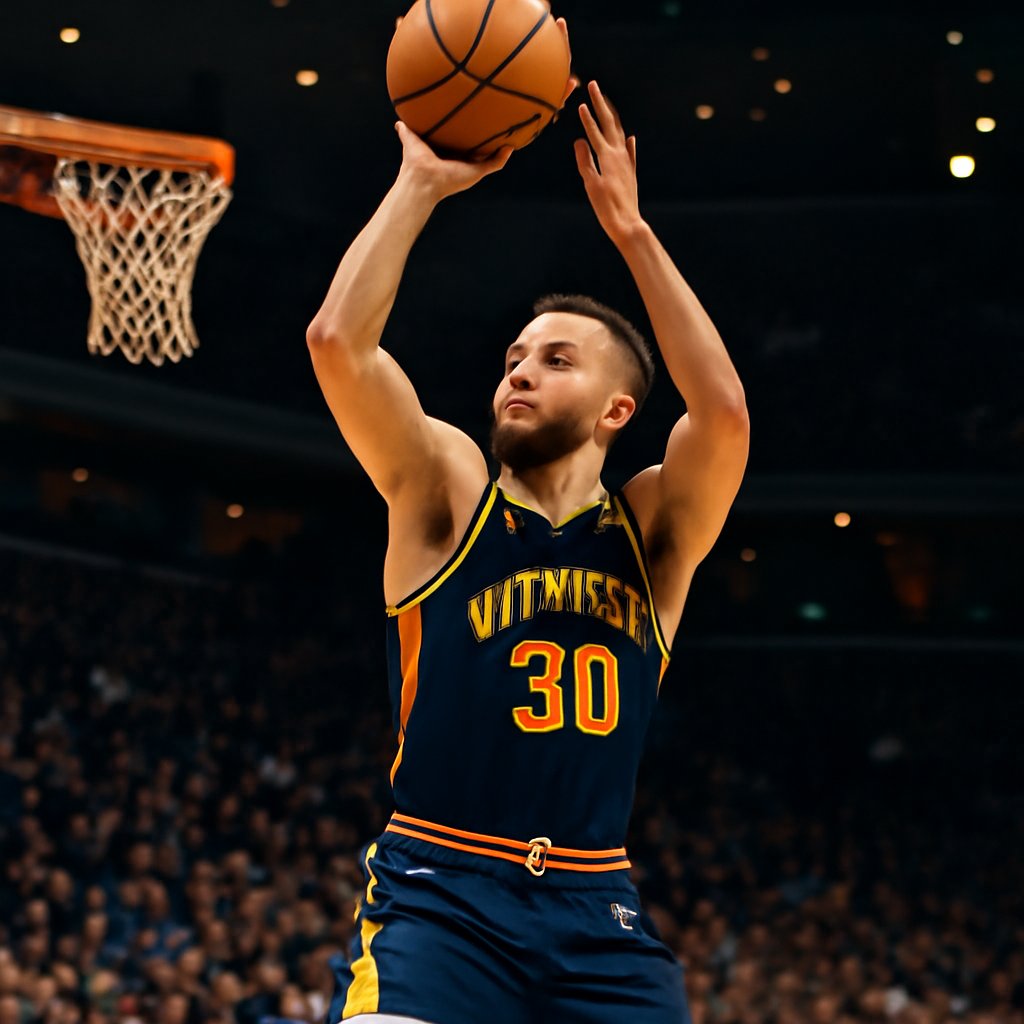
Stephen Curry didn’t just change how the NBA shoots threes—he reminded folks that the game has always been bigger than stats, rooted in the way Black and brown communities have long turned basketball into a language of hope and expression. From the playgrounds in Charlotte where he first honed that quick release to the bright lights of the Bay, Curry’s willingness to live beyond the arc forced every team to stretch their thinking, their spacing, and their courage.
Before he arrived in 2009, the league sat around 18 three-point attempts per game. Most clubs still leaned on mid-range jumpers and post play, treating the long ball like a specialty item instead of a foundation. That conservative style kept the paint clogged and limited the kind of free-flowing transition that has always felt like home to so many of us who grew up watching the game on community courts.
Then came 2012-13. Curry dropped 272 threes in a single season, shattering the old mark and showing the league what off-the-dribble range from thirty feet could look like. His footwork and release turned contested shots into high-percentage looks. Over the years he climbed past 3,200 career threes while holding a lifetime mark above 42 percent. What gets lost in the highlights is how the Warriors built an entire motion offense around his gravity—constant cuts, off-ball screens, and decisions that left defenses choosing between helping or getting cooked from deep. That opened lanes for Klay Thompson and Draymond Green, the kind of unselfish basketball that echoes the way our communities have always valued the extra pass.
The numbers followed fast. By 2022-23, teams were averaging 35 threes a game, nearly double the volume from Curry’s rookie year. Even old-school franchises started hunting stretch bigs and shooting wings. In the playoffs the shift showed up clearest: trailing teams now go small with five perimeter shooters, a direct line from Golden State’s blueprint. Since 2015, fourteen different players have posted at least 300 postseason threes in one run, compared with just four in the decade before. Golden State itself reached 48.7 percent of its playoff field-goal attempts from deep in 2022. Defenses started giving Curry an extra 2.3 inches of space on average, a quiet admission that one man had redrawn the map.
What makes Curry’s influence even more profound is how it shifted the entire philosophy of player development across the league. Front offices recognized that shooting range from anywhere on the court wasn’t a luxury—it became essential. Teams began investing heavily in three-point shooting coaches and biomechanics specialists to refine shot mechanics at scale. Young players coming into the league now grow up watching Curry highlights, understanding that range extends to 40 feet and beyond. This trickle-down effect reached down to high schools and AAU circuits, where coaches suddenly demanded their big men develop outside shot capabilities. The position-less basketball movement gained real momentum because Curry proved that scoring from distance could be more efficient than traditional post scoring.
The economic impact of this shift shouldn’t be overlooked either. Teams willing to embrace the three-point revolution early gained competitive advantages that translated into playoff success and revenue growth. The Warriors’ unprecedented success from 2014-2019, built on the foundation of Curry’s gravity and shooting, generated global interest in the NBA at unprecedented levels. International broadcasts increased, merchandise sales soared, and young players worldwide began emulating his shooting form rather than traditional NBA archetypes. Players from Europe, Australia, and the Americas who might have been overlooked in previous eras suddenly found value in the league because they could shoot. Curry essentially opened a new avenue for NBA talent evaluation that democratized the game in meaningful ways.
Coaching strategies underwent complete overhauls to counter Curry’s presence. Defensive schemes that worked for decades became obsolete. Teams had to choose between staying attached to shooters on the perimeter, which left cutters free, or playing help defense, which invited three-point attempts. The pick-and-roll, basketball’s most fundamental play, evolved into the pick-and-pop because centers had to be mobile and capable of shooting from distance. Even defensive assignments became more fluid, with switching on screens becoming normalized to prevent defenders from getting stuck on shooters like Curry. Analytics departments grew in importance because shooting efficiency required data to justify its prioritization over traditional scoring methods.
The same wave rolled into the WNBA, where players like Diana Taurasi and today’s young guards have pushed the perimeter game further than ever, proving the three-point revolution belongs to women too. The game keeps teaching us that when one person reimagines what’s possible, entire generations find new ways to move. Women’s basketball has embraced the three-point line with enthusiasm, with WNBA teams increasing their attempts from around 15 per game a decade ago to over 25 in recent seasons. Young female players now train with the same emphasis on range that male players do, fundamentally changing the landscape of women’s basketball talent development.
League average three-point attempts rose from 18.1 per game in 2009-10 to 35.2 per game in 2023-24. Curry’s 2015-16 season produced 402 threes, a record that stood until 2022. Teams running five-out sets average 8.4 more three-point attempts per game than traditional lineups. Curry’s influence shows up in draft rooms, coaching clinics, and even how international programs now prioritize spacing. The paradigm isn’t shifting anymore—it has shifted. And the pride we feel watching it unfold comes from knowing the culture that birthed this game is still shaping its future.
Beyond individual statistics, Curry’s impact fundamentally changed how teams value their rosters. Role players who could shoot became premium commodities, sometimes commanding salaries previously reserved for All-Stars. Teams realized that surrounding elite players with shooters created spacing that made everyone more efficient. This economic valuation shift influenced free agency markets, trade negotiations, and team construction strategies across the entire league. Organizations that understood the assignment early, like the Warriors, reaped consistent playoff success. Those slower to adapt found themselves increasingly disadvantaged in competitive windows.
The defensive implications continue to ripple through the league. Traditional big men who couldn’t space the floor became liabilities, while mobile centers who could shoot stretch the game vertically in ways previous generations never imagined. Help defense, once the cornerstone of defensive schemes, became risky because one miscalculation meant an open three. Teams developed more sophisticated switching schemes and defensive coverages specifically designed to mitigate high-volume three-point shooting. The evolution shows that Curry’s impact wasn’t just about individual shooting—it forced entire defensive systems to rebuild from the ground up.