
Stephen Curry’\”s Three-Point Shooting Record: The Numbers That Redefined NBA History
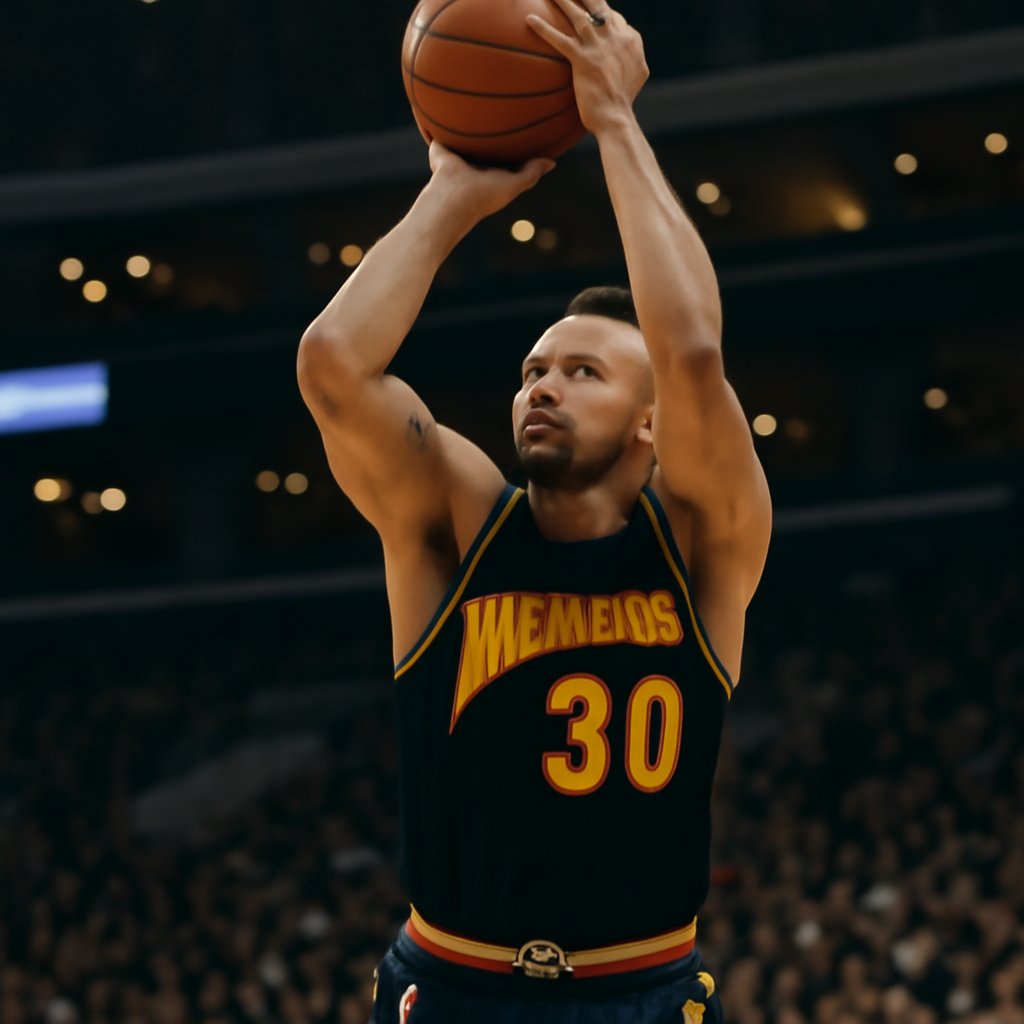
Stephen Curry’s shooting has changed the game in ways that hit different if you’ve ever felt the rim’s give on a pull-up from deep. I laced up for four years playing college ball, so I know the burn in your legs when you’re running off screens and still have to rise and fire with balance. The advanced metrics back up what any player who’s been in the gym knows: Curry isn’t just making threes at historic volume—he’s doing it with a quick release and footwork that creates separation even when the defense is draped all over him. Over 3,200 career threes and counting, a single-season mark of 402 in 2015-16, and more than 600 in the playoffs. Those numbers sit alone at the top.
When he passed Ray Allen’s old record of 2,973, it closed one chapter and opened another. Curry got there in fewer games because his movement and the Warriors’ spacing created opportunities Allen never saw. In the postseason he’s still knocking down close to 40 percent while taking eight or more a night. That kind of consistency under playoff lights is what separates the greats from the guys who heat up for a week.
His mechanics come from deliberate, repetitive work on balance and release point—stuff you feel in your fingertips after thousands of shots. Catch-and-shoot conversion rates above 45 percent in multiple seasons don’t happen by accident. The off-ball action and constant motion the Warriors run turn his gravity into open looks for everybody else, and the numbers show team three-point attempt rates jump when he’s on the floor.
What makes Curry’s achievement even more remarkable is the trajectory of his career. When he entered the league in 2009 as a seventh overall pick, scouts questioned whether his slight frame and ankle issues would hold up against NBA athleticism. Yet he developed his shooting into a weapon so reliable that defenses now have to account for him from 40 feet away. His shooting range extends several feet beyond the three-point line, forcing defenders to guard him tighter and creating driving lanes for teammates. This fundamental shift in how teams construct their offensive sets traces directly back to Curry proving night after night that deep threes were a viable, repeatable offensive strategy.
The 2014-15 season marked the turning point where Curry’s individual excellence translated into league-wide influence. That year, he made 286 three-pointers, a single-season record at the time, while shooting 50-40-90 for the first time in his career. The Warriors that season started to push pace and spacing to extremes, and opponents struggled to keep up. The following season, his 402 three-pointers broke his own record and established a standard that still stands. What’s crucial to understand is that those 402 threes came on superior efficiency—he wasn’t just launching more; he was making a higher percentage while doing so. His 50.4 percent from three that season remains one of the most efficient high-volume seasons ever recorded in basketball.
Compare that to the other volume shooters. James Harden put up big totals but never matched the career percentage. Damian Lillard stretches it deep too, yet the total makes don’t reach Curry’s level. Klay Thompson was a perfect complement because he didn’t need as many attempts. Curry’s combination of longevity, peak efficiency, and the way he forces defenses to adjust still stands apart.
The playoff track record deserves special attention because that’s where legacies crystallize. Curry has made over 600 three-pointers in the postseason, maintaining that 40 percent mark while taking multiple attempts per game. During the Warriors’ championship runs, opposing coaches faced an impossible choice: go under screens and risk deep threes, or go over and give up driving lanes. There’s no perfect answer when defending Curry, which is precisely why he’s unique. Most elite shooters face a defensive scheme that can at least be theoretically sound; Curry breaks the math on both ends.
His influence on youth basketball and player development extends far beyond statistics. In AAU circuits, high school gyms, and college programs across the country, young players now work obsessively on three-point range and footwork. Coaches teach the Curry pull-up off the dribble, the step-back three from NBA range, and the catch-and-shoot mechanics that allow you to get your shot off against tight defense. The shooting form he’s popularized—high release point, quick trigger, smooth follow-through—has become the blueprint for how guards are trained in America. Facilities that once focused primarily on post moves and mid-range game now dedicate equal time to perimeter shooting development.
In Black American communities the game has always lived on the playgrounds and in the rec centers—places where handle, footwork, and the ability to create your own shot get passed down like family recipes. Curry’s influence has pushed that culture even further toward perimeter spacing and movement, and now you see kids in every city working on the same quick trigger and off-ball reads. The league-wide jump in three-point attempts since he broke through shows how one player’s style can shift the whole ecosystem.
The data on league-wide three-point evolution is staggering. During the 2009-10 season, NBA teams attempted an average of 16.5 three-pointers per game. By the 2023-24 season, that number had nearly doubled to over 32 attempts per night. While multiple factors contribute to this shift—rule changes, spacing concepts, analytics adoption—Curry’s demonstration that threes could be a primary offensive weapon rather than a secondary option accelerated the timeline considerably. Teams watched what happened when the Warriors built around elite perimeter shooting and spacing, and they scrambled to acquire or develop their own three-point shooters.
Looking at his career trajectory in total, Curry has won two MVP awards, led his team to four NBA Finals appearances, and won three championships. His Finals MVP award in 2022 cemented his status as clutch when it matters most. The combination of individual accolades, team success, and sustained excellence across more than a decade separates him from flash-in-the-pan performers who put up big numbers for a season or two. Curry has done this year after year, playoff after playoff, against the best defenses in the world.
As his career continues, the conversation around three-point shooting will inevitably reference Curry as the inflection point. He didn’t invent the three-pointer, but he proved it could be the foundation of championship basketball. Future generations will measure their shooting against his standards, and coaches will study film of his movement and mechanics the way they once studied Jordan’s mid-range game or Kobe’s footwork. That’s the mark of true transcendence in basketball—when your individual style becomes the template the entire sport tries to replicate.