
Tyrese Haliburton Ignites the Indiana Pacers with Elite Playmaking
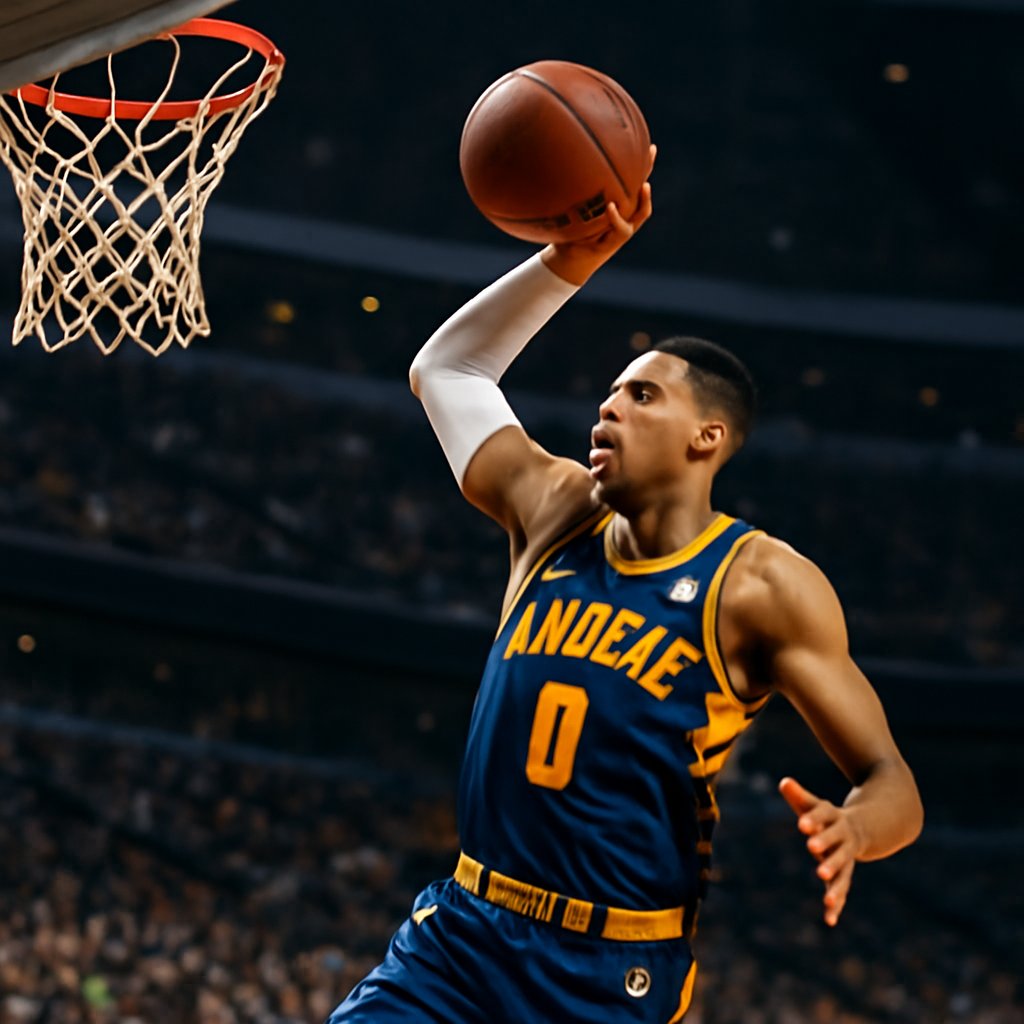
Man, seeing Tyrese Haliburton light up the floor for the Indiana Pacers brings back memories from my own playing days. I laced up for four years playing college ball, so I know what this feels like when a point guard starts dictating the whole game with nothing but vision, quick hands, and that extra gear in transition. The kid went from a mid-first-round pick out of Iowa State to a guy running one of the league’s most exciting offenses, and the advanced metrics back up what any player who’s been in the gym knows: elite pace and spacing change everything.
That trade sending him from Sacramento to Indianapolis for Domantas Sabonis flipped the script in a hurry. Haliburton stepped into a bigger role and immediately showed why scouts loved his basketball IQ back in college. He started dropping pinpoint passes in both the open floor and half-court sets, the kind that make defenders look like they’re moving in slow motion.
His assist numbers have been climbing ever since he landed in Indiana, often sitting above 10 dimes a night while keeping turnovers low. He leads the league in potential assists and those hockey assists that don’t always show up in the box score but turn teammates into scorers. Guys like Bennedict Mathurin and Myles Turner are eating off his reads and lobs, and the team has climbed into the top 10 in offensive rating. The advanced metrics back up what any player who’s been in the gym knows: consistent double-digit assist games against tough defenses, transition playmaking that fuels fast breaks, and that secondary creation that makes the whole offense hum.
Beyond the dimes, Haliburton is dropping 20-plus points with solid field goal and three-point percentages. His pull-up jumper and floater let him score at all three levels without forcing anything, and tracking data shows he’s dangerous both in catch-and-shoot spots and creating off the dribble. I remember how in Black communities from playgrounds to pro arenas, that kind of two-way guard play carries a special weight, like carrying the rhythm of the neighborhood onto the big stage.
Under his direction the Pacers run a motion offense built on constant movement and spacing. His gravity pulls defenders out of position, opening lanes for drives and corner threes. Role players start thriving because of it, with better offensive rebounding and second-chance chances off his outlet passes. When you stack him against other young point guards like Darius Garland or De’Aaron Fox, Haliburton stands out in true shooting percentage and assist-to-turnover ratio. His usage rate stays balanced so nobody’s possessions get hogged, and his defensive growth has started showing up in close games.
PER, win shares, and RAPTOR numbers put him right there with the top young floor generals. He creates positive impact through steals and deflections that spark transition buckets. Those numbers tell you why Indiana sees him as the foundation for real contention. His leadership in the locker room, mentoring younger guys and pushing accountability, has shifted the culture toward winning habits. The defensive ratings look better when he’s orchestrating, and you can expect more growth as he sharpens his mid-range game and pick-and-roll mastery.
What really sets Haliburton apart from other young point guards is his consistency across different game situations. Whether the Pacers are facing a top-tier defensive team or playing against a weaker opponent, he maintains his high-level vision and decision-making. That kind of steadiness doesn’t come from talent alone—it comes from preparation, film study, and an understanding of angles that most players never develop. In the fourth quarter of close games, when possessions matter most, Haliburton’s assist rates actually increase. He becomes even more dangerous because he’s reading defenses that are tightening up and still finding the open man with surgical precision.
The Sacramento Kings’ decision to trade him still gets debated in NBA circles. At the time, the front office saw an opportunity to acquire Sabonis, a dominant big man, and believed it would accelerate their rebuild. But Haliburton’s trajectory in Indiana has made it clear that the young point guard was going to be special regardless. Scouts at Iowa State had flagged his exceptional court vision and low turnover rate as elite-level traits, and Indiana’s front office recognized they had struck gold when they acquired him. The chemistry he’s built with teammates suggests he was always destined to be the kind of floor general who elevates everyone around him.
One aspect of Haliburton’s game that often gets overlooked is his understanding of spacing and how to weaponize it. He doesn’t just make the obvious pass—he positions himself and his teammates to create second and third passing options on every possession. This creates what’s known as “offensive continuity,” where the ball keeps moving and defenders exhaust themselves trying to recover. Guards like Steve Nash and John Stockton built Hall of Fame careers partly on this skill, and Haliburton is already showing similar tendencies. Coaches love pointing to him in film sessions because his movement, even without the ball, teaches younger players how to read an offense.
The Pacers’ defensive identity has also improved with Haliburton’s growth in that end of the floor. While he’ll never be a lockdown perimeter defender, his length and quick hands force opposing guards to work harder for everything. More importantly, his ability to anticipate passing lanes and jump into the passing lanes for steals creates easy transition opportunities. Teams that have faced the Pacers lately know they can’t just barrel into Indiana expecting an easy night—Haliburton’s defensive consciousness makes every possession difficult.
Looking ahead, the question isn’t whether Haliburton can maintain this level of play, but rather how high his ceiling truly is. If he continues to develop his scoring touch and maintains his efficiency, he could eventually average 12-plus assists while scoring 23-25 points per game. That combination would put him in conversations with some of the greatest offensive players in NBA history. For now, Indiana fans should savor watching a young superstar in the making, someone who proves that elite basketball IQ and basketball instinct can’t be taught in training camp—they’re developed through thousands of hours of preparation.
With Haliburton at the controls, the Pacers have one of the league’s most entertaining and efficient backcourts. That mix of elite passing, efficient scoring, and improving defense has them positioned as a rising force in the East, ready to test the established powers.